
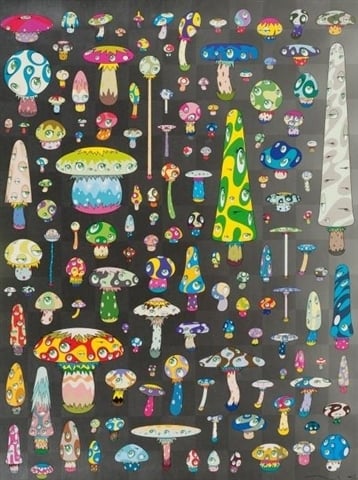
Expertenanalyse zu Takashi Murakamis Posi Mushroom
Stil: Neo-Pop Art, Superflat · Genre: figurative
Expert Analysis: "Posi Mushroom" by Takashi Murakami
Takashi Murakami’s Posi Mushroom is a quintessential example of his Superflat aesthetic, a style that deliberately collapses the boundaries between high art, popular culture, and commercial imagery. Executed in the Neo-Pop vein, this figurative work features Murakami’s signature smiling mushroom—a motif that recurs throughout his oeuvre as a playful yet pointed symbol of post-war Japanese consumerism and the uncanny sweetness of kawaii (cute) culture.
The significance of Posi Mushroom lies in its calculated visual philosophy. Murakami’s Superflat movement draws on the flat, two-dimensional visual language of manga, anime, and ukiyo-e woodblock prints, rejecting traditional Western perspective in favor of a graphic, surface-level immediacy. Here, the mushroom is rendered with crisp outlines, vibrant color fields, and a cartoonish smile—an image that appears innocent but carries deeper subtext. The “posi” (positive) label hints at the artist’s interest in the psychological conditioning of happiness in contemporary society, particularly in Japan, where moe and cuteness are deployed as both a comfort and a form of soft power.
Stylistically, the work embodies Murakami’s method of “superflatness”: the absence of depth and shadow flattens the image into a signifier, turning the mushroom into an icon that can be endlessly reproduced and commodified. This echoes the artist’s critique of the art market and postmodern capitalism, where even critical gestures can be absorbed into the very system they question. The smiling face—both joyful and eerie—references the psychedelic era (mushrooms as altered states) while simultaneously evoking the sanitized, mass-produced happiness of corporate mascots.
In the context of Neo-Pop Art, Posi Mushroom stands alongside Murakami’s Mr. DOB and Flower series as a deliberate provocation: it asks viewers to reconsider the line between authentic expression and manufactured delight. Its significance is thus twofold—as a masterful technical execution of Superflat’s graphic principles and as a cultural critique wrapped in deceptively simple iconography. The piece is not merely a cute figure but a mirror reflecting the contradictions of a hyper-commodified, affect-driven world.
Visuell ähnlich
20 Werke mit ähnlicher Komposition und Farbpalette
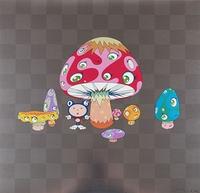
Poke!
Takashi Murakami
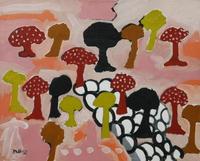
Trees
Walter Battiss
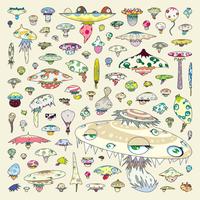
Army of Mushrooms
Takashi Murakami
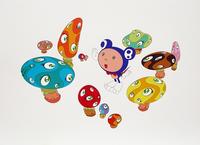
!N-Cha!
Takashi Murakami
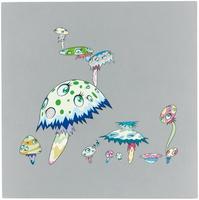
Mushroom Youkai
Takashi Murakami
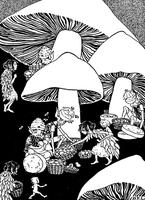
‘Mopsa The Fairy’ by Jean Ingelow
Dorothy Lathrop
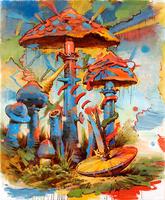
Mushrooms
Arsen Savadov
Illustrations for Mikhail Stelmakh's book "In the Hedgehog's Windmill"
Hryhorii Havrylenko
Journey to the Center of the Earth
Edouard Riou
The Fairy Must Give Herself up to the Queen
Virginia Frances Sterrett
Giant Triple Mushrooms
Carsten Holler
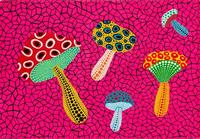
Mushrooms
Yayoi Kusama
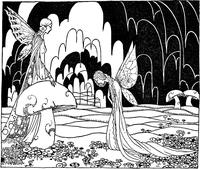
the Fairy Must Give Herself up to the Queen and Lose Her Power for Eight Days
Virginia Frances Sterrett
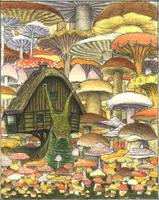
Theophilus snail
Jacek Yerka
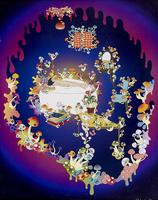
Mushroom Room
Chiho Aoshima
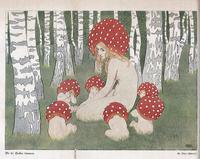
Mother Mushroom with her children
Edward Okuń
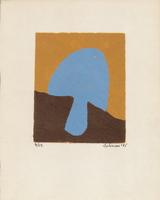
Honesty Isn't Measured With the Meter But With Heartbeats (from the Archways series)
Vasile Dobrian
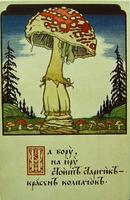
Mushroom
Ivan Bilibin
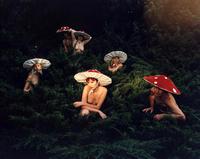
Marxizm de Sad
Arsen Savadov
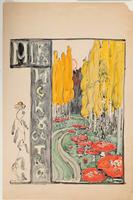
Mir Iskusstva (World of Art). Cover Design
Maria Yakunchikova