Expert analysis of Iosif Iser’s Nude on the Chair
Style: Expressionism · Genre: nude painting (nu)
Expert Analysis: "Nude on the Chair" by Iosif Iser
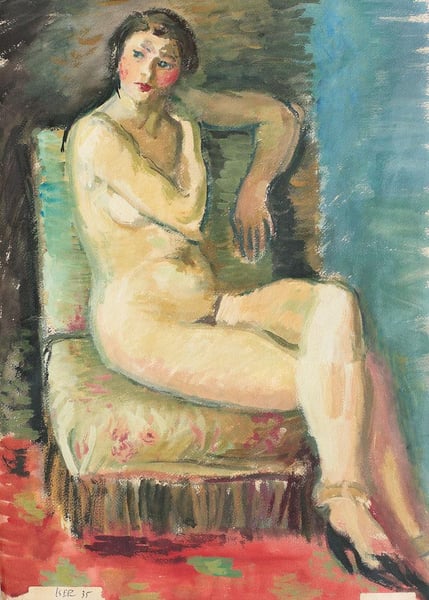
Iosif Iser’s Nude on the Chair is a compelling example of how Expressionism was adapted within the Romanian avant-garde of the early 20th century. While the genre—the reclining or seated nude—has deep roots in Western academic painting, Iser subverts its conventions through the expressive distortions and heightened emotionality that define the Expressionist movement.
Significance within Expressionism and the Nude Genre
-
Emotional Distortion Over Idealization: Unlike the classical nude, which emphasizes harmonious proportion and idealized beauty, Iser’s figure is marked by angular, almost jarring contours and a compressed, awkward pose. The chair—a mundane domestic object—anchors the composition, but the figure’s relationship to it feels uneasy, suggesting psychological tension rather than passive repose. This aligns with Expressionism’s goal of conveying inner states through formal deformation.
-
Color as Emotional Force: Iser likely employs a palette of dissonant, unblended hues—muted earth tones offset by sharp accents—to heighten the sense of vulnerability or alienation. This use of color is not naturalistic but symbolic, a hallmark of Expressionist painting.
-
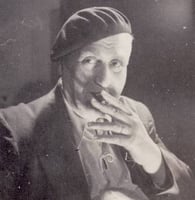
Context in Romanian Modernism: Iser was a key figure in the Romanian modernist scene, influenced by German Expressionism (particularly through his training in Munich) and by the emerging Parisian avant-garde. Nude on the Chair bridges these influences, demonstrating how central European Expressionism could be synthesized with a local sensibility. The work stands as a rejection of the academic nudes of the Romanian school, replacing grace with raw expressivity.
-
Psychological Modernity: The subject’s confrontational gaze or detached expression (typical of Iser’s figures) introduces a psychological dimension that moves the painting beyond mere representation. This introspective quality prefigures later existential themes in European art.
Conclusion: Iser’s Nude on the Chair is significant not only as a masterful example of Expressionist portraiture but also as a culturally specific reinterpretation of the timeless nude. It challenges the viewer to see the human form not as an ideal, but as a vessel for emotion and modern anxiety, placing Iser firmly within the Expressionist tradition while also asserting a distinct Romanian voice.
Visually similar
20 works with related composition and palette
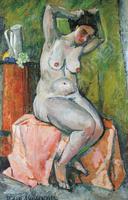
Seated Nude
Ilya Mashkov
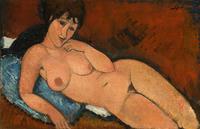
Nude on a Blue Cushion
Amedeo Modigliani
Intimacy
Theodor Pallady
Nude Sitting on a Couch
Suzanne Valadon
Seated Female Nude
Richard Gerstl
Nude
Alexandre Jacovleff
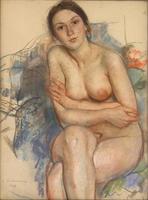
Portrait of Ekaterina Serebriakova
Zinaida Serebriakova
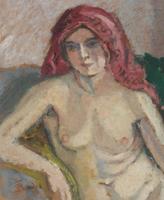
Odalisque
Theodor Pallady
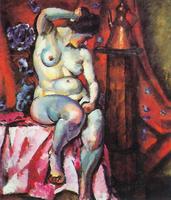
Nude
Ilya Mashkov
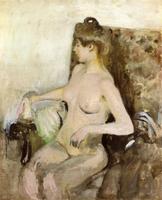
Seated Nude
Edouard Vuillard
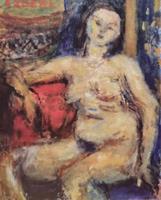
Seated Nude
Bela Czobel
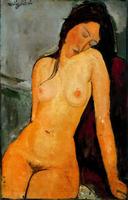
Female nude
Amedeo Modigliani
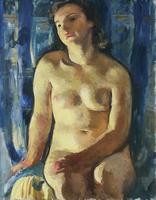
Blue-Gold Nude
Wojciech Weiss
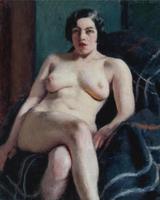
Nude Seated on a Green Rug
Roderic O'Conor
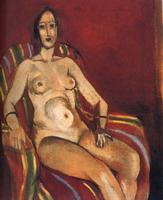
Nude in Front of a Red Background
Henri Matisse
Bela Czobel, Nu Assis 1928
Bela Czobel
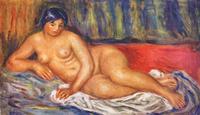
Nude girl reclining
Pierre-Auguste Renoir
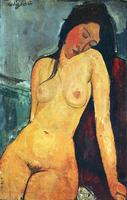
Seated female nude
Amedeo Modigliani
Seated Nude
Ilya Mashkov
Nude
Iosif Iser