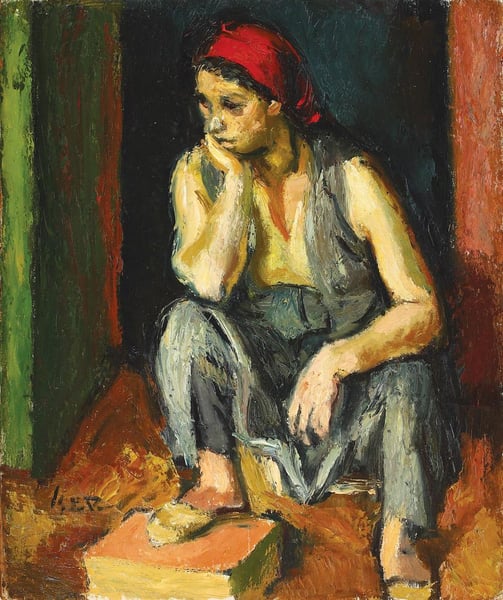
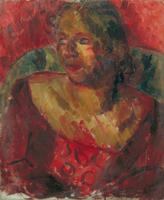
Odalisque with Red Scarf
Expert analysis of Iosif Iser’s Odalisque with Red Scarf
Style: Expressionism, Orientalism · Genre: portrait
The significance of "Odalisque with Red Scarf" by Iosif Iser lies in its remarkable synthesis of Expressionist visual language with the exoticizing conventions of Orientalist portraiture, a fusion that both honors and subverts traditional academic painting.
Within Expressionism: Iser employs a vibrant, almost Fauvist palette—most notably through the titular red scarf, which acts as a bold focal point and emotional anchor. The characteristic distorted or simplified forms and heightened color contrasts are not merely decorative; they convey a subjective, psychological intensity. The odalisque is not a passive, idealized figure but a presence charged with inner life, aligning with Expressionism’s aim to externalize emotion through raw, gestural brushwork and non-naturalistic color.
Within Orientalism: Iser situates the work firmly in the 19th- and early 20th-century tradition of depicting odalisques (concubines in a harem) as objects of Western fantasy. However, he reinterprets this trope through a modernist lens. Instead of the polished, voyeuristic realism of earlier Orientalists (e.g., Ingres or Gérôme), Iser’s handling is rhythmic and painterly, prioritizing the materiality of paint and the expressive power of the red scarf over illusionistic detail. This shift challenges the static, detached gaze typical of academic Orientalism, replacing it with a more dynamic, emotional interaction between viewer and subject.
Significance as a portrait: The genre of portraiture allows Iser to focus on the sitter’s character and mood, even within an Orientalist framework. The red scarf—bold, asymmetrical, and emphatic—functions symbolically: it may signify passion, exoticism, or the artist’s own modern intervention. Iser’s background as a Romanian artist also introduces a cross-cultural nuance; he draws on Balkan and local folk traditions (often featured in his work) while engaging with Western European modernity. This hybridity makes the painting a document of early 20th-century Eastern European modernism, where national identity and international movements converge.
In sum, "Odalisque with Red Scarf" is significant for its ability to reanimate a tired Orientalist convention through Expressionist energy, creating a portrait that is both historically situated and psychologically immediate. Iser’s use of expressive color and brushwork transforms the odalisque from a mere decorative fantasy into a vehicle for modern artistic sensation.
Visually similar
20 works with related composition and palette
Tatar Woman
Iosif Iser
Odalisque
Iosif Iser
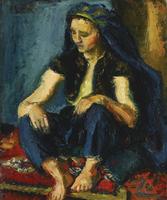
Odalisque
Iosif Iser
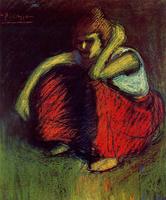
A red skirt
Pablo Picasso

Vaszary János, Lány Lepellel
Vaszary János
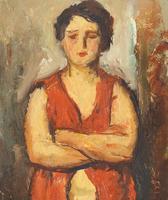
Catrina
Nicolae Tonitza
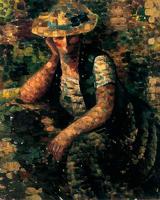
Woman in a Straw Hat
Roger Bissière

Odalisque
Iosif Iser

Thinking
Nicolae Vermont
Waitress
Nikola Martinoski
Thinking
Nicolae Vermont
Woman in an Oriental Costume
Pierre-Auguste Renoir
Vera Cuningham in a Chair
Matthew Smith
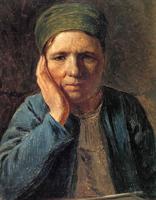
A Peasant Woman, Resting on Her Hand
Alexey Venetsianov
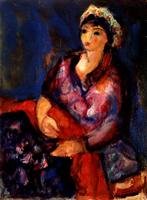
Oriental Woman
Alexander Bogen
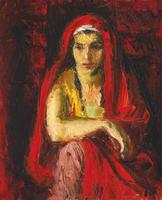
The Red Shawl
Iosif Iser

Portrait of a Young Lady
George Luks

Thinking
Ipolit Strambu
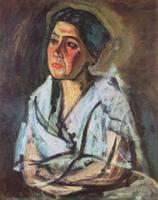
Margitka
Bertalan Por
Vera Cuningham. Head and Shoulders
Matthew Smith