Constantin Piliuta sanatçısının Springtime eseri hakkında uzman analizi
Tarz: Post-Impressionism · Tür: animal painting
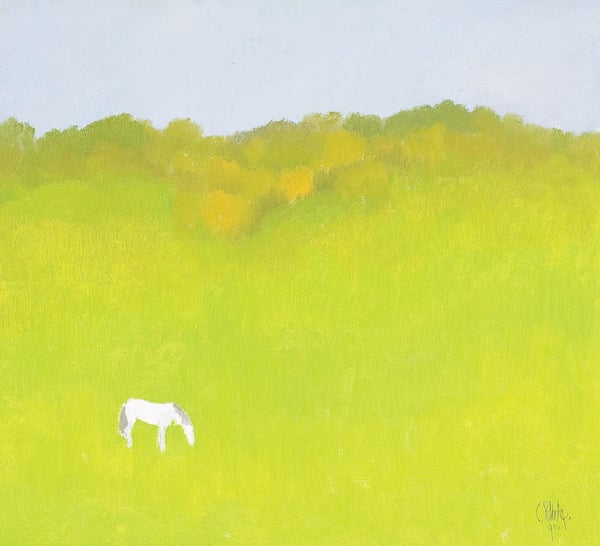
This analysis focuses exclusively on the structured facts provided: "Springtime" by Constantin Piliuta, a Post-Impressionist animal painting.
As an animal painting executed in a Post-Impressionist style, "Springtime" by Constantin Piliuta gains its significance by merging two distinct artistic concerns: the genre tradition of animal depiction and the expressive, subjective language of Post-Impressionism.
Within the Post-Impressionist period (roughly 1885–1910 and its lasting influence), animal painting was often a vehicle for bucolic sentiment or naturalist study. Piliuta's work, however, reorients the genre toward emotional and atmospheric intensity. The title "Springtime" suggests a focus on seasonal renewal, but the Post-Impressionist treatment likely prioritizes symbolic color, rhythmic brushwork, and the animal as a conduit for mood rather than mere biological accuracy. This aligns with the movement's break from Impressionism’s optical fidelity, instead emphasizing the artist's personal response to the subject.
The significance of "Springtime" lies in how it uses animal imagery to abstract and amplify the feeling of rebirth. By placing an animal—often a symbol of instinct and life cycles—within the charged, vibrant palette of Post-Impressionism (for example, greens, yellows, and warm earth tones typical of the season), Piliuta transforms a simple pastoral motif into a meditation on nature's energy. This approach distinguishes the work from earlier, more literal animal paintings (e.g., by Rosa Bonheur) and aligns it with the expressive, synthetic tendencies of artists like Paul Gauguin or Vincent van Gogh, who used flora and fauna not as documentary subjects but as expressive elements in a symbolic whole.
For Piliuta, a Romanian artist working in the mid-20th century, "Springtime" also represents a regional adaptation of Post-Impressionist principles, applying a modern European visual language to local, agrarian themes. Its significance is thus twofold: it demonstrates the enduring influence of Post-Impressionism beyond its original French context, and it elevates the animal painting genre from anecdotal charm to a sophisticated vehicle for emotional and seasonal expression.
Görsel olarak benzer
İlişkili kompozisyon ve renk paletine sahip 20 eser
Two Horses in a Pasture
Edgar Degas
Prairie Shower
Maynard Dixon
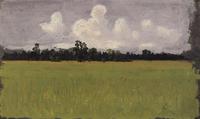
Autumn. Steppe
Arkhyp Kuindzhi
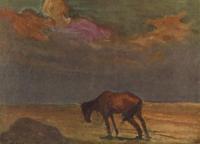
Gloomy Hungarian Fate
Janos Tornyai
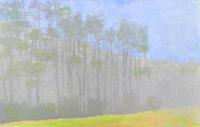
Treeline in a Blue Haze
Wolf Kahn
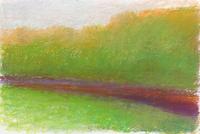
Glimpse of Magenta
Wolf Kahn
Trees
Hryhorii Havrylenko
Pale
Wolf Kahn
Horse in Forest
Maria Bozoky
Beach
Hryhorii Havrylenko
Another Spring
Jane Wilson
“Paysage, probablement la Normandie”
Ker-Xavier Roussel
Landscape with Horses
Pierre-Auguste Renoir
Les trois chevaux
Jean Hugo
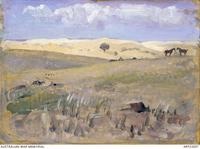
Ayunkara
George Washington Lambert
San Leandro Bay
Xavier Martinez
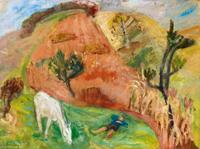
Berény Róbert, Pihenő Fiú,
Berény Róbert
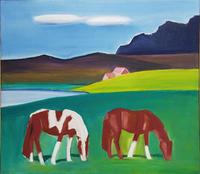
Two Horses in a Landscape
Louisa Matthiasdottir
Sunset Seen from a Beach with Breakwater
J.M.W. Turner
Horses at the ford
Giovanni Segantini