In the City
Expert analysis of Constantin Piliuta’s In the City
Style: Post-Impressionism · Genre: cityscape
Expert Analysis of "In the City" by Constantin Piliuta
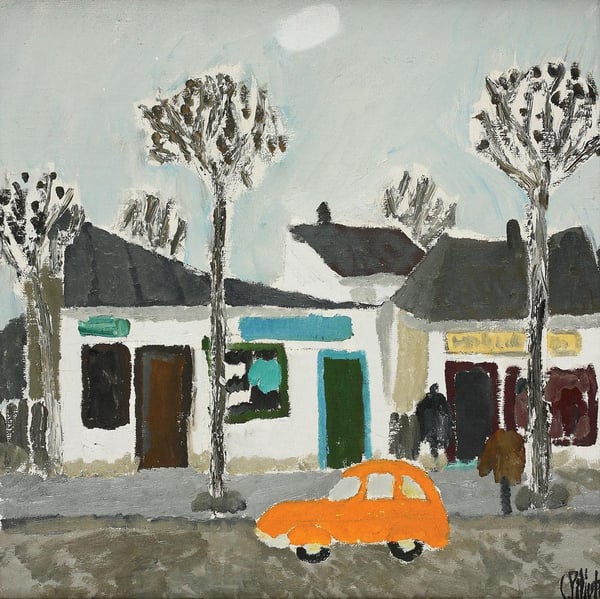
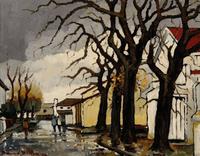
Constantine Piliuta’s "In the City" is a compelling example of Post-Impressionist cityscape painting, capturing the dynamic tension between modern urban life and the artist’s subjective emotional response. As a Romanian painter active in the mid-20th century, Piliuta worked within the broader Post-Impressionist tradition while infusing it with a distinctly Eastern European sensibility.
What makes this work significant lies in how it embodies the core Post-Impressionist departure from Impressionism’s purely optical approach. Rather than simply recording fleeting light effects, Piliuta uses the city as a vehicle for expressive mood and structured composition. The cityscape genre here allows him to explore the rhythms of streets, architecture, and the anonymous crowd, but filtered through bold, often arbitrary color choices and simplified forms—hallmarks of Post-Impressionism.
The work’s significance is twofold:
-
Within Post-Impressionism — "In the City" demonstrates the movement’s shift toward emotional and symbolic content. The city is not just a backdrop but a psychological space, where color (likely heightened and non-naturalistic) and brushwork convey the energy or alienation of urban existence. This aligns with the legacy of artists like Cézanne, van Gogh, or Seurat, who each reimagined reality through personal vision.
-
Within Romanian Modernism — Piliuta was a key figure in bringing Post-Impressionist idioms to Romanian art. In a period when the avant-garde was thriving, his cityscapes offer a bridge between local traditions and international modernist currents. "In the City" stands as a testament to how a mature Post-Impressionist style could render a familiar urban environment—perhaps Bucharest—as simultaneously intimate and monumental.
While specific visual details are not provided, the work’s significance resonates through its confident use of the Post-Impressionist language: a cityscape that is less a documentary record and more a personal, constructed vision of modern life.
Visually similar
20 works with related composition and palette
Czene Béla, Szolnoki Utca
Czene Béla
Street in Tapolca
Maria Bozoky
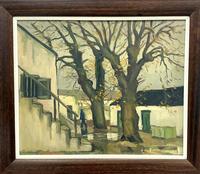
LABOURIE - Paarl
David Botha
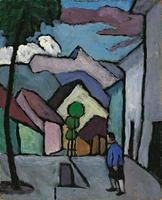
Hauptstrasse (Mit Mann)
Gabriele Munter
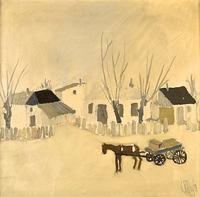
Winter in the Village
Constantin Piliuta
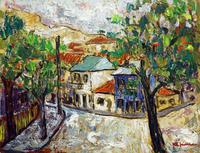
At Balcic
George Stefanescu
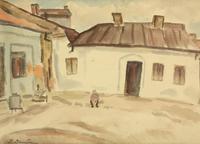
In front of the House
Stefan Dimitrescu
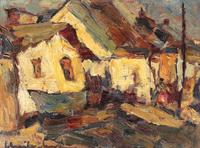
Fringe of Bucharest
Rudolf Schweitzer-Cumpana
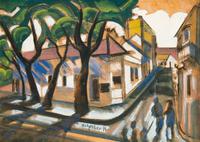
Scheiber Hugó Utcán, Gouache, Szén,papír, 41x57.5cm
Scheiber Hugó
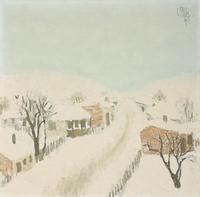
Winter Landscape
Constantin Piliuta
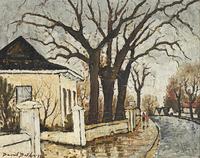
Hoofstraat, Paarl ,1973
David Botha
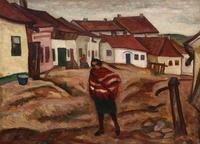
Street in Iași
Stefan Dimitrescu
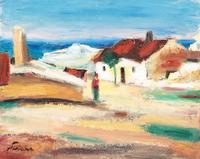
Evening at Balcic
Francisc Sirato
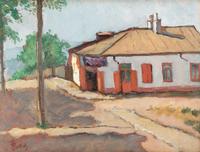
Towards the Buffet
Theodor Pallady
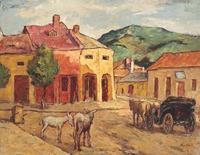
Street in Huși
Adam Baltatu
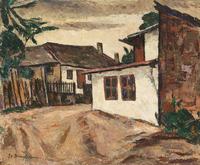
Street
Stefan Dimitrescu
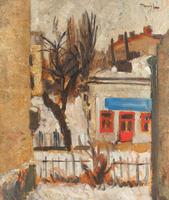
Winter Landscape
Nicolae Tonitza
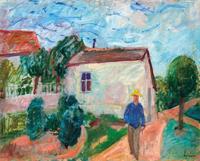
Berény Róbert Kertben Sétáló
Berény Róbert
A Street Scene on a Rainy Day 1984
David Botha
Shop in Autumn
Maria Bozoky