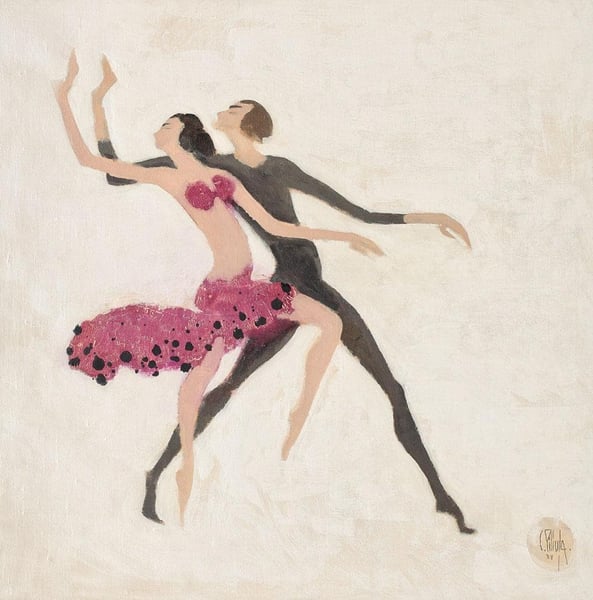
Flamenco
Analisi esperta di Flamenco di Constantin Piliuta
Stile: Post-Impressionism · Genere: genre painting
Expert Art Historical Analysis: "Flamenco" by Constantin Piliuta
Constantin Piliuta’s Flamenco stands as a compelling example of Post-Impressionist genre painting, a work that channels the raw emotional and kinetic energy of its subject through the hallmarks of this transformative style. The significance of the piece lies in how Piliuta uses Post-Impressionist techniques—specifically, a departure from naturalistic representation in favor of expressive color, rhythmic line, and subjective mood—to elevate a humble genre scene into a universal study of passion and movement.
As a genre painting, Flamenco captures a moment of everyday cultural life: the performance of the traditional Spanish dance. However, Piliuta transcends mere documentary by employing the Post-Impressionist emphasis on the artist’s personal response. The brushwork likely eschews realistic detail, instead using bold, visible strokes to suggest the rapid, percussive footwork and the swirling fabric of the dancer’s dress. Color choice—perhaps intense reds, deep blacks, and stark whites—likely serves not to copy reality but to dramatize the emotional heat of the dance. This technique aligns with Post-Impressionist pioneers like Van Gogh and Gauguin, who used color as a carrier of emotion rather than description.
What makes Flamenco significant within its style and period is its fusion of local cultural specificity with a universal pictorial language. By taking a genre subject (a performance often associated with folkloric identity) and treating it through a Post-Impressionist lens, Piliuta demonstrates how this style could modernize traditional scenes without losing their soul. The significance is in the tension: the dance’s formal, ritualistic structure is animated by the artist’s spontaneous, gestural mark-making. This balance between representation and abstraction places the work firmly in the legacy of Post-Impressionism, where the ordinary becomes extraordinary through the artist’s subjective vision.
Visivamente simili
20 opere con composizione e palette affini
Ballet Dancers
Constantin Piliuta
Latin American Grand Final
John Brack
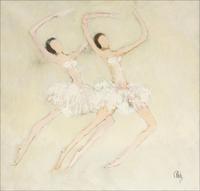
Ballerinas
Constantin Piliuta
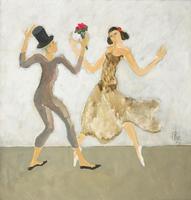
Pierrot și Colombina 1982
Constantin Piliuta
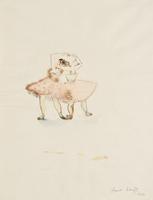
Anna Margit, Táncosnők
Anna Margit
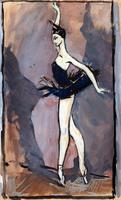
Ballerina O. Potapova
Zoe Lerman
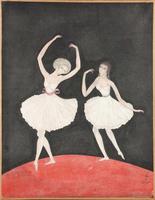
Dancers
Tsuguharu Foujita
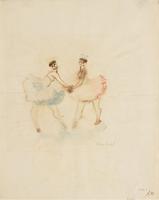
Anna Margit, Táncosnők 1
Anna Margit
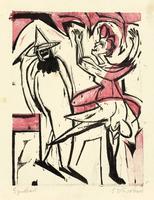
Dance
Ernst Ludwig Kirchner
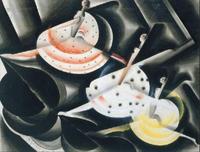
Scheiber Hugó, Három Táncosnő 1925
Scheiber Hugó
Scheiber Hugó, Három Táncosnő 1925
Scheiber Hugó
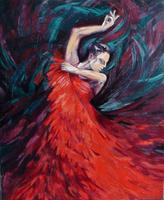
Flamenco
Małgorzata Serwatka
Three Ballerinas
Tsuguharu Foujita
English Dance Couple
Ernst Ludwig Kirchner
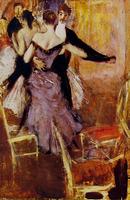
Ballerina in Mauve
Giovanni Boldini
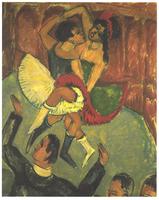
Dance of Negros
Ernst Ludwig Kirchner
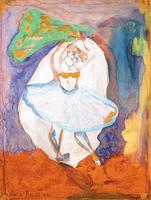
Anna Margit, Balerina, 1941
Anna Margit
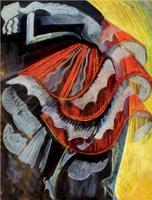
Scheiber Hugó, Táncolo
Scheiber Hugó
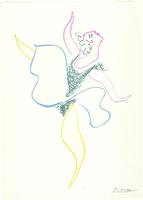
Dancer
Pablo Picasso
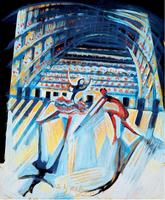
Scheiber Hugó Esti Mulató, 1930
Scheiber Hugó