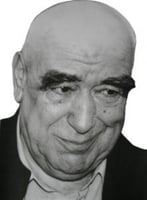
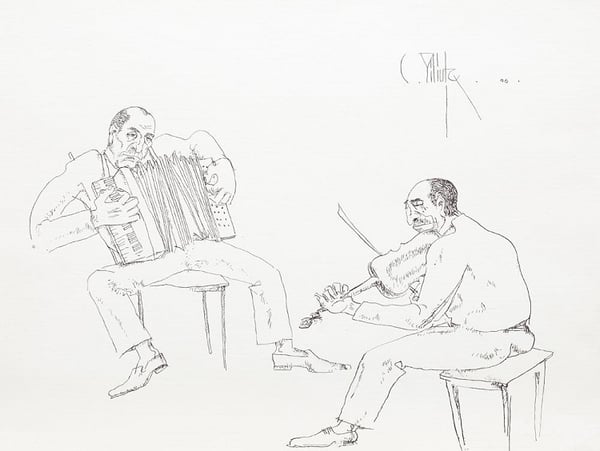
Lautari
Analisi esperta di Lautari di Constantin Piliuta
Stile: Post-Impressionism · Genere: genre painting
Expert Analysis of "Lautari" by Constantin Piliuta
Constantin Piliuta’s Lautari stands as a compelling example of how Post-Impressionist principles were adapted to convey the cultural soul of rural Romania. As a genre painting, it depicts a group of traditional folk musicians (lautari), capturing a moment of communal performance with profound emotional and symbolic depth.
Significance within Post-Impressionism:
Piliuta channels the Post-Impressionist emphasis on subjective expression and formal structure. Rather than replicating a naturalistic scene, he distills the essence of the music-making through bold, rhythmic brushwork and a heightened color palette. The composition likely pushes beyond mere observation, using color (warm ochres, deep earth tones, and vibrant accents) to evoke the raw energy and melancholy of the folk melodies. This approach aligns with the movement’s rejection of Impressionism’s fleeting light effects in favor of more deliberate, emotionally charged constructions—a trajectory seen in the works of van Gogh or Gauguin, here translated into a distinctly Eastern European context.
Cultural and Genre Significance:
As genre painting, Lautari serves as both a documentary and a tribute. The lautari were central figures in Romanian village life, custodians of oral tradition and collective memory. Piliuta elevates this everyday activity to a near-sacred ritual, capturing the musicians’ concentration and the implied connection with their audience. The painting’s significance lies in its ability to freeze a transient performance into a timeless emblem of national identity, while simultaneously exploring universal themes of creativity, tradition, and human connection.
Art Historical Context:
Piliuta (1909–1991) worked through a period when Romanian modernism sought to reconcile Western avant-garde trends with local folk heritage. Lautari exemplifies this synthesis: the painterly freedom and emotional intensity of Post-Impressionism are harnessed to celebrate indigenous culture, avoiding both academic naturalism and abstract formalism. The work thus stands as a bridge—rooted in the specific, yet resonant with the broader Post-Impressionist quest for authentic, expressive representation.
Visivamente simili
20 opere con composizione e palette affini
The blue fiddler
Marc Chagall
Straatmusikante
Johannes Meintjes
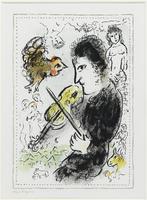
Fiddler with ruster
Marc Chagall
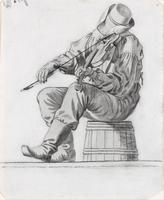
Fiddler (study for the Jolly Flatboatmen)
George Caleb Bingham
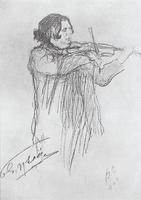
Eugene Ysaye
Valentin Serov
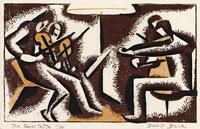
The String Quartette
Dorrit Black
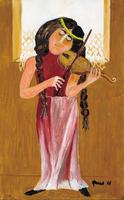
Anna MArgit, Szonáta
Anna Margit
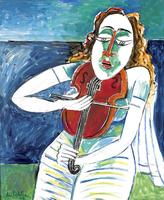
The Violin Player
Paritosh Sen
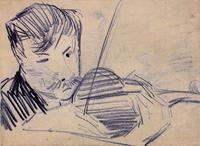
Violinist Seen from the Front
Vincent van Gogh
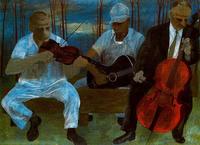
Four Piece Orchestra
Ben Shahn
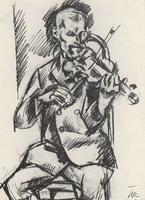
Violinist
Pyotr Konchalovsky
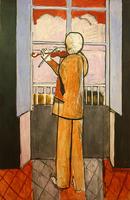
The Violinist at the Window
Henri Matisse
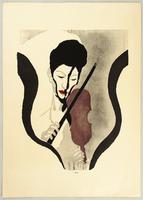
Impression of a Violinist (Portrait Of Suwa Nejiko)
Koshiro Onchi
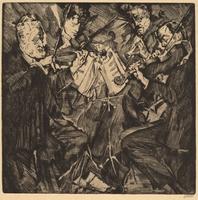
Rose Quartett
Max Oppenheimer
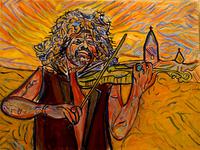
Ara Malikian
Cricorps
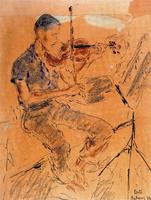
Leonel Alberú playing the violin
Arturo Souto
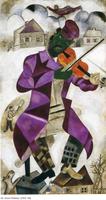
The Green Violinist
Marc Chagall
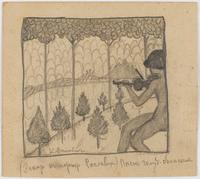
Song of the Blue Clouds
Kazimir Malevich
Anna Margit, Lány Hegedűvel 1944
Anna Margit
Itinerant players
Marc Chagall