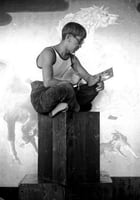
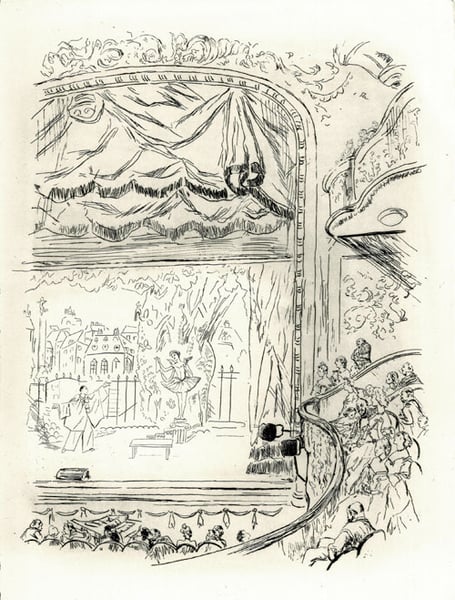
Tsuguharu Foujita の Maligny の専門的な分析
スタイル:Magic Realism · ジャンル:genre painting
Expert Analysis of "Maligny" by Tsuguharu Foujita
Tsuguharu Foujita’s "Maligny" stands as a compelling example of Magic Realism within the genre painting tradition. The work’s significance lies in how Foujita masterfully merges the meticulous observation of everyday French rural life—a classic genre painting subject—with an uncanny, dreamlike atmosphere that defines the Magic Realist ethos.
Placement within Magic Realism
Magic Realism emerged in the early 20th century as a mode of painting that presents the mundane with such hyper-real precision that it acquires a mysterious, often unsettling quality. In "Maligny," Foujita achieves this by applying his signature delicate, ink-like lines and milky, luminous whites—techniques borrowed from Japanese ukiyo-e—to a seemingly ordinary scene. The result is a reality that feels both tangible and otherworldly. The ordinary details of a French village become imbued with a quiet, suspended time, typical of Magic Realism’s tendency to render the familiar strange.
Significance as Genre Painting
As a genre painting, "Maligny" belongs to a long tradition of depicting scenes from everyday life, from Dutch Golden Age interiors to 19th-century Realist works. Foujita’s contribution is his transformative synthesis of Eastern and Western pictorial sensibilities. While the subject—likely a rustic courtyard, street, or interior in the village of Maligny—is grounded in the real, Foujita’s flattened perspective, delicate contour lines, and subtle use of shadow create a sense of heightened reality. The painting captures a moment that feels both intimate and remote, as though seen through a veil of memory.
Cross-Cultural Innovation
Foujita was a central figure in the École de Paris, and "Maligny" exemplifies his ability to transcend cultural boundaries. His Japanese training in sumi-e and ink painting infuses the Western oil-on-canvas tradition with a distinctive clarity and precision. In Magic Realism, this cross-pollination is particularly potent: the precision of his brushwork lends credibility to the scene, while the slight distortion of perspective or lighting introduces the magic. This duality makes "Maligny" significant as a work that redefines genre painting for the modern era, proving that the everyday can be a portal to the metaphysical.
Conclusion
Ultimately, "Maligny" is significant because it encapsulates Foujita’s unique position as a bridge between cultures and artistic movements. Within Magic Realism, it demonstrates how a seemingly simple genre scene can be transformed into a repository of quiet mystery. Within the history of genre painting, it revitalizes the form through a synthesis of Eastern aesthetics and Western subject matter, creating a timeless work that invites the viewer to look closer—and to question the boundary between reality and reverie.
ジャンル
スタイル
視覚的に類似
構図やパレットが近い作品 20 件
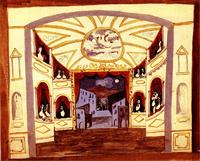
Scene design for "Pulcinella"
Pablo Picasso
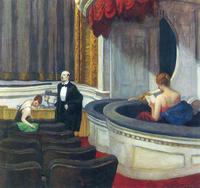
Two on the Aisle
Edward Hopper
The Variety Theatre in Paris
Magnus Enckell
View from the Side Boxes (Opera), Philadelphia
Morton Schamberg
Interior View of the Finnish Opera
Magnus Enckell
Théâtre du Gymnase in Paris
Adolph Menzel
In the box
Boris Kustodiev
Barbara Hutton at the Gran Teatro Cervantes in Tangier
Consuelo Hernández
Denmark. A Small Theatre.
Mstislav Dobuzhinsky
First Row Orchestra
Edward Hopper
The Box with the Guilded Mask
Henri de Toulouse-Lautrec
The Box at the Opera
Edgar Degas
Letter «T»
Alexandre Benois
Gross Arnold, A Művészet Dícsérete
Gross Arnold
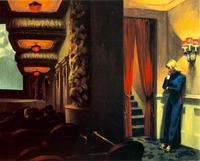
New York Movie
Edward Hopper
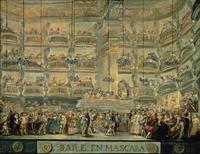
Baile en máscara
Luis Paret y Alcazar
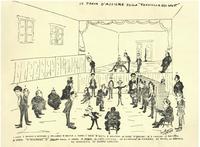
'La Fanciulla Del West' Rehearsal
Enrico Caruso
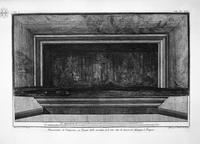
Demonstration of in large atrium aforesaid
Giovanni Battista Piranesi
The Old Burgtheater
Gustav Klimt
Italian comedy
Alexandre Benois