
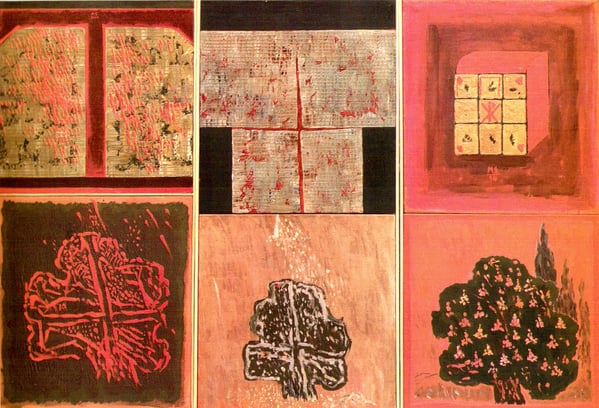
Analisi esperta di Polyptic di Marin Gherasim
Stile: Byzantine, Expressionism · Genere: symbolic painting
Expert Analysis: "Polyptic" by Marin Gherasim
Marin Gherasim’s "Polyptic" stands as a striking synthesis of two seemingly divergent artistic languages—Byzantine iconography and Expressionist emotion—creating a work that is both deeply rooted in tradition and boldly modern. As a symbolic painting executed in a polyptych format (a multi-panel structure historically reserved for altarpieces and ecclesiastical art), Gherasim invites the viewer into a layered dialogue between sacred structure and personal, free expression.
Significance within Style and Period
The work’s primary significance lies in its masterful reconciliation of Byzantine rigidity with Expressionist intensity. Byzantine art is characteristically hieratic, frontal, and dominated by gold ground and formalized compositions that convey spiritual transcendence. Expressionism, by contrast, erupts with subjective feeling, distorted forms, and vibrant, often jarring color. Gherasim does not simply juxtapose these styles; he infuses one with the soul of the other. The polyptych’s divisions—each panel a self-contained unit—echo the compartmentalized narratives of medieval icons, yet the painterly handling, visible brushwork, and emotional coloration break the static symmetry, injecting a raw human vulnerability into the sacred framework.
Symbolism and Genre
As a symbolic painting, "Polyptic" functions on multiple allegorical levels. The polyptych form itself symbolizes the fragmentation of experience—or of faith—in the modern world. Gherasim likely employs traditional Byzantine motifs (halos, gesturing saints, architectural niches) but recontextualizes them through an Expressionist lens, turning stable icons into carriers of contemporary anxiety or longing. The work can be read as a meditation on spiritual continuity amidst modern disarray, where ancient symbols are not discarded but reanimated with visceral emotion.
Legacy and Contribution
Within the context of late 20th-century Eastern European art, Gherasim’s "Polyptic" is a landmark in the revival of Byzantine aesthetics filtered through modern subjectivity. It challenges the notion that tradition and innovation are opposites, proving that iconic stillness can coexist with expressive turbulence. The piece thus becomes a bridge: between East and West, between sacred and profane, and between historical reverence and avant-garde freedom. Its significance endures as a testament to art’s power to hold contradictions and find new resonance in old forms.
Genere
Visivamente simili
20 opere con composizione e palette affini
Untitled
Alfred Manessier
Rouge et noir
Roger Bissière
0-9 (ULAE 19)
Jasper Johns
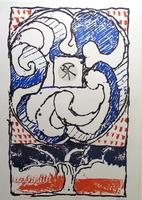
Untitled from the series Windows
Pierre Alechinsky
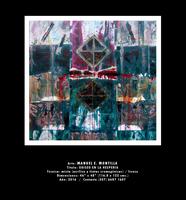
ODISEO EN LA HESPERIA
Manuel E. Montilla
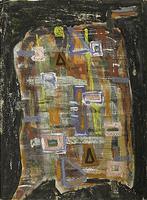
Untitled (Abstraction)
Betty Parsons
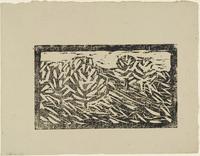
Landscape (Polling)
Christian Rohlfs
Untitled
Keith Haring
Composition 119 (Oiseau rouge sur noir)
Roger Bissière
Untitled (Press Series)
Brice Marden
Untitled (Press Series)
Brice Marden
A Print from Saundarya Lahiri
Akkitham Narayanan
Head (Tête)
Pierre Alechinsky
Composição concreta II
Rodrigo Gontijo
Prapor
Horia Bernea
Xilografia
Julius Evola
Yellow and black composition
Roger Bissière
Herbarium of Structures
Oleksandr Aksinin
Circle Image No. 25
Louis Schanker
Abstract Composition, Knossos
Jean Arp