Expertenanalyse zu Nicolae Vermonts Sewer
Stil: Impressionism, Realism · Genre: genre painting
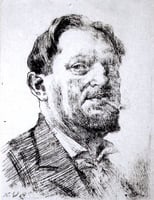
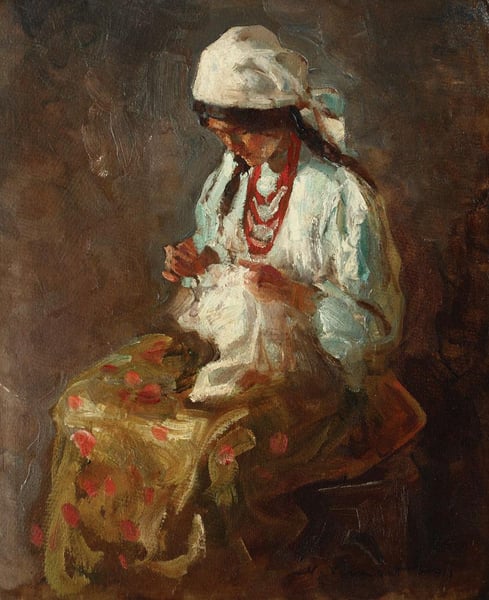
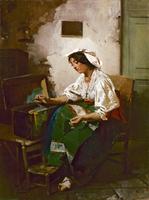
This analysis is based solely on the provided facts: artwork "Sewer," artist Nicolae Vermont, style comprising both Impressionism and Realism, and genre painting.
The significance of Nicolae Vermont’s “Sewer” lies in its compelling synthesis of two often antithetical movements—Impressionism and Realism—within the realm of genre painting. By depicting a mundane, even gritty subject (implied by the title “Sewer”) through the lens of these styles, Vermont elevates the everyday labor of urban life to a subject worthy of aesthetic and social contemplation.
As a genre painting, “Sewer” focuses on a scene from ordinary life, yet the choice of subject matter—likely workers or conditions associated with a sewer—is distinctly Realist in its embrace of the unglamorous. Realism traditionally emphasized unvarnished depictions of the working class and industrial environments. Vermont aligns with this tradition by selecting a lowly, often overlooked infrastructure, challenging the viewer to engage with the social realities of sanitation, labor, and urban poverty.
Simultaneously, the Impressionist aspect suggests a shift in technique: loose brushwork, concern with atmospheric effects (light, shadow, moisture), and a sense of fleeting moment. Rather than a didactic or overtly political statement, Vermont uses Impressionism’s formal innovations to capture the ephemeral play of light on wet surfaces, the dimness of underground spaces, or the reflectivity of water and metal. This interplay of styles means the artwork is not merely a documentary record but a sensory experience—a blurred boundary between social observation and painterly sensation.
The work's significance, therefore, is its ability to reconcile two competing artistic goals: the Realist commitment to truth and social awareness, and the Impressionist commitment to perceptual immediacy and chromatic vibrancy. In doing so, “Sewer” becomes a hybrid that expands the vocabulary of genre painting beyond rustic or bourgeois interiors, venturing into the invisible infrastructure of modern cities. It stands as an early example of how art can address pressing social issues without sacrificing the emergent pictorial freedoms of the late 19th and early 20th centuries.
Genre
Visuell ähnlich
20 Werke mit ähnlicher Komposition und Farbpalette
Carmelita Requena
Thomas Eakins
Seaming Wench
Nicolae Vermont
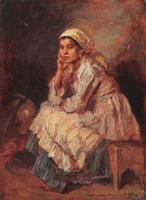
Thinking
Nicolae Vermont

Head of the Old Woman
Konstantin Makovsky
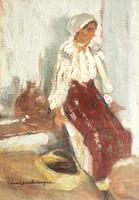
Peasant Woman on Bench
Rudolf Schweitzer-Cumpana
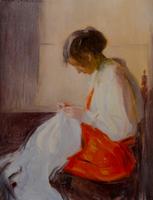
Rapariga Costurando
Antonio Carneiro

Italian girl
George Elgar Hicks

Portrait of Tillie
Robert Henri

Thinking
Nicolae Vermont
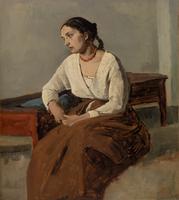
Melancholy Italian Woman (Rome)
Camille Corot
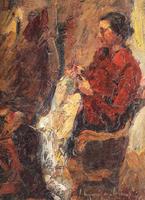
The Wife of the Artist, Sewing
Rudolf Schweitzer-Cumpana
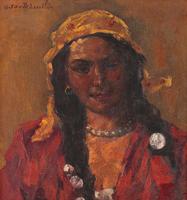
The Yellow Headscarf
Octav Bancila
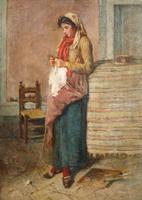
Woman from Gabbro working with crochet
Silvestro Lega
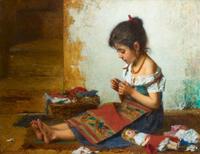
Portrait of a Young Girl
Alexei Harlamoff
Gipsy Woman in the Veranda
Nicolae Vermont

Портрет молодої української дівчини
Микола Пимоненко
Young Roumanian
Pierre-Auguste Renoir
The Flowery Headscarf
Ipolit Strambu
Young Teleb Seated
Theodore Chasseriau
Girl sewing
Domenico Induno