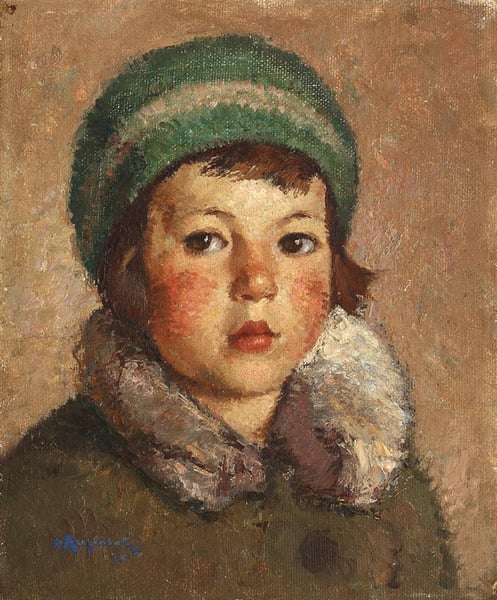
Copil cu beretă verde
Expert analysis of Octav Angheluta’s Copil cu beretă verde
Style: Impressionism · Genre: portrait
Expert Analysis of "Copil cu beretă verde" (Child with Green Beret) by Octav Angheluta
Octav Angheluță’s Copil cu beretă verde stands as a compelling fusion of French Impressionist sensibility with a distinctly Romanian sensibility in portraiture. Painted within the early-to-mid 20th century, the work demonstrates how Angheluță—primarily known for his later expressionist and post-impressionist phases—engaged directly with Impressionism’s core tenets while adapting them to the intimate scale of a child’s portrait.
Significance within Impressionism:
The painting’s significance lies in its masterful handling of light and color to convey psychological presence rather than mere visual likeness. The green beret functions as both a compositional anchor and a chromatic foil: its cool, saturated hue is set against a subtly modulated background of warm, broken tones—likely creams, ochres, and pale grays—that evoke dappled or filtered daylight. This interplay of complementary colors is a hallmark of Impressionist technique, but here it is used not to dissolve form but to define the child’s gentle features through soft, sketch-like brushwork.
Unlike many Impressionist portraits that prioritize atmosphere over individuality (e.g., Renoir’s generalized children), Angheluță maintains a notable specificity in the child’s expression—a quiet, slightly guarded gaze that suggests inner life. The loose handling of the beret’s fabric and the hair, with visible, rapid strokes, contrasts with a more resolved treatment of the eyes and mouth, directing the viewer’s attention to the subject’s emotional core. This tension between spontaneity and precision marks a significant contribution: it demonstrates Impressionism’s capacity for psychological depth when freed from strict outer-air landscapes and applied to the domestic portrait genre.
Context and Legacy:
In the broader Romanian art scene, Angheluță’s adoption of Impressionism in the 1930s and 1940s was part of a generation seeking to modernize national painting by integrating Western European avant-garde currents. Copil cu beretă verde therefore represents not only a personal stylistic engagement but also a cultural negotiation—importing French color theory while retaining a local intimacy in subject matter. The work’s significance lies in its proof that Impressionism, often associated with fleeting outdoor scenes, could be translated successfully into a structured, indoor portrait that still pulses with light, movement, and emotion. The green beret, a simple accessory, becomes a symbol of this synthesis: bright, modern, and rooted in the everyday life of a Romanian child.
Visually similar
20 works with related composition and palette
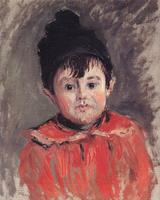
Portrait of Michael with Hat and Pom Pom
Claude Monet
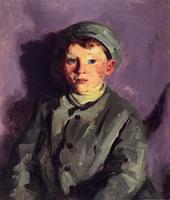
Bucko O'Malley (Charles)
Robert Henri
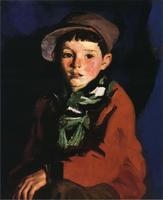
Listening Boy
Robert Henri
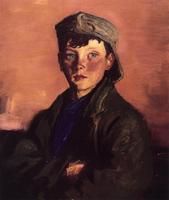
Charles O'Malley
Robert Henri
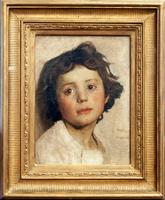
Face study. Portrait of a little girl
Pellizza da Volpedo
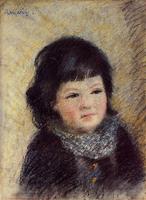
Portrait of a Child
Pierre-Auguste Renoir
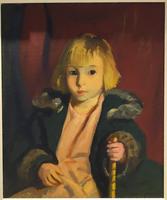
Carl
Robert Henri
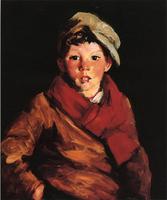
Cafferty
Robert Henri
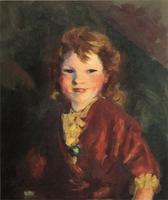
Portrait of Stella
Robert Henri
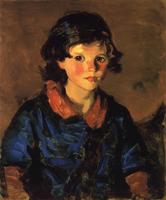
Mary Ann Caferty
Robert Henri
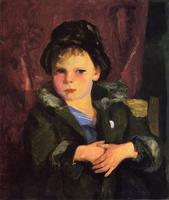
Irish Boy
Robert Henri
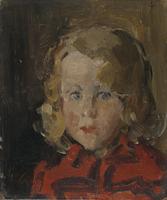
Vincent Willem Van Gogh
Isaac Israels
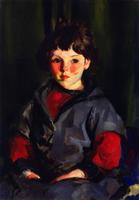
Untitled (also known as Alanna)
Robert Henri
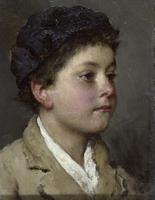
Head of a boy, Venice
Eugene de Blaas
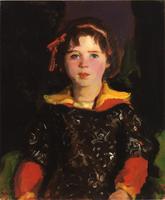
Bridgie (also known as Girl with Chinese Dress)
Robert Henri
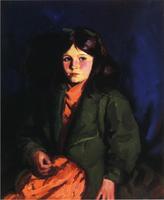
Portrait of Mary Patten
Robert Henri
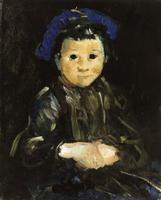
Boy with Blue Cap
George Luks
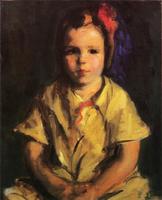
Portrait of Faith
Robert Henri
Modok Mária. Lányportré
Modok Mária
The Irish Boy in Blue Denim - Anthony Lavelle
Robert Henri