Análisis experto de Marina de Samuel Mutzner
Estilo: Post-Impressionism · Género: landscape
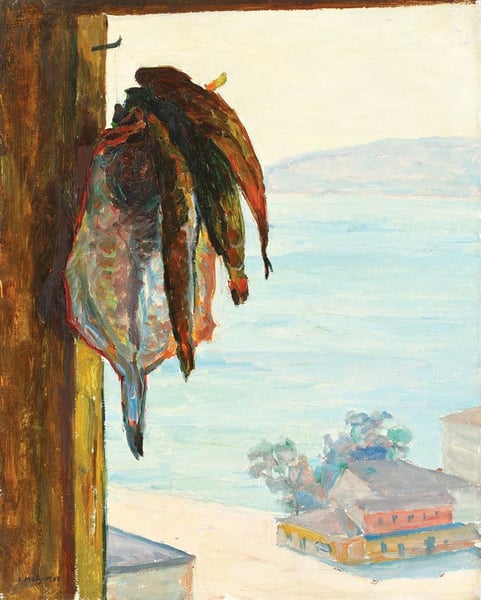
"Marina" by Samuel Mutzner exemplifies Post-Impressionism’s shift from naturalistic representation to expressive, subjective interpretation. As a landscape, it captures a marina scene not merely as a topographical record, but as a vehicle for emotional and sensory experience. Mutzner likely employs the hallmark Post-Impressionist techniques of bold, non-naturalistic color (perhaps heightened blues, greens, or warm earth tones), visible brushstrokes that convey texture and movement, and a composition that prioritizes atmosphere over strict perspective. The significance lies in how the work reflects the movement’s core concern: to express the artist’s personal response to the subject—the rhythmic ebb of water, the play of light on boats and shore—rather than objective accuracy. Within the broader Post-Impressionist landscape tradition (carried forward by artists like Cézanne, Van Gogh, and Seurat), Mutzner contributes a nuanced, intimate view that balances structured form with lyricism, making "Marina" a distinctive example of how the style reinvented the ordinary landscape as a realm of pure visual and emotional resonance.
Género
Estilo
Visualmente similares
20 obras con composición y paleta relacionadas
Still Life. Fish.
Pyotr Konchalovsky
Fish in a Dish
Pierre Bonnard
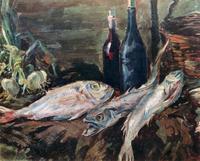
Still life with fish
Konstantin Korovin
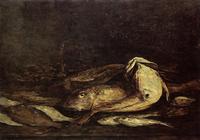
Mullet and Fish
Eugene Boudin
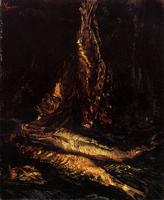
Still Life with Bloaters
Vincent van Gogh
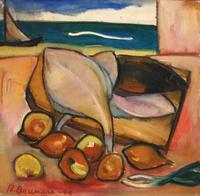
Bute
Biruta Baumane
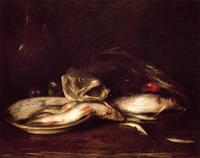
Still Life with Fish
William Merritt Chase
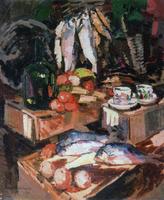
Fish
Konstantin Korovin
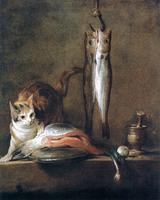
Still Life with Cat and Fish
Jean-Baptiste-Simeon Chardin
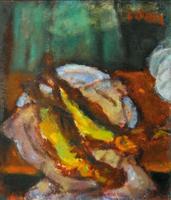
Czóbel Béla Halas Csendélet
Bela Czobel
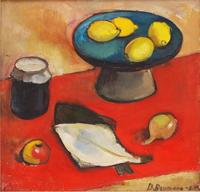
Still Life with Lemons
Biruta Baumane
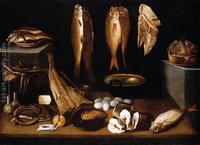
Still Life
Francisco Barrera
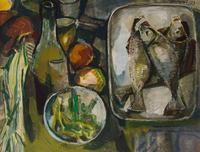
Still Life with Fish
Petros Malayan
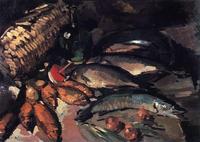
Fish
Konstantin Korovin
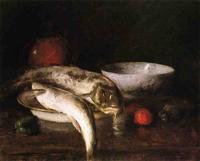
Still Life with Fish
William Merritt Chase
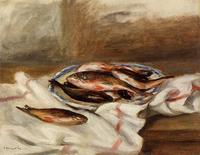
Still Life with Fish
Pierre-Auguste Renoir
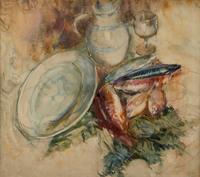
Still Life with Fish
Frances Hodgkins
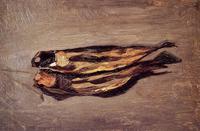
Dried Fish
Frederic Bazille
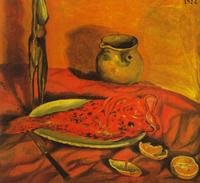
Still Life (Pulpo y scorpa)
Salvador Dali
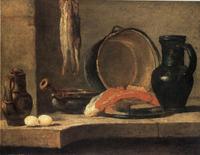
Still Life of Kitchen Utensils
Jean-Baptiste-Simeon Chardin