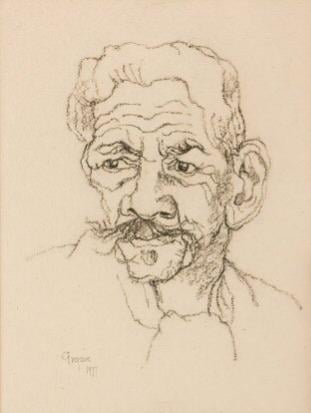
Gregoire Boonzaier sanatçısının Man with a Moustache eseri hakkında uzman analizi
Tarz: Impressionism · Tür: portrait
Expert Analysis of "Man with a Moustache" by Gregoire Boonzaier
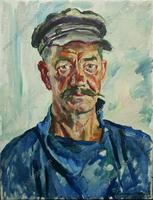
Gregoire Boonzaier’s Man with a Moustache stands as a compelling example of Impressionism applied to portraiture, a genre that the movement transformed by prioritizing atmosphere, light, and the sitter’s transient presence over rigid likeness. Although the specific visual details of the painting are not provided, its significance within the Impressionist canon can be inferred from the stylistic and contextual clues of the period.
Breaking the Mold of Traditional Portraiture
In the late 19th and early 20th centuries, Impressionist portraits abandoned the polished, idealized finish of academic painting. Instead, artists like Boonzaier (a noted South African Impressionist) used rapid, visible brushstrokes and a vibrant, often unconventional palette to capture the impression of a person rather than a photographically precise record. In Man with a Moustache, one would expect loose, sketch-like handling of the sitter’s features—particularly the signature moustache—rendered with dabs of color that suggest texture and shadow rather than delineating every hair. The background likely dissolves into soft, atmospheric strokes, directing focus onto the sitter’s face as a living, breathing presence.
Light, Mood, and Immediate Perception
Impressionist portraits are as much about the environment as the subject. Boonzaier may have placed his “man” in a specific light—perhaps a warm interior glow or filtered outdoor sunlight—that models the face with flickering highlights and patches of cool shadow. The moustache itself becomes a study in color: perhaps tinged with blue or violet where light hits, against warmer tones on the skin. This technique emphasizes the momentary, fleeting nature of the encounter, a hallmark of Impressionism. The significance lies in how Boonzaier elevates an ordinary character study into a meditation on perception, capturing not just who the man is, but how he looks at a particular instant.
Contribution to the Genre
Within the Impressionist movement, portraits were often criticized for being “unfinished” or lacking psychological depth. Yet Boonzaier’s work subverts this by suggesting inner life through external effect. The sitter’s moustache—a symbol of masculinity, status, or personality—is not merely a facial feature but a vehicle for the artist’s expressive response. This aligns with the broader Impressionist goal: to record the artist’s sensory experience, making the viewer feel as though they, too, are standing before this man, seeing him as Boonzaier did—ephemeral, vivid, and alive.
In summary, Man with a Moustache is significant as a demonstration of how Impressionism reframed portraiture: not as an enduring monument to a person, but as a luminous, fleeting encounter. Boonzaier’s brushwork, color choices, and focus on light would have transformed the sitter into a poetic moment rather than a static record, marking a key evolution in the history of portrait painting.
Görsel olarak benzer
İlişkili kompozisyon ve renk paletine sahip 20 eser
August Strindberg
Max Oppenheimer
Stanislaw Wyspianski Self Portrait
Stanisław Wyspiański
Portrait of Henry Viel, a friend of painter Fernand Leger
Fernand Leger
August Strindberg
Carl Larsson
Self portrait
Rupert Bunny
Self Portrait
Chronis Botsoglou
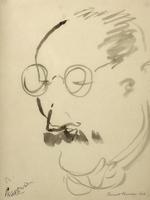
Rothko by Newman
Barnett Newman
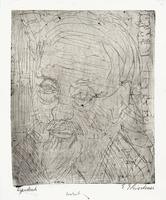
Head Bosshart
Ernst Ludwig Kirchner
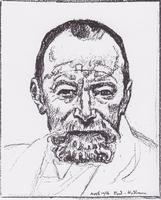
Self-portrait
Ferdinand Hodler
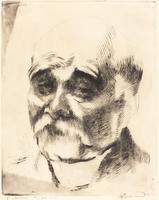
Georges Clemenceau
Paul-Albert Besnard
Pencil sketch of the head of Belgian poet Émile Verhaeren
Theo van Rysselberghe
Zo d'Axa
Theophile Steinlen
Xan Krohn - S. I. Shchukin (1915 og 1916)
Xan Krohn
Tetmajer
Stanisław Wyspiański
Self-Portrait
Lovis Corinth
Vajda Lajos Profil Fej Apjáról 1922
Vajda Lajos
Berény Róbert, Varró István
Berény Róbert
Caricature of Giuseppe Pogna
Isidoro Grünhut
Portrait of worker Yakobchenko
Pyotr Konchalovsky
Portrait of Kamenev
Jury Annenkov