Analisi esperta di Self-Portrait di Gregoire Boonzaier
Stile: Impressionism · Genere: self-portrait
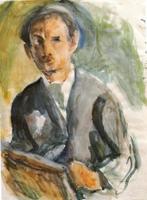
This analysis is based solely on the provided facts: artwork "Self-Portrait" by Gregoire Boonzaier, style Impressionism, genre self-portrait.
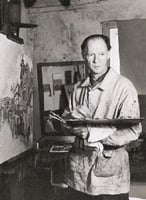
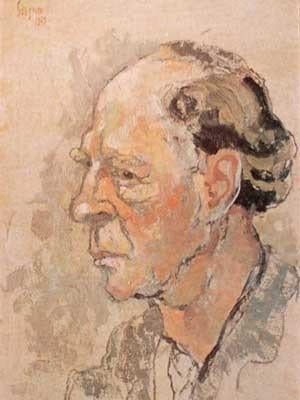
As an Impressionist self-portrait, Gregoire Boonzaier’s work engages with one of the movement’s most intimate challenges: capturing the ephemeral nature of the self through light, color, and fleeting expression. While typical Impressionist landscapes prioritize atmospheric effects over psychological depth, a self-portrait requires the artist to simultaneously observe objectively and express subjectively. Boonzaier’s significance lies in how he applies the Impressionist vocabulary—broken brushstrokes, vibrant contrasts, and an emphasis on shifting light—to the genre of self-representation.
By choosing the self-portrait, Boonzaier places himself within a long tradition of artists examining their own identity, but his approach is distinctly modern. The Impressionist style allows him to foreground the act of seeing itself: the face becomes a surface where light dances across the skin, shadows are rendered in blues or violets rather than blacks, and the background dissolves into pure color sensation. This technique turns the portrait into a study of visual perception, where the artist’s physical presence is less important than the optical experience of viewing him.
Moreover, Boonzaier’s South African context adds a layer of significance. As an Impressionist working outside Europe, he adapts the style to a different luminance and palette, possibly infusing the self-portrait with a local sensibility even as he adheres to international formal concerns. The self-portrait thus becomes a bridge between the artist’s personal psyche and the broader global language of Impressionism, demonstrating how the movement’s core tenets—immediacy, sensation, and the primacy of the artist’s eye—can be transplanted and made profoundly personal. In this work, Boonzaier does not merely show himself; he shows how he sees himself, and how he sees the world seeing him.
Visivamente simili
20 opere con composizione e palette affini
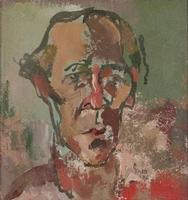
Self-Portrait
Gregoire Boonzaier
Self-Portrait
Vincent van Gogh
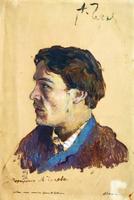
Portrait of writer Anton Chekhov
Isaac Levitan
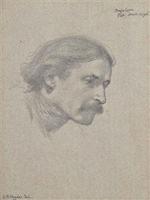
Orazio Cervi
Edward Robert Hughes
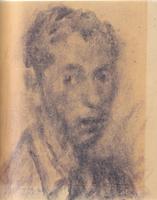
Portrait
George Bouzianis
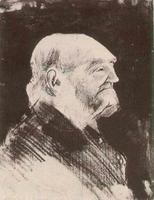
Orphan Man, Bareheaded
Vincent van Gogh
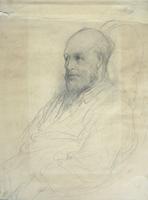
Portrait d'homme
Gustave Dore
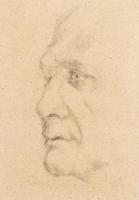
Portrait of Stephen Spender
Lucian Freud
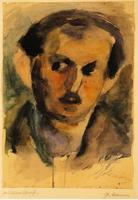
Portrait of a man
George Bouzianis
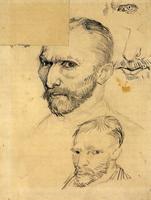
Two Self-Portraits and Several Details
Vincent van Gogh
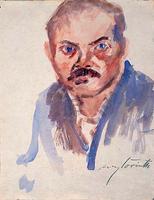
Self-Portrait
Lovis Corinth
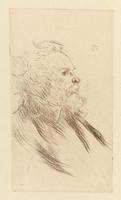
Tristan Bernard
Henri de Toulouse-Lautrec
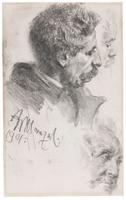
A Mustachioed gentleman in profile (Three Studies)
Adolph Menzel
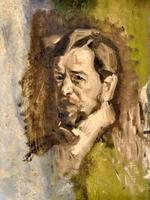
Three-quarter self-portrait
Umberto Veruda
Édouard Vuillard
Odilon Redon
Scheiber Hugó, Férfi Portré,.
Scheiber Hugó
Jean-Marie-Joseph Deville
Honore Daumier
Portrait of François Coppée (1842-1908)
Paul Émile Chabas
Self Portrait
George Bouzianis
Portrait of Leo Tolstoy
Ilya Repin