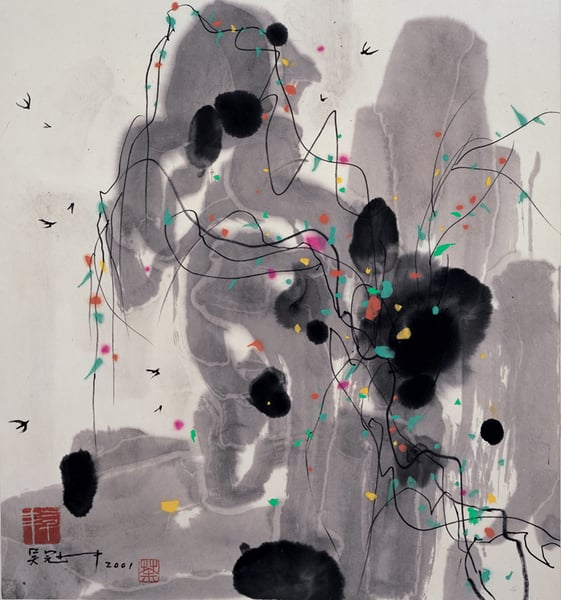
Expert analysis of Wu Guanzhong’s Attachment
Style: Abstract Expressionism, Ink and wash painting · Genre: abstract
Expert Analysis: "Attachment" by Wu Guanzhong
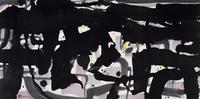
In "Attachment", Wu Guanzhong masterfully bridges two seemingly opposing traditions—Western Abstract Expressionism and Chinese ink and wash painting—creating a work that is both emotionally resonant and historically pivotal. Executed in the abstract genre, the painting exemplifies the artist’s lifelong quest to synthesize the spontaneity of Eastern calligraphic brushwork with the gestural freedom of postwar Western abstraction.
Significance within Style and Period:
-
Fusion of Traditions: Wu was among the first Chinese artists to fully absorb the lessons of Abstract Expressionism—particularly its emphasis on raw emotion, mark-making, and the physical act of painting—while grounding his practice in the disciplined, poetic language of shui-mo (ink wash). "Attachment" does not simply mimic Western abstraction; it reinterprets it through the lens of Chinese aesthetics, where every brushstroke carries the weight of calligraphic rhythm and philosophical nuance.
-
Abstracting Emotion: The title "Attachment" hints at the personal, often melancholic introspection that underpins much of Wu’s late work. Rather than depicting a literal scene, the composition uses fluid ink washes, swift linear strokes, and subtle gradations of black and gray to evoke a sense of longing or connection. This aligns with Abstract Expressionism’s goal of conveying inner states, but Wu achieves it with the economy and restraint typical of East Asian ink painting—making the emotion feel both universal and deeply intimate.
-
Technical Innovation: Wu’s signature technique involves layering diluted ink to create translucent, atmospheric fields, then overlaying them with sharp, confident lines. In "Attachment", this contrast between soft washes and decisive, almost calligraphic strokes generates a dynamic tension—a visual metaphor for the push and pull of emotional bonds. The integration of Western compositional dynamism (asymmetry, all-over gesture) with Eastern paper sensibility (ink bleeding, negative space) marks a significant evolution in modern ink painting.
-
Historical Context: Emerging during China’s post-Cultural Revolution era, Wu’s work challenged the prevailing socialist realism and traditionalist orthodoxy. "Attachment" represents a radical assertion of individual subjectivity and aesthetic synthesis at a time when cultural boundaries were being redrawn. It stands as a landmark in the global narrative of Abstract Expressionism—proving that the movement’s core impulses could be transplanted, transformed, and enriched by non-Western traditions.
Conclusion:
"Attachment" is significant not only as a powerful abstract composition but as a seminal example of cross-cultural modernism. Wu Guanzhong’s ability to distill complex emotion through the elegant marriage of Eastern ink and Western gesture makes this work a vital contribution to both Abstract Expressionism and contemporary ink painting.
Visually similar
20 works with related composition and palette
Reflections at the river
Alfred Freddy Krupa
Kupa river in Ladešići
Alfred Freddy Krupa
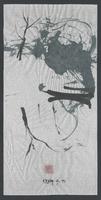
Snow on the river Kupa
Alfred Freddy Krupa
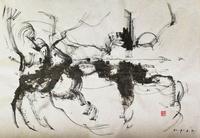
One morning at the river
Alfred Freddy Krupa
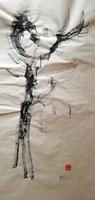
Birth of the moon
Alfred Freddy Krupa
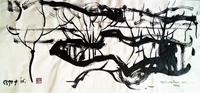
The Karlovac Swamp in 1994
Alfred Freddy Krupa
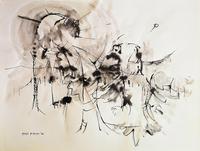
The bird is awakened
Alfred Freddy Krupa
Winter
Alfred Freddy Krupa
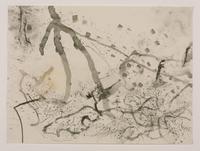
Composition Har
Carl Buchheister
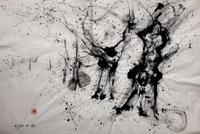
The first snow (2nd December 2020)
Alfred Freddy Krupa
Genesis
Zao Wou-Ki
Bird on Willow Branch
Ding Yanyong
Along the coast of the Adriatic
Alfred Freddy Krupa
In the morning
Alfred Freddy Krupa
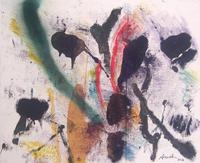
Mon Mistral
Francois Arnal
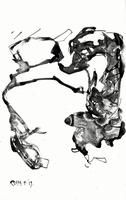
Pseudo Rorschach Test
Alfred Freddy Krupa
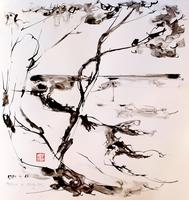
According to Krupa A. ('79.) - The seaside
Alfred Freddy Krupa
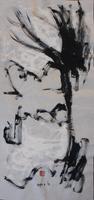
The tree and the river
Alfred Freddy Krupa
Alienation
Wu Guanzhong
The old blanket, the wood and the young blonde of hidden identity due to the rapidly growing number of false moralists and clerics
Alfred Freddy Krupa