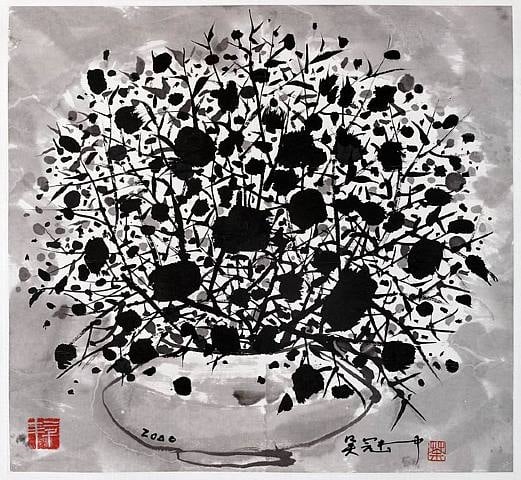
Expert analysis of Wu Guanzhong’s Flower
Style: Abstract Expressionism, Ink and wash painting · Genre: flower painting
Expert Analysis of "Flower" by Wu Guanzhong
Wu Guanzhong’s Flower stands as a pivotal work that synthesizes the emotive spontaneity of Western Abstract Expressionism with the disciplined elegance of traditional Chinese ink and wash painting. This fusion not only redefines the genre of flower painting but also marks a significant moment in modern Chinese art history—a bridge between Eastern lyrical abstraction and Western postwar expressionist energy.
Composition and Technique:
Using the classic medium of ink on rice paper, Wu breaks from the literal representation typical of traditional flower-and-bird painting. Instead, he reduces the floral form to its essential kinetic gestures. Broad, sweeping brushstrokes—some dry and ragged, others wet and saturated—create a sense of growth, rhythm, and organic dynamism. The ink is not merely a contour but an active participant, with washes bleeding into each other to suggest petals in motion. This method echoes Abstract Expressionists like Franz Kline or Jackson Pollock, yet Wu’s restraint and reliance on negative space (the paper’s unpainted areas) remain deeply rooted in Chinese literati aesthetics.
Significance:
Flower is significant because it exemplifies Wu Guanzhong’s lifelong quest to “nationalize” oil painting and “modernize” ink painting. Here, he achieves a synthesis where the abstract expressionist vocabulary (gesture, allover composition, emotional immediacy) is filtered through the calligraphic brushwork and ink tonalities of Chinese tradition. The painting does not depict a specific flower species; it captures the essence of blossoming—vitality, fragility, and transience. This conceptual shift aligns with Abstract Expressionism’s emphasis on inner feeling over outer form, but Wu’s medium and visual language are unmistakably Eastern.
Context and Legacy:
Created during a period when Wu was grappling with how to make Chinese art relevant to the global modernist conversation, Flower embodies his famous doctrine: “The intersection of East and West is the path to the future.” The work challenges the dichotomy between representation and abstraction, tradition and modernity. Its loose, energetic brushwork and bold compositional balance anticipate later developments in ink abstraction by artists like Liu Guosong. Ultimately, Flower is not merely a flower—it is a manifesto of cultural synthesis, proving that abstract expressionism could find a unique voice through the ink and wash tradition.
Visually similar
20 works with related composition and palette
Still life
Dimitris Mytaras
Vase with Flowers
Aurel Cojan
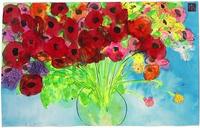
Poppies
Walasse Ting
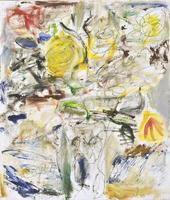
Vase with Flowers 3
Aurel Cojan
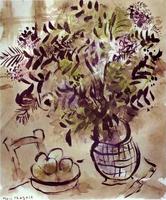
Still Life with Vase of Flowers
Marc Chagall
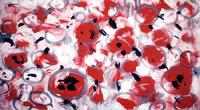
Family Tree
Ozdemir Atlan
Untitled (Floral Abstraction)
Alma Woodsey Thomas
Untitled
Wu Guanzhong
Prussian blue
Kazuo Shiraga
Untitled
Maki Haku
Untitled
Hélène de Beauvoir
Chapel du Saillant
Marc Chagall
Spring Plum Blossoms
Huang Yongyu
Composition
Pierre Tal-Coat
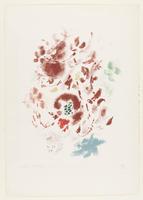
Red Pomegranates
Andre Masson
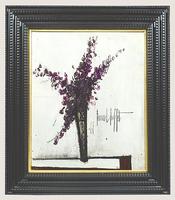
Bouquet
Bernard Buffet
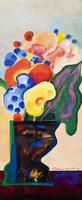
Vase With Flowers
Aldemir Martins
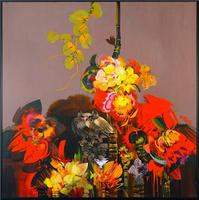
Parque Salamanca
Alejandro Obregon
Peach Blossoms
Mikey William Cheung
Roses
Sanyu