Expert analysis of Matej Sternen’s The Red Parasol
Style: Impressionism · Genre: portrait
Expert Analysis of "The Red Parasol" by Matej Sternen
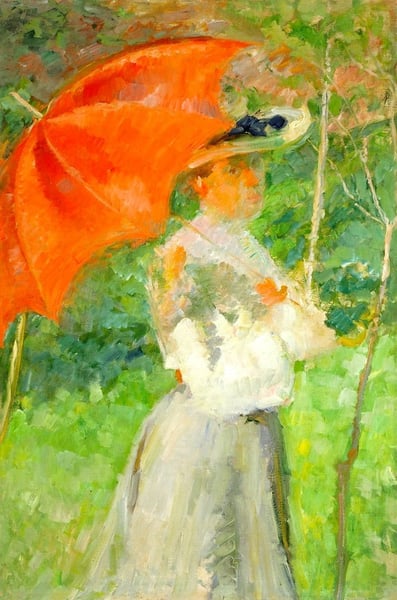
Matej Sternen’s The Red Parasol stands as a compelling example of European Impressionism adapted beyond its French origins, showcasing the movement’s global reach and local reinterpretation. As a Slovenian Impressionist and a member of the influential group known as the “Sebastian’s Painters,” Sternen brought a distinctly Central European sensibility to Impressionist concerns—particularly the interplay of natural light, fleeting atmospheric effects, and vibrant color.
Significance within Impressionism
What makes The Red Parasol significant is its masterful use of a single, saturated hue—the titular red—to anchor the composition and create a dynamic contrast with softer, more diffused surroundings. The parasol acts as both a formal device and a symbol of leisure, a common Impressionist motif. Sternen’s brushwork is loose yet deliberate: rapid, visible strokes capture the dappled sunlight filtering through foliage, while the figure’s face is rendered with more delicate touches, emphasizing an intimate, candid moment. This balance between vivid color and luminous atmosphere demonstrates Sternen’s assimilation of Impressionist principles while retaining a personal sensitivity to the mood of the sitter.
Portrait as Light Study
Although classified as a portrait, the work functions equally as a study of light on fabric and skin. The red parasol reflects warm tones onto the subject’s complexion and dress, a hallmark of Impressionist color theory—where shadows are not gray but composed of complementary blues and purples. Sternen’s handling of the background (likely an outdoor garden or park) dissolves into suggestive patches of green and yellow, prioritizing optical sensation over precise detail. This aligns with the Impressionist goal of capturing a single, fleeting moment.
Cultural and Artistic Context
Sternen’s The Red Parasol is significant for demonstrating how Impressionism was absorbed and transformed by artists in the Austro-Hungarian and Balkan regions. Unlike the Parisian avant-garde’s emphasis on modern urban life, Sternen often depicted more tranquil, pastoral or domestic scenes, imbued with a quiet, lyrical introspection. The work thus bridges the radical pictorial innovations of Impressionism with a distinctly Mitteleuropean aesthetic, contributing to the movement’s legacy as a truly international language of light and color.
Genre
Style
Visually similar
20 works with related composition and palette
Young Girl with an Umbrella
Berthe Morisot
Young Woman with an Umbrella
Camille Pissarro
At the Beach - Portrait of Martha Salomon
Isaac Israels
Two Girls with Parasols at Fladbury
John Singer Sargent
Constanța Promenade
Nicolae Vermont
In the garden
Giuseppe De Nittis
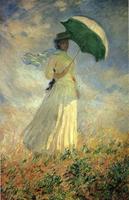
Woman with a Parasol, Facing Right (also known as Study of a Figure Outdoors (Facing Right))
Claude Monet
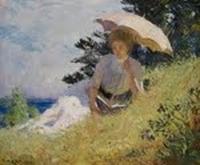
The Hillside (reading in Sun and Shade)
Frank W. Benson
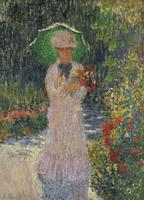
Camille with Green Parasol
Claude Monet

Vaszary János, Ülő Nő
Vaszary János
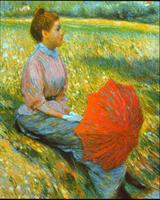
Lady in a Meadow
Federico Zandomeneghi

Vaszary János, Ülő Nő 1909
Vaszary János
Portrait of Nadezhda Repina, the Artist's Daughter
Ilya Repin
Woman with Japanese Umbrella
Samuel Mutzner
Morning Walk
John Singer Sargent
The Portrait of Mrs. Emmy Frosterus
Magnus Enckell
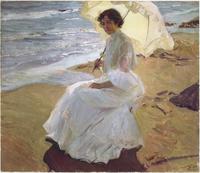
Clothilde at the Beach
Joaquín Sorolla
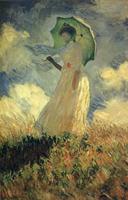
Woman with a Parasol (also known as Study of a Figure Outdoors (Facing Left))
Claude Monet
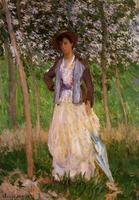
The Stroller (Suzanne Hoschede)
Claude Monet
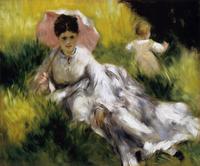
Woman with Parasol
Pierre-Auguste Renoir