Expert analysis of Kansuke Yamamoto’s Map Of Labyrinth
Style: Surrealism · Genre: photo
Expert Analysis: "Map Of Labyrinth" by Kansuke Yamamoto
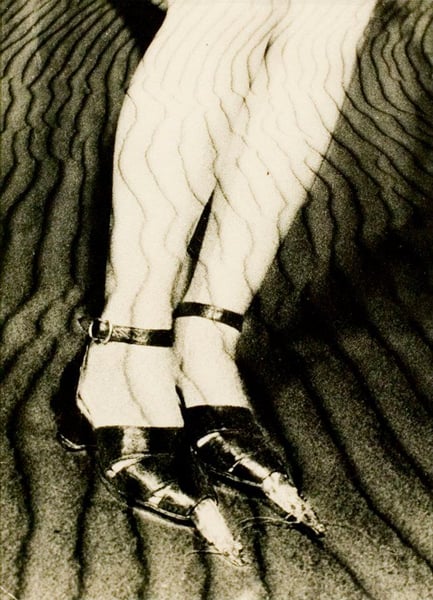
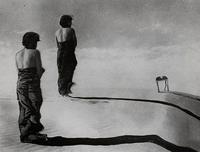
Kansuke Yamamoto’s Map Of Labyrinth is a cornerstone of Japanese Surrealist photography, embodying the movement’s global reach while asserting a distinctly personal and cultural perspective. The work’s significance lies in how it adapts European Surrealist strategies—such as dislocation, dream logic, and the uncanny—to a photographic medium, pushing the boundaries of what a photograph can represent.
1. Bridging Cultures: Japanese Surrealism in a Photographic Form
Yamamoto was a founding figure of the Surrealist movement in Japan, active in the 1930s–1950s. Map Of Labyrinth exemplifies his ability to synthesize Western avant-garde techniques (influenced by Man Ray, Magritte, and Dali) with a Japanese sensibility that values meticulous craftsmanship and symbolic ambiguity. The title itself suggests a paradox: a map is meant to clarify, yet a labyrinth implies confusion. This tension between order and chaos is a hallmark of Surrealist inquiry into the subconscious.
2. Subverting the Medium: Photography as a Tool of the Unreal
In an era when photography was largely seen as a document of reality, Yamamoto uses the medium to construct impossible spaces. The “labyrinth” likely appears as a collage of fragmented architectural elements, distorted perspectives, or layered negatives—techniques that create a sense of psychological entrapment. By manipulating the photographic process (e.g., double exposure, montage, or solarization), he challenges the viewer’s trust in the camera’s objectivity, insisting that the mind’s inner landscapes are as real as the external world.
3. Symbolic Resonance: The Labyrinth as a Surrealist Metaphor
The labyrinth is a potent surrealist symbol: it represents the winding, often irrational paths of the unconscious, the search for self-knowledge, and the anxiety of being lost. Yamamoto’s “map” is not a navigational aid but a visual riddle—a commentary on the impossibility of fully charting human desire or memory. This aligns with Surrealism’s core project of exploring the irrational and the repressed. The photograph likely juxtaposes domestic or natural objects in ways that feel both familiar and alien, evoking the disquiet of a half-remembered dream.
4. Significance Within the Surrealist Canon
Map Of Labyrinth is significant because it expands Surrealism beyond its Eurocentric origins. Yamamoto’s work demonstrates that Surrealism was a truly international language, capable of expressing non-Western anxieties and aesthetics. His use of photography—rather than painting or sculpture—also anticipates later trends in conceptual and staged photography, where the artist constructs reality rather than capturing it. The work stands as a precursor to the psychologically charged, cinematic images that would emerge in later 20th-century art.
Conclusion
In Map Of Labyrinth, Kansuke Yamamoto transforms a simple photographic apparatus into a device for exploring the subconscious. Its significance lies in its pioneering fusion of technical experimentation, cultural translation, and Surrealist philosophy. The image remains a vital reminder that the most compelling maps are those that lead us inward, into the uncharted territory of the mind.
Visually similar
20 works with related composition and palette

Untitled
Alevtyna Kakhidze

Keepsake
Morteza Katouzian

Shoes
Arsen Savadov

Niagara
Jeff Koons
Untitled
Alevtyna Kakhidze
Shoe Rows
Wayne Thiebaud

Untitled
Alevtyna Kakhidze
White Dunes, Oceano
Edward Weston

Untitled
Alevtyna Kakhidze

Untitled
Alevtyna Kakhidze

Untitled
Alevtyna Kakhidze
Untitled
Alevtyna Kakhidze
Rendez Vous 58
Katrien De Blauwer
Untitled
Kansuke Yamamoto
Dunes, Oceano
Edward Weston
Nude on Sand, Oceano
Edward Weston
Opera N. 47
Carol Rama
Shoe and Hand
Marisol Escobar

Study
Safiuddin Ahmed
Untitled (Two Women)
Kansuke Yamamoto