Analisi esperta di The Semitransparent City di Kansuke Yamamoto
Stile: Surrealism · Genere: photo
Analysis of "The Semitransparent City" by Kansuke Yamamoto
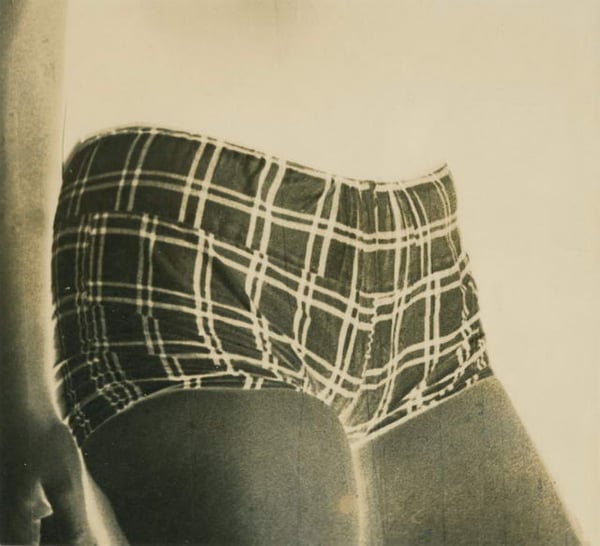
Kansuke Yamamoto’s The Semitransparent City stands as a pivotal work within the Surrealist photographic tradition, particularly notable for its fusion of Western surrealist sensibilities with a distinctly Japanese modernist perspective. As a photograph, it transcends pure documentation, instead employing the medium to explore psychological and metaphysical dimensions of urban space.
Significance within Surrealism and its Period:
-
Surrealist Photography as a Tool for the Unconscious: Yamamoto, a founding member of the Japanese Surrealist movement, uses the camera not to capture reality but to construct a dreamlike vision. The title’s emphasis on “semitransparency” suggests a layering—of time, memory, and material—that aligns with Surrealism’s goal of dissolving the boundary between the conscious and unconscious. The city becomes a liminal space, both familiar and estranged.
-
Japanese Modernist Intervention: Unlike many European Surrealists who juxtaposed disparate objects, Yamamoto’s work often incorporates the anxiety and alienation of 1930s–1940s Japan. The Semitransparent City likely reflects the tension between rapid urbanization (pre-war Tokyo or Yokohama) and a lingering traditional spirit. The “semitransparent” quality may imply a ghostly overlay—a critique of modernity’s erasure of history.
-
Technical and Conceptual Innovation: The use of photographic tricks (double exposure, soft focus, or montage) to achieve translucency was avant-garde for its time. This technique allows the city to appear as a fragile, permeable membrane—a surrealist commentary on the instability of perceived reality. Yamamoto’s approach anticipates later photographic Surrealism by artists like Manuel Álvarez Bravo and Clara C. M. E. G. G. Maillard.
Why It Endures:
As one of the few Japanese Surrealist photographers to achieve international recognition, The Semitransparent City exemplifies how Surrealism was not a monolithic Western import but a global language adapted to local anxieties. Its blend of poetic ambiguity and technical daring marks it as a cornerstone of photographic Surrealism—a work that asks viewers to see the city as a psychological state rather than a physical place.
Visivamente simili
20 opere con composizione e palette affini
Single Cuts 111
Katrien De Blauwer
Untitled
Katrien De Blauwer
Untitled
Katrien De Blauwer
Bend Over
Luc Tuymans
Blue Panties
John Kacere
Joanne
John Kacere
Die Rose
Paul Wunderlich

Pink Sparkle Bikini
John Kacere
Cosinus Alpha 1
Otto Muehl
Striped Trousers
Domenico Gnoli
Girl in Violet Shirt: Front View
George Segal
Untitled
Katrien De Blauwer
Untitled
Kansuke Yamamoto
Eros Cromático
Jorge Martins
Standing Male Torso
Andy Warhol
The Smile
Toyen
Girl and stone woman
Hryhorii Havrylenko

Mujer Desnuda
Miguel Rio Branco
The Nest
Roland Topor
Untitled
Frederick Sommer