Untitled
Expert analysis of Kansuke Yamamoto’s Untitled
Style: Surrealism · Genre: photo
Expert Analysis of "Untitled" by Kansuke Yamamoto
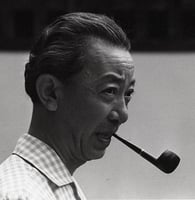
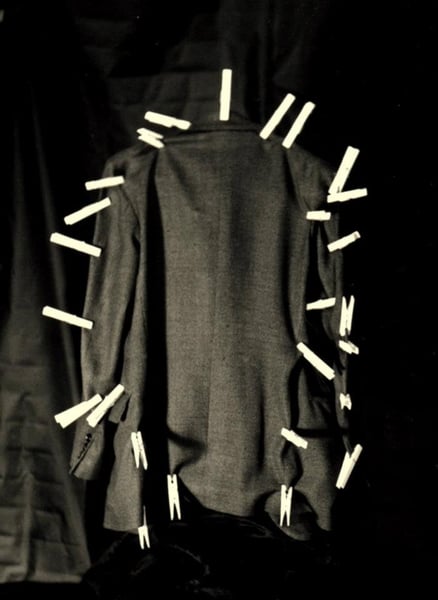
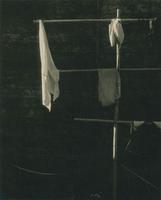
Kansuke Yamamoto’s "Untitled" stands as a pivotal work within the Surrealist photographic canon, particularly for its role in transposing the movement’s dreamlike logic onto a distinctly Japanese cultural and aesthetic framework. As a Surrealist photograph, it exemplifies the core principle of defamiliarization—using the camera’s mechanical eye to capture an uncanny, irrational reality that lies beneath everyday appearances.
Significance within Surrealism:
-
Cross-Cultural Synthesis: Yamamoto was a founding member of the avant-garde group Avant-Garde Art Association in 1930s Japan. Unlike many European Surrealists who drew from Freudian psychoanalysis and urban Parisian life, Yamamoto fused Surrealist techniques with traditional Japanese sensibilities—such as the elegance of wabi-sabi (impermanence) and the subtle, layered symbolism of ukiyo-e prints. "Untitled" likely employs juxtapositions familiar to Surrealism (e.g., floating objects, distorted bodies, or unnatural lighting) but renders them with a restrained, almost classical composition that challenges the Western Surrealist tendency toward overt shock.
-
Expanding the Medium: At a time when Surrealist photography was dominated by Man Ray’s solarizations and Brassaï’s nocturnal Paris, Yamamoto demonstrated that Surrealist inquiry could thrive outside Europe. His work often featured solitary figures, dismembered mannequins, or surreal still lifes that evoke both alienation and spiritual longing. This photo exemplifies how Surrealism became a global language for questioning reality, identity, and the subconscious—now filtered through a Japanese lens shaped by the trauma of war and modernization.
-
Temporal Disruption: Yamamoto’s photographs frequently manipulate scale, shadow, and focus to collapse past and present. In "Untitled," the interplay of light and form likely creates an ambiguous space—neither wholly dream nor reality—that mirrors Surrealism’s quest for the surreality of the mind. His work prefigures later photographers’ use of tableaux and constructed realities (e.g., Jeff Wall or Cindy Sherman) by proving that the camera can fabricate psychological depth as convincingly as paint.
Why This Work Matters:
"Untitled" by Kansuke Yamamoto is significant not only as a masterful Surrealist photograph but as a cultural bridge. It demonstrates that Surrealism’s core ambition—to dissolve the boundary between dream and daily life—transcends geography. Yamamoto’s reticent, poetic approach offers a quieter, more meditative Surrealism, where the uncanny emerges not through violence but through delicate disorientation. This image remains a vital testament to the movement’s global reach and its enduring power to reshape perception.
Visually similar
20 works with related composition and palette
Les pinces à linge
Louis Pons
The pincers at the sunset
Alfred Freddy Krupa
Compenetração estática interior de uma cabeça = complementarismo congénito absoluto (SENSIBILIDADE LITHOGRAPHICA)
Guilherme de Santa-Rita
The Secret
Conroy Maddox
Collage
Aldo Mondino
body object series #17 toothpick suit
Ann Hamilton
Untitled
Mustafa Sabbagh
Euromaidan
Alevtyna Kakhidze
N° 6608: Enseigne peinte - Les sciences exactes
Jean-Claude Silbermann
El Corazon En La Percha (2)
Martin Pereira
Pegged
Fusun Onur
Objetos en la pared
Angel Planells
La Biancheria
John Singer Sargent
Clothespin
Claes Oldenburg
COAT
Goran Despotovski
Variations
Fusun Onur
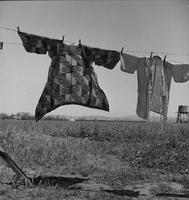
Jour De Lessive, Quarante Huit Heures Avant L’évacuation Des Personnes D’ascendance Japonaise De Ce Village Agricole Du Comté De Santa Clara, San Lorenzo, Californie
Dorothea Lange
3017 Him Looking up
MF ARLO
Untitled
Kansuke Yamamoto
Portrait of the Artist in Drip Dry Suit
Billy Apple