Analisi esperta di A sesta di Jose Malhoa
Stile: Realism · Genere: genre painting
Expert Analysis: "A sesta" by José Malhoa (Realism, Genre Painting)
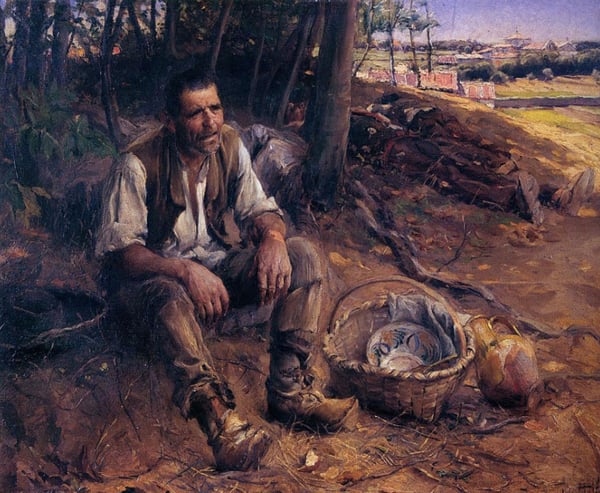
José Malhoa’s “A sesta” (The Siesta) stands as a masterful example of Portuguese Realism, capturing the quiet dignity of rural labor through a moment of rest. Painted with meticulous naturalism, the work avoids idealization—Malhoa focuses on the worn hands, sun-baked skin, and simple clothing of the figures, grounding them in the physical realities of fieldwork. The composition, likely set in the Portuguese countryside, uses a horizontal format to emphasize the stillness of the midday pause, with light and shadow carefully observed to convey the oppressive heat.
Significantly, “A sesta” aligns with Realism’s broader mission: to elevate everyday peasant life to a subject worthy of serious artistic attention. Malhoa, a leading figure in Portuguese Naturalism, breaks from romanticized depictions of rural life, instead offering an unvarnished yet sympathetic portrait of fatigue and resilience. The painting’s subtle interplay of social commentary and human warmth—showing workers not as anonymous laborers but as individuals in a shared, quiet moment—makes it a poignant document of 19th-century rural Portugal. Its importance lies in how it balances documentary precision with emotional depth, affirming Realism’s power to find beauty and meaning in the ordinary.
Visivamente simili
20 opere con composizione e palette affini
Haymaking
Léon Augustin Lhermitte
Alone in the fields
Noè Bordignon
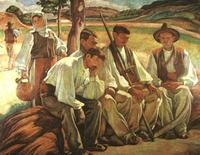
Crickets Resting
Camil Ressu
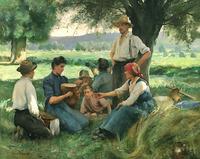
Shadow and Sunlight
Julien Dupré
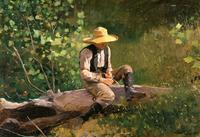
The Whittling Boy
Winslow Homer
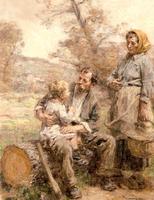
The lumberjack's lunch
Léon Augustin Lhermitte
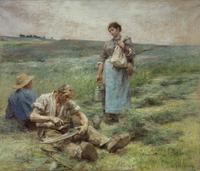
The old harvester's meal
Léon Augustin Lhermitte
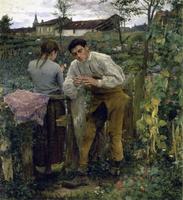
Rural Love
Jules Bastien-Lepage
At Volga
Vladimir Makovsky
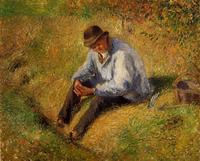
Pere Melon Resting
Camille Pissarro
In the Forest
Pascal Dagnan-Bouveret
Portrait of the Ukrainian boy
Nikolai Ge
Peasant woman at rest
Silvestro Lega
Noon prayer at harvest
Theodor Christoph Schuz
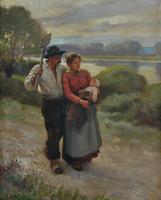
Return from the fields
Edouard Debat-Ponsan
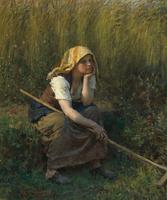
Summer
Jules Breton
At apiary
Taras Shevchenko
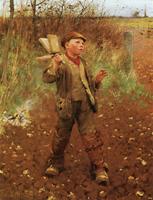
Bird Scaring
George Clausen
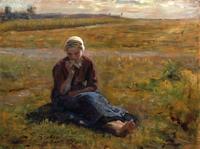
Study for ''The Tea Break'' (August 10, 1885)
Jules Breton
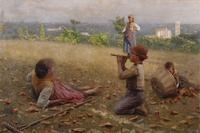
Autumn
Noè Bordignon