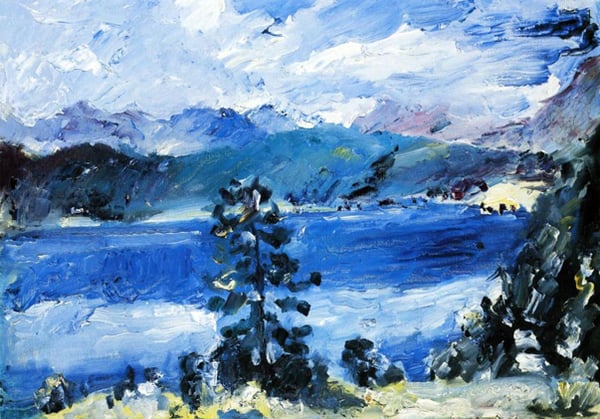
Expert analysis of Lovis Corinth’s The Walchensee with a Larch Tree
Style: Expressionism, Impressionism · Genre: landscape
Expert Analysis of The Walchensee with a Larch Tree by Lovis Corinth
Lovis Corinth’s The Walchensee with a Larch Tree stands as a pivotal work that bridges two major movements—Impressionism and Expressionism—while embodying the artist’s deeply personal, late-career vision. Painted during his extended stays at the Walchensee in the Bavarian Alps, this landscape is part of a celebrated series that marks Corinth’s most expressive and liberated phase.
Significance within Style and Period
Corinth initially trained in academic realism before embracing Impressionist techniques, but after a severe stroke in 1911, his style shifted radically. His later works, including this view of the Walchensee, fuse Impressionism’s concern with light and atmosphere with Expressionism’s emotional intensity and bold formal distortions. Here, the larch tree—a singular, vertical protagonist—anchors the composition against the expansive lake. The tree is not merely a botanical feature but a dynamic, almost anthropomorphic presence, rendered with vigorous, slashing brushstrokes that convey a sense of raw energy and personal struggle.
The work exemplifies Corinth’s unique synthesis: the shimmering, broken color of Impressionism (seen in the dappled light on the water and sky) is pushed toward a heightened, emotional palette—deep greens, blues, and touches of orange—that anticipates German Expressionist color symbolism. The larch tree’s twisting, gestural form disrupts the tranquil horizontality of the lake, creating a visual tension that mirrors Corinth’s own physical and psychological turmoil after his stroke. This tension between calm landscape and agitated mark-making is the hallmark of his late style.
Art Historical Context
The Walchensee with a Larch Tree is significant because it documents Corinth’s radical departure from conventional naturalism. While earlier Impressionists sought to capture fleeting optical impressions, Corinth uses the landscape as a vehicle for subjective expression. The larch tree, often a symbol of resilience, becomes a metaphor for the artist’s own defiant vitality in the face of infirmity. This work, like others in the Walchensee series, demonstrates how Corinth helped pave the way for later Expressionist painters by prioritizing emotional truth over accurate representation.
In sum, the painting is significant for its masterful fusion of two major early-20th-century movements, its intensely personal narrative, and its demonstration of a major artist reinventing himself at the end of his life. It remains a touchstone for understanding the evolution of modern landscape painting in Germany.
Visually similar
20 works with related composition and palette
The Walchensee with Mountain Range and Shore
Lovis Corinth
The Jochberg and the Walchensee
Lovis Corinth
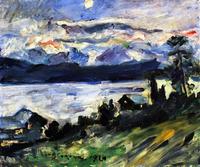
The Walchensee on Saint John's Eve
Lovis Corinth
The Walchensee, New Snow
Lovis Corinth
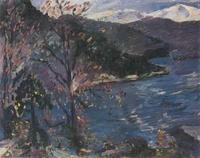
Walchensee im Herbst
Lovis Corinth
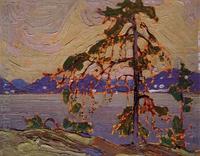
Sketch for The Jack Pine
Tom Thomson
Pines by the Sea
Henri-Edmond Cross
Agay Bay
Armand Guillaumin
In the north of Baikal
Mikhail Olennikov
Пейзаж
Trush Ivan Ivanovych
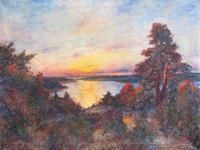
Sunset
Kimon Loghi
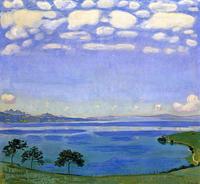
Lake of Geneve
Ferdinand Hodler
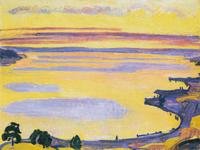
Sunset on Lake Geneva from the Caux
Ferdinand Hodler
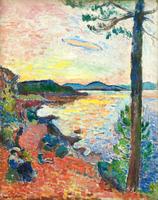
The Gulf of Saint Tropez
Henri Matisse
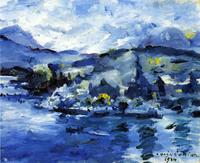
Lake Lucerne-Afternoon
Lovis Corinth
UNDER MOUNTAINS JESENIKY
JAROSLAV KELUC
Loch on the Duke of Sutherland's Estate
Winston Churchill
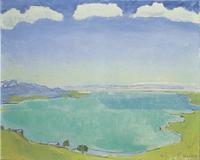
Lake Geneva from the Caux
Ferdinand Hodler
Lake Gel-Gel
Eugene Lanceray
Widok na Tatry
Czesław Jan Pyrgies