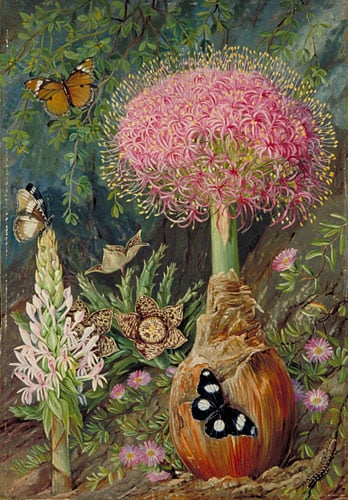
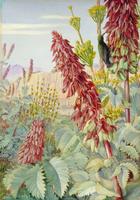
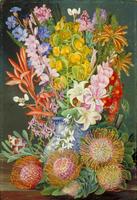
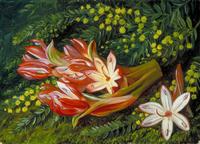
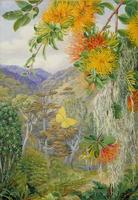
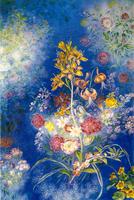
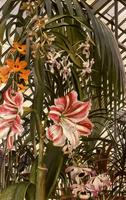
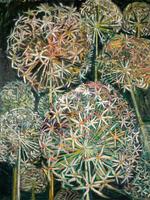
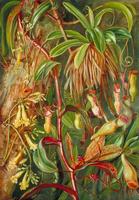
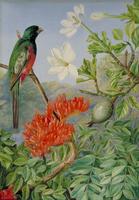
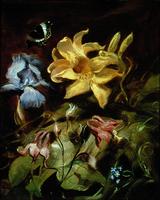
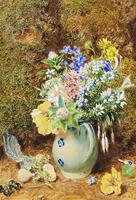
The artwork Buphane toxicara and other Flowers of Grahamstown by Marianne North is a notable example of Naturalism in flower painting. Within this style, the work achieves significance through its precise botanical accuracy and vivid representation of a specific South African species, Buphane toxicara, alongside other local flora. This adherence to naturalistic detail elevates the piece beyond decorative still life, functioning instead as a scientific and artistic record that captures the unique character of Grahamstown’s plant life. The genre of flower painting is thus used not merely for aesthetic pleasure but to document and celebrate biodiversity with a faithful, observational eye, reflecting the period’s growing interest in merging art with natural history.