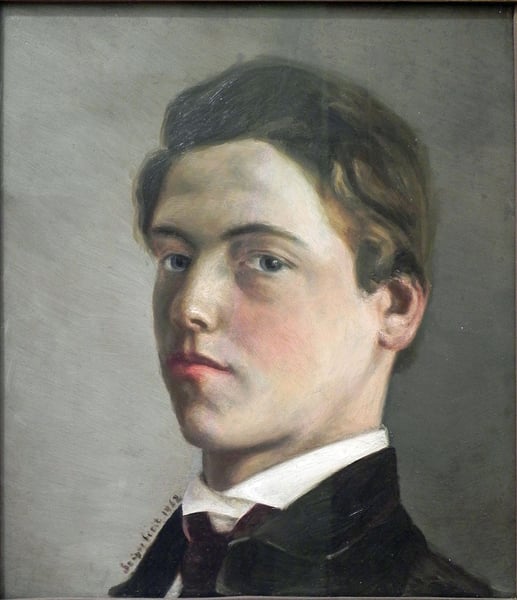
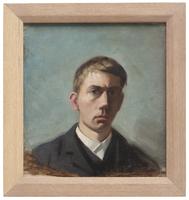
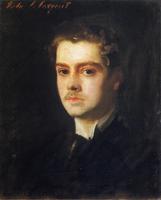
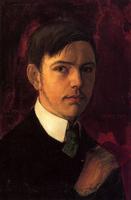
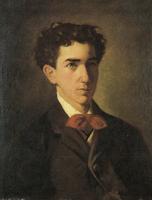
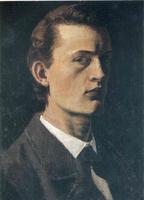
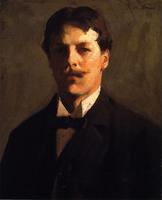
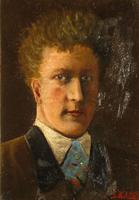
This self-portrait, executed when Wilhelm Leibl was just eighteen years old, stands as an early testament to the core tenets of 19th-century Realism. Within the genre of self-portraiture, its significance lies in its uncompromising commitment to truthful, unidealized representation. Rather than presenting a romanticized or heroic image of the young artist, Leibel focuses on meticulous, direct observation: the careful rendering of facial structure, the play of light on skin, and the frank, unwavering gaze that meets the viewer. This work embodies the Realist break from academic conventions, prioritizing honest psychological presence and technical precision over flattery or dramatic narrative. It marks the confident emergence of a master who would become a leading figure of German Realism, proving that even in youth, the movement's dedication to verisimilitude could yield profound artistic depth.