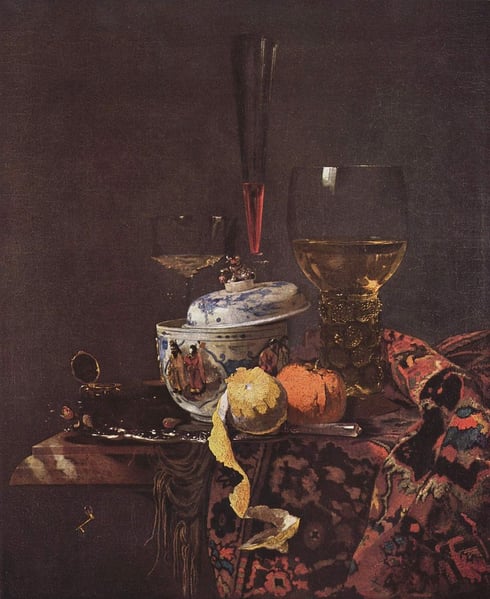
Expertenanalyse zu Willem Kalfs Still life with glassware and porcelain covered bowl
Stil: Baroque · Genre: still life
Expert Art Historical Analysis: Still Life with Glassware and Porcelain Covered Bowl by Willem Kalf
This work is a quintessential example of Baroque still life painting, specifically the pronk (ostentatious) tradition that flourished in the Dutch Golden Age. Willem Kalf was a master of this sub-genre, and here he demonstrates his extraordinary ability to transform everyday luxury objects into a symphony of light, texture, and symbolic meaning.
Significance within the Baroque Period:
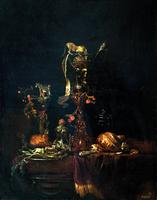
- Virtuosic Handling of Light and Reflection: The Baroque fascination with dramatic chiaroscuro and naturalism is pushed to its peak. Kalf captures the refractive brilliance of glassware—note the delicate play of highlights on the stems and bowls, as well as the translucent shadows. The polished surface of the porcelain covered bowl offers a counterpoint of soft, diffused glow versus sharp specular reflections, showcasing the artist's command over diverse materials.
- Material Wealth as a Baroque Theme: The composition deliberately juxtaposes imported porcelain (likely Chinese Wanli ware, a symbol of the global trade networks of the Dutch Republic) with local Venetian-style or Dutch glassware. This pairing encapsulates the Baroque ethos of accumulation and display—wealth was not merely owned but exhibited through art that celebrated craftsmanship and exotic goods.
- Textural Realism and Still Life Hierarchy: Within the still-life genre, Kalf elevates the depiction of inanimate objects to rival historical or religious painting. The velvety softness of the rug or tablecloth, the cool hardness of the porcelain, and the fragile transparency of glass are rendered with near-tactile precision. This technical bravura was central to the Baroque aim of mimesis—a convincing imitation of nature that dazzles the viewer.
What Makes This Artwork Particularly Significant: Unlike earlier, more didactic still lifes that directly moralize about transience, Kalf’s work does so subtly. The luxurious objects hint at vanitas themes (the fleeting nature of earthly pleasures) through the very fragility of the glassware and the perishability implied by the covered bowl (perhaps containing food). Yet the primary impact is celebratory: this painting is a testament to the Dutch Republic’s economic prosperity and the Baroque delight in sensory richness. It stands as a supreme example of how still life, once considered the lowest genre, became a vehicle for breathtaking technical innovation and a mirror of its age.
Visuell ähnlich
20 Werke mit ähnlicher Komposition und Farbpalette
Still-Life with Chinese Porcelain Bowl
Willem Kalf
Still-Life with a Late Ming Ginger Jar
Willem Kalf
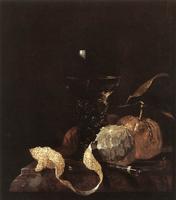
Still-Life with Lemon, Oranges and Glass of Wine
Willem Kalf
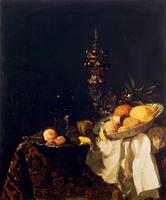
Still-Life
Willem Kalf
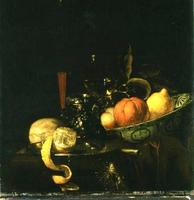
Still-Life: Orange, Lemon, and Wine in a Glass
Juriaen van Streeck
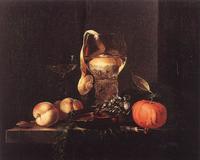
Still-Life with Silver Bowl, Glasses, and Fruit
Willem Kalf
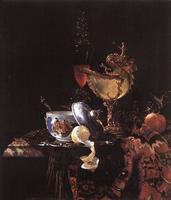
Still-Life with a Nautilus Cup
Willem Kalf
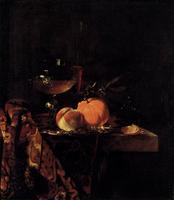
Still-Life with Glass Goblet and Fruit
Willem Kalf
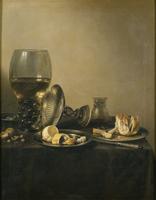
Still Life with Goblet, Silver Tureen and Bread
Pieter Claesz
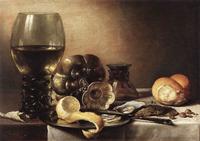
Still Life with Oysters
Pieter Claesz
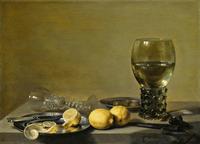
Still Life of Lemons and Olives Pewter Plates a Roemer and a Facon De Venise Wine Glass on a Ledge
Pieter Claesz
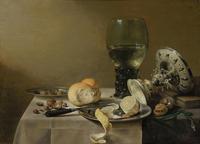
Still Life with Tazza
Pieter Claesz
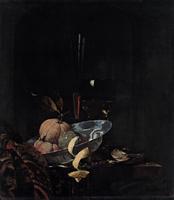
Still-Life with Fruit, Glassware, and a Wanli Bowl
Willem Kalf
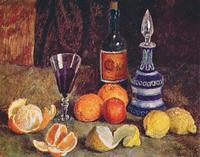
Still life
Ilya Mashkov
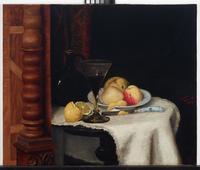
Still Life with Fruit
William Henry Huddle
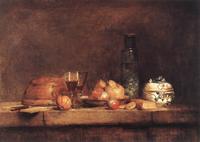
Still Life with Jar of Olives
Jean-Baptiste-Simeon Chardin
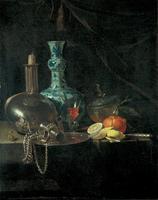
Still Life with a Pilgrim Flask, Candlestick, Porcelain Vase and Fruit
Willem Kalf
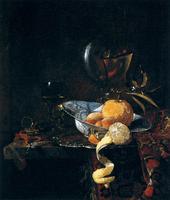
Still-Life with Porcelain and a Nautilus Cup
Willem Kalf
Still Life # 4
Dmytro Kavsan
Still Life
Pieter Claesz