Willem Kalf の Still-Life の専門的な分析
スタイル:Baroque · ジャンル:still life
Expert Analysis: Still-Life by Willem Kalf (Baroque, c. mid-17th century)
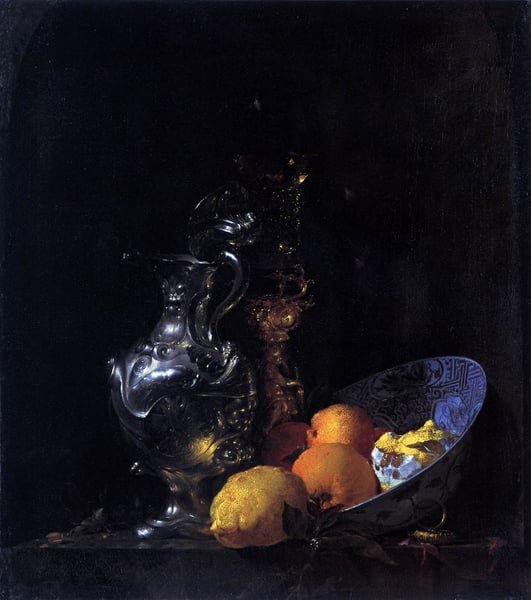
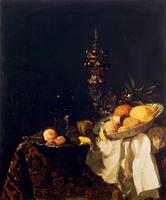
Willem Kalf’s Still-Life is a masterful example of the Dutch Baroque tradition, and its significance lies in how it elevates the still-life genre to a meditation on material wealth, sensory experience, and the fleeting nature of earthly pleasures. Kalf was renowned for his meticulous depiction of luxurious objects—porcelain, silver, glassware, and exotic fruits—and in this work, each surface becomes a stage for virtuosic technique.
Key features that define its importance
- Radical chiaroscuro and reflected light: Kalf harnesses a dramatic, almost Caravaggesque spotlight that emerges from a dark, neutral background. Light glazes over the polished silver salver and the stem of a wine glass, while casting soft highlights on the half-peeled lemon—a signature motif that signals the tension between presence and decay (the lemon’s spiral rind hints at time’s erosive passage). The translucent glow of a glass roemer and the metallic gleam of a nautilus cup demonstrate Kalf’s ability to distinguish textures through light alone, a hallmark of Dutch pronkstilleven (“ostentatious still life”).
- Symbolism of vanitas and abundance: Every object is laden with meaning. The imported Chinese porcelain, the Turkish carpet, and the silver-gilt ewer speak to Amsterdam’s global trade dominance during the Dutch Golden Age. Yet the inclusion of a half-eaten pastry, a slice of lemon, and an overturned wine glass reminds the viewer of mortality and the emptiness of excess. Kalf balances celebration with caution, elevating still life from mere decoration to a moral lesson.
- Compositional harmony through asymmetry: Unlike many Baroque still lifes that crowd the canvas, Kalf creates a deliberate, sparse arrangement. The diagonal thrust of the table’s edge, the vertical accent of the glass, and the horizontal sweep of the cloth guide the eye in a controlled, elegant counterpoint. This restraint shows the influence of the Amsterdam school’s preference for clarity over chaos.
Why it matters
Kalf’s Still-Life is significant because it perfects the genre’s dual purpose: breathtaking realism that rivals nature, and a layered allegory that critiques the very opulence it depicts. It stands as a pinnacle of Baroque still-life painting, influencing generations of artists from Chardin to the modern era. Its technical brilliance—particularly the rendering of reflected highlights on curved surfaces—remains a benchmark for painterly skill.
視覚的に類似
構図やパレットが近い作品 20 件
Still-Life
Willem Kalf
Still Life with a Pilgrim Flask, Candlestick, Porcelain Vase and Fruit
Willem Kalf
Still-Life
Willem Kalf
Still Life with Ewer, Vessels and Pomegranate
Willem Kalf
Nature morte au sucrier d'argent, cachet, flacon et châle rouge
Joseph Bail
Still-Life with a Late Ming Ginger Jar
Willem Kalf
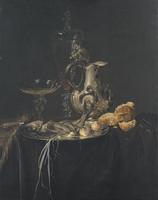
Still Life Breakfast Piece with a Silver Jug
Willem van Aelst
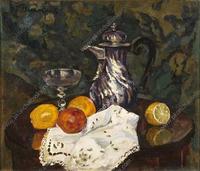
Still life on the background of the carpet. Oranges and coffee.
Pyotr Konchalovsky
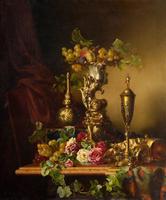
Prunkstilleben
Adalbert Schaffer
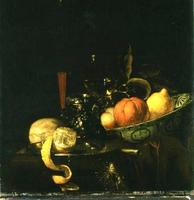
Still-Life: Orange, Lemon, and Wine in a Glass
Juriaen van Streeck
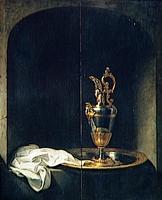
The Silver Ewer
Gerrit Dou
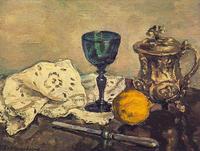
Still Life. The green glass.
Pyotr Konchalovsky
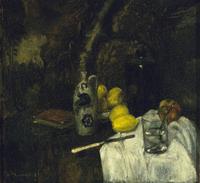
Lemons and Bottle of Dutch Gin
Henri Matisse
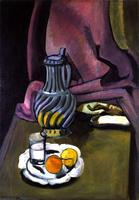
The Pewter Jug
Henri Matisse
Brass Pots
Matthew Almy
The Big Brass Bowl
William Merritt Chase
Still-Life with Glass Goblet and Fruit
Willem Kalf
Still life with jug
Paula Modersohn-Becker
Still Life with a Grey Jug
Jules Dupre
Still Life
Pieter Claesz