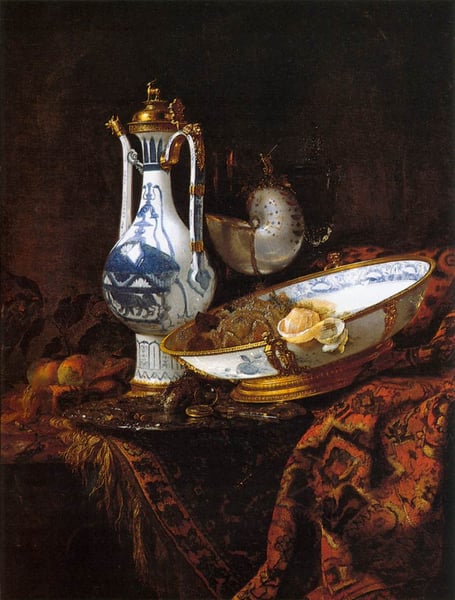
Expertenanalyse zu Willem Kalfs Still-Life with an Aquamanile, Fruit, and a Nautilus Cup
Stil: Baroque · Genre: still life
In the hands of Willem Kalf, the Baroque still life transcends mere representation to become a meditation on luxury, transience, and artistic mastery. “Still-Life with an Aquamanile, Fruit, and a Nautilus Cup” exemplifies the zenith of 17th-century Dutch still-life painting, where Kalf’s virtuoso handling of light and texture elevates a gathering of exquisite objects into a deeply symbolic tableau.
Significance within the Baroque Style and Period:
-
Technical Brilliance and Trompe-l’Œil Realism – Kalf was celebrated for his ability to render surfaces with astonishing fidelity. Here, the cool gleam of the silver aquamanile (a medieval-style water vessel), the iridescent, spiraled surface of the nautilus cup, and the soft, fuzzy bloom on peaches and grapes are not just painted—they are experienced. The play of light across curved metal and translucent shell demonstrates the Baroque fascination with optical illusion and the material world’s tactile allure.
-
The Vanitas Subtext – While the composition appears to celebrate wealth—rare porcelain, imported fruits, costly shell-work—it carries a quiet, allegorical counterpoint. The nautilus cup, a prized collector’s item, also alludes to the sea’s impermanence; the ripe fruit brims with flesh but will soon decay. Kalf’s careful arrangement invites the viewer to ponder the brevity of earthly pleasures, a core Baroque theme shaped by both Counter-Reformation piety and Dutch Calvinist morality.
-
Luxury and Global Trade – The objects themselves are signifiers of Dutch Golden Age commerce: a Chinese porcelain bowl, a German or Netherlandish aquamanile, and a nautilus cup mounted by a silversmith. Kalf’s still lifes are documents of an era when Amsterdam was the world’s emporium. By isolating these items against a dark, recessive background, he transforms them into iconic emblems of status and cosmopolitan taste, while also subtly reminding the viewer that such treasures are ultimately fragile.
-
Compositional Drama – Unlike earlier, more balanced still lifes, Kalf uses asymmetry and a diagonal sweep to create Baroque dynamism. The nautilus cup rises like a sculptural spire, its spiral echoing the curl of a lemon peel and the arc of a grapevine. The light-source, entering from the upper left, carves out pockets of shadow and brilliance, lending the scene a theatrical, almost sacred stillness.
In sum, Kalf’s painting is significant because it synthesizes the Baroque obsession with mimesis (imitation of nature) and memento mori (reminder of death), all while celebrating the painter’s own unrivaled ability to conjure the sheen of silver, the translucence of shell, and the velvet of fruit from mere oil paint. It is a silent, sumptuous sermon on the art of seeing—and on the fleeting beauty of the seen world.
Museum / Gallery
Visuell ähnlich
20 Werke mit ähnlicher Komposition und Farbpalette
Still Life with Holbein Bowl, Nautilus Cup, Glass Goblet and Fruit Dish (detail)
Willem Kalf
Still Life with Nautilus Shell Cup
Willem van Aelst
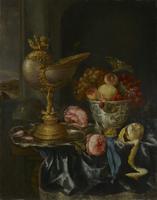
Banquet Still Life with Nautilus Cup
Abraham van Beyeren
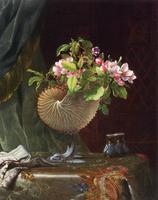
Still Life with Apple Blossoms in a Nautilus Shell
Martin Johnson Heade
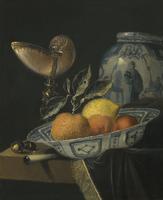
Still-Life with Fruits and a Nautilus Goblet
Juriaen van Streeck
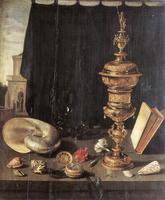
Still Life with Large Goblet
Pieter Claesz
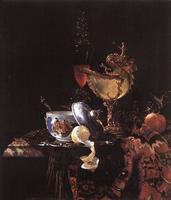
Still-Life with a Nautilus Cup
Willem Kalf
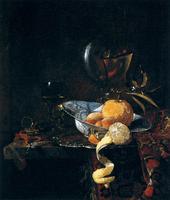
Still-Life with Porcelain and a Nautilus Cup
Willem Kalf
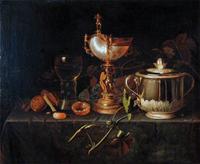
Porringer and Nautilus Cup
Pieter Gerritsz. van Roestraten
Shells
Boris Kustodiev
Vanitas con calavera coronada
Edward Collier
Stillleben Mit Nautiluspokal Und Weintrauben
Adalbert Schaffer
Still Life with a Pilgrim Flask, Candlestick, Porcelain Vase and Fruit
Willem Kalf
Still life
Willem Kalf
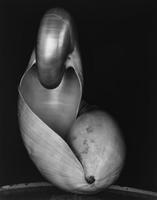
Shell
Edward Weston
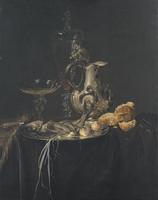
Still Life Breakfast Piece with a Silver Jug
Willem van Aelst
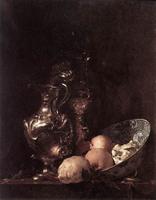
Still-Life
Willem Kalf
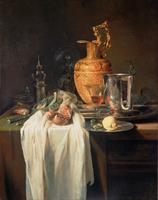
Still Life with Ewer, Vessels and Pomegranate
Willem Kalf
Cabinet de curiosités. Toile. Une paire. Signée 'Ch. Langlois'. Beaux cadres dorés à décor de motifs végétaux.
Jean-Charles Langlois
Nautilus
Edward Weston