Expertenanalyse zu Kazuo Nakamuras Autumn
Stil: Abstract Expressionism · Genre: landscape
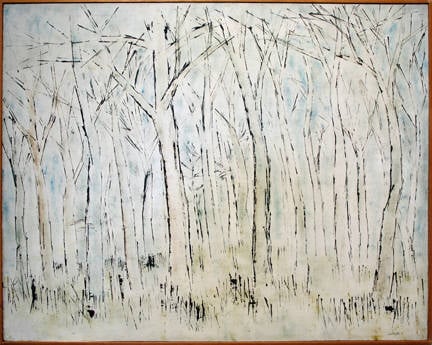
Considered a masterpiece of mid-20th-century Canadian art, "Autumn" by Kazuo Nakamura stands as a landmark achievement within the Abstract Expressionist movement. While the genre is identified as landscape, Nakamura’s work is significant precisely because it transcends the typical emotional, gestural torrents associated with New York Abstract Expressionism, instead forging a meditative, structural path.
Significance within Abstract Expressionism and the Period: Nakamura was a core member of the revolutionary Toronto-based group Painters Eleven, who introduced Abstract Expressionism to Canada. However, "Autumn" exemplifies his unique departure from the group's more energetic or lyrical tendencies. Here, Nakamura synthesizes the genre of landscape with a deeply personal, almost scientific abstraction built on rhythm, repetition, and grid-like structures.
Key Analytical Elements:
- The "Blue Lattice" and Structural Abstraction: The work is a prime example of Nakamura’s signature "blue lattice" or "inhibited string" series. Rather than using explosive brushstrokes to convey the season, he overlays a delicate, open grid of blue lines over muted earth tones. This lattice is not a cage but a filter—a way to organize the infinite complexity of nature into a simple, repeating structural rhythm. This formalist approach gave Abstract Expressionism a new, quieter vocabulary rooted in geometry and optics.
- Landscape as Essence, Not Representation: The painting does not depict specific trees or leaves. Instead, it captures the sensation of autumn—the falling, the decay, the underlying skeletal order of nature. The interwoven lines suggest branches, while the washes of ochre, umber, and faded green evoke the fading light and color of the season. Nakamura’s genius lies in making the abstract feel profoundly organic, as if the grid is a natural law of growth and entropy.
- Canadian Identity and Zen-like Restraint: "Autumn" is significant for its distinctly Canadian sensibility. In contrast to the bombast of American Abstraction, Nakamura channeled the quiet, vast landscapes of Ontario and a personal, post-war interest in Zen Buddhism. The work’s restraint, its use of a limited palette, and its insistence on underlying order create a contemplative, almost spiritual experience. It is a landscape seen through the mind’s eye—an attempt to find universal, timeless patterns in the fleeting change of a single season.
Ultimately, "Autumn" is significant because it redefined what Abstract Expressionism could be. It proved that the movement was not solely about expressionistic fury; it could also be a vehicle for meditation, structural clarity, and a profound, quiet connection to the natural world. It remains a cornerstone of Nakamura’s career and a vital bridge between North American abstraction and a uniquely Canadian sense of place.
Visuell ähnlich
20 Werke mit ähnlicher Komposition und Farbpalette
Springtime
Alexandru Ciucurencu
Dark Band
Wolf Kahn
new year
maede
Glen
Wolf Kahn
The nightfall is approaching
Endre Bartos
House in Spring
Naser Ramezani
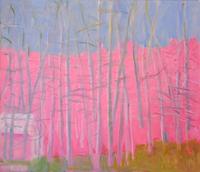
Low Lying Barn
Wolf Kahn
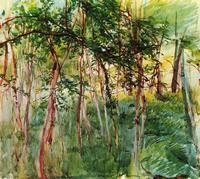
Trees in the Bois de Boulogne
Giovanni Boldini
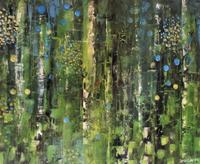
Sans titre
DIDIER DOIGNON
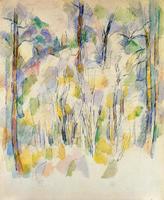
In the Woods
Paul Cezanne
GRASSHOPPER
Peter Doig
Winter Trees
Egon Schiele
Birch Woods
Adam Baltatu
At dawn
Alfred Freddy Krupa
Zona envolvente do Castelo de Santa Maria da Feira
Paulo Fontes
Landscape with birch trees
Paula Modersohn-Becker
Pale
Wolf Kahn
Half Hidden
Wolf Kahn
Forest (Morning sun)
Johann Walter
Harlem Courtyard
Norman Lewis