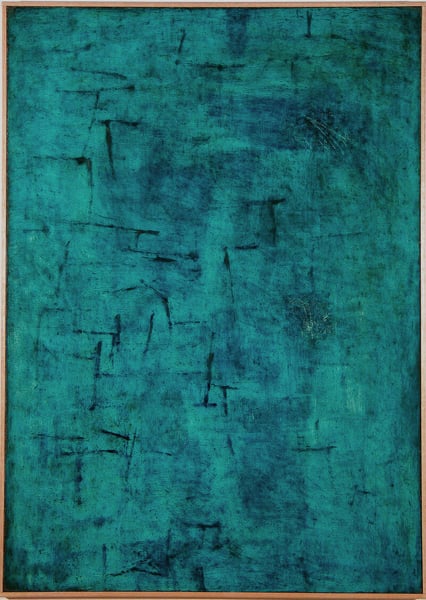
Expert analysis of Kazuo Nakamura’s Inner Structure
Style: Abstract Expressionism · Genre: abstract
Expert Analysis: "Inner Structure" by Kazuo Nakamura
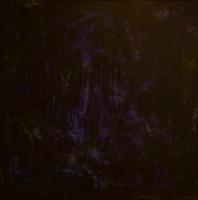
Kazuo Nakamura’s “Inner Structure” is a masterful example of Abstract Expressionism that redefines the movement’s typical emphasis on gestural emotion by introducing a rigorous, meditative order. While many Abstract Expressionists championed spontaneous, all-over composition or explosive brushwork, Nakamura instead channels a contemplative, almost scientific approach to abstraction—a hallmark of his place within the North American art scene, particularly as a member of the iconic Painters Eleven group in Canada.
Significance within Abstract Expressionism:
The painting’s significance lies in its synthesis of two seemingly opposed impulses: the organic freedom of abstraction and the precise logic of structure. Nakamura’s “Inner Structure” series explores the underlying patterns of nature—mathematical grids, cellular growth, or crystalline formations—rendered with a muted, refined palette and restrained brushwork. This sets him apart from the more flamboyant New York School contemporaries. Instead of raw emotion, Nakamura focuses on the universal, almost invisible order beneath visible reality.
Formal Analysis:
The composition likely features geometric or quasi-geometric forms that are neither rigidly hard-edged nor fully organic. Delicate lines and subtle color gradations (typical of Nakamura’s palette—grays, browns, blues, or earth tones) create a sense of depth and movement. The forms seem to grow or dissolve into the background, evoking natural processes like erosion, strata, or neural networks. There is no central focal point; rather, the eye wanders through a luminous, atmospheric space that suggests infinite expansion.
Art-Historical Context:
By bridging Abstract Expressionism with the later concerns of Minimalism and Post-Painterly Abstraction, Nakamura anticipated a more analytical strain of abstract art. His work is a quiet, intellectual counterpoint to the heroic angst of Pollock or de Kooning. “Inner Structure” represents a search for harmony between intuition and reason—a unique contribution that expands the possibilities of abstract painting beyond pure gesture.
Conclusion:
Ultimately, “Inner Structure” is significant not only as a signature work of Nakamura’s personal practice but as a proof that Abstract Expressionism could accommodate both visceral energy and cool, systematic inquiry. It invites the viewer to see abstraction not as chaos, but as a window into the deep, regulative structures of the world.
Visually similar
20 works with related composition and palette
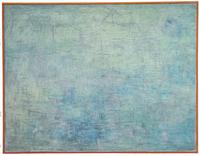
Inner Structure
Kazuo Nakamura
Ruído Seco
Paula Klien
Крізь глибину (Through the deepness)
Артемій Присяжнюк
Shale
Dan Christensen
Message #1
Warren Rohrer

Townscape M8 (Grey)
Gerhard Richter
UNTITLED - HEAVEN SERIES - BLUE PERIOD
Pratap Singh
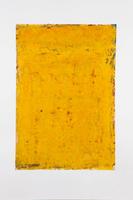
Untitled
Tiberiy Szilvashi
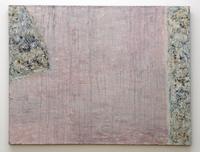
Untitled
Tiberiy Szilvashi
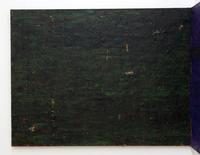
Untitled
Tiberiy Szilvashi
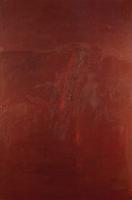
Qui lève
Pierre Tal-Coat
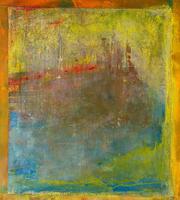
37528
Frank Bowling
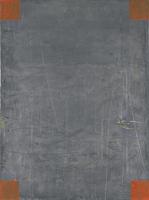
Bad Honnef Multiple
Gunther Forg
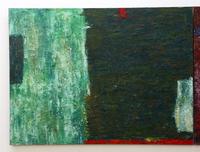
Untitled
Tiberiy Szilvashi
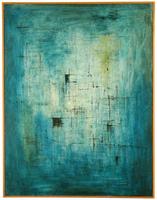
Morning Mist
Kazuo Nakamura
Avondrood (evening Glow)
Raoul De Keyser
Old Altar Piece
Frank Bowling
20.5.74
John Hoyland
Untitled
Alexandre Istrati
Heaven II
Pratap Singh