Analisi esperta di In Kyiv di Taras Shevchenko
Stile: Romanticism · Genere: landscape
Artwork Analysis: In Kyiv by Taras Shevchenko
Context and Significance
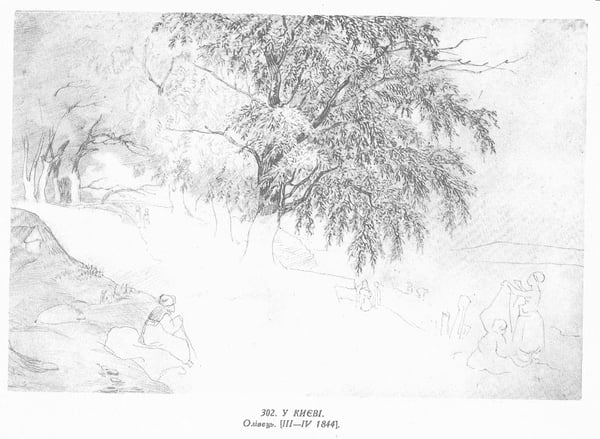
Taras Shevchenko (1814–1861) is best known as Ukraine’s national poet, but his work as a painter and printmaker is equally vital to understanding Romanticism in Eastern Europe. In Kyiv is a landscape executed in the Romantic style, a period that emphasized emotion, individual vision, and the sublime power of nature. For Shevchenko, however, Romanticism also served as a vehicle for national identity—a way to document and celebrate the Ukrainian homeland during an era when its culture and language were suppressed under the Russian Empire.
Key Features of the Work
As a landscape, In Kyiv likely presents a view of the Dnipro River and the city’s historic hills, possibly including landmarks such as the golden domes of St. Sophia Cathedral or the Monastery of the Caves. Shevchenko’s treatment of light and atmosphere would align with Romantic conventions: dramatic contrasts between illuminated areas and deep shadows, a sense of vastness, and a mood of contemplative reverence. The natural setting is not merely a backdrop but an active participant in the scene, evoking the Romantic idea of nature as a source of spiritual and national awakening.
Why It Matters within Romanticism
Shevchenko’s landscape stands apart from Western Romantic examples (e.g., Caspar David Friedrich’s alpine vistas or J.M.W. Turner’s sublime seascapes) because it fuses personal emotion with political and cultural resistance. For Shevchenko, painting Kyiv’s landscape was an act of defiance—reclaiming the visual heritage of Ukraine at a time when its identity was being erased. The work thus functions as a national Romantic landscape, elevating the ordinary topography of the Dnipro region to the level of the heroic and eternal.
Legacy
In Kyiv is significant not only as an example of Shevchenko’s dual artistic-literary genius but also as a foundational image of Ukrainian cultural memory. It anticipates later 19th-century national movements across Eastern Europe, where landscape painting became a tool for asserting historical and ethnic continuity. Today, the work is studied as a key intersection of Romantic aesthetics, social conscience, and nation-building—a quiet but powerful declaration that a people’s homeland deserves to be seen as sublime.
Visivamente simili
20 opere con composizione e palette affini
Study of willows
Thomas Gainsborough
Rural Landscape in the Mark Brandenburg
Carl Blechen
Row of Trees
Jan Dirksz Both
Landscape
Esaias van de Velde
Verscheijde Ghesichten, in 't Haechsche Bosch na 't Leven geteyckent
Roelant Roghman
A Wooded Road
Rembrandt
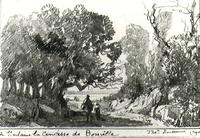
A path in the forest
Theodore Rousseau
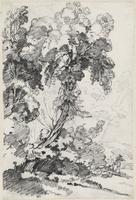
A Towering Tree with Travelers
Joseph-Marie Vien
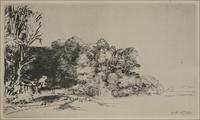
The Vista
Rembrandt
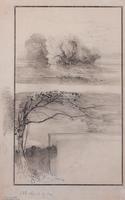
Trees near the water. Branches of trees
Aleksey Savrasov
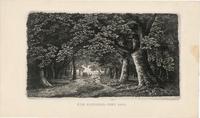
Forest path with a carriage
Karl Friedrich Schinkel
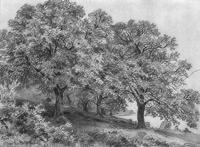
Lake
Ivan Shishkin
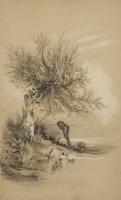
Paisaje
Rosario Weiss Zorrilla
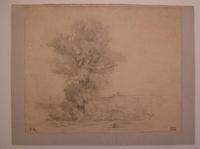
Landscape
Theodore Rousseau
Travelling Couple with Dog in an Arcadian Landscape
Johann Christoph Haffner
Out of the forest of Fontainebleau
Theodore Rousseau
Landscape
Pyotr Konchalovsky
Mountainous landscape with travellers Sun__Mountainous-landscape-with-travellers
Jacob van Strij
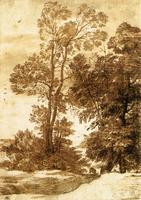
Trees
Claude Lorrain
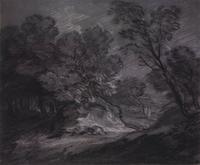
Forest landsape with mountain
Thomas Gainsborough