Analisi esperta di Progression vier gleicher Gruppen von 1-4 di Richard Paul Lohse
Stile: Concretism · Genere: abstract
Analysis of "Progression vier gleicher Gruppen von 1-4" by Richard Paul Lohse
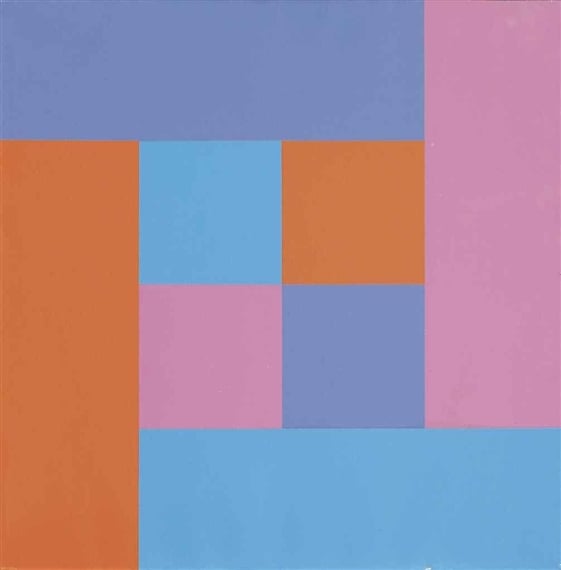
Richard Paul Lohse was a leading figure in Swiss Concretism, a movement that stripped art down to its most rational, non-representational elements. In this work, the title—Progression vier gleicher Gruppen von 1-4 (Progression of Four Equal Groups from 1 to 4)—directly signals the artist’s method: a systematic, serial manipulation of form and color. The painting belongs to Lohse’s mature phase, where he abandoned subjective gesture in favor of objective, rule-based compositions that anticipate both Minimalism and Op Art.
Systematic Structure and Mathematical Logic
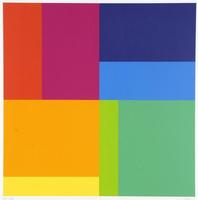
The artwork is built from four identical groups, each undergoing a clear numerical progression (1 through 4). Lohse organizes these groups in a grid-like field, typically using squares or rectangles of varying dimensions or color values. The progression may refer to an increase in size, a shift in hue saturation, or a stepwise change in the number of elements per group. This rigorous sequencing creates a visual rhythm that the eye can trace—a kind of measurable, non-narrative melody. Every element is determined by the internal logic of the system; nothing is arbitrary.
Concretist Principles
Concretism, as defined by artists like Max Bill and Lohse, rejected any reference to nature or emotion. Instead, it elevated pure geometry, color, and structure into autonomous realities. Progression vier gleicher Gruppen von 1-4 exemplifies this: the painting is not a representation of anything outside itself—it is the idea of progression made visible. The equal groups ensure balance, while the progression introduces controlled variation. Lohse often employed complementary or analogous color palettes to heighten the perceptual interaction between adjacent fields.
Significance within the Style and Period
What makes this work significant is its radical transparency. Lohse lays bare the construction process: the viewer can reconstruct the rule that generated the composition. This approach challenges traditional notions of artistic genius and inspiration, replacing them with a programmatic, almost scientific method. The painting becomes a demonstration of order, a visual equation. In the context of postwar European art, Lohse’s systematic concretism offered a constructive, optimistic alternative to gestural abstraction—proving that beauty could emerge from logic, and that art could be both rational and deeply perceptual.
Ultimately, Progression vier gleicher Gruppen von 1-4 stands as a quintessential example of concrete art: a self-sufficient, intellectually rigorous object where the means of making are identical to the meaning of the work.
Visivamente simili
20 opere con composizione e palette affini
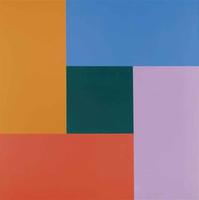
Bewegung von dunkelgelb über rot, violett, blau zu grünem Zentrum
Richard Paul Lohse
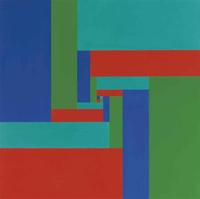
Bewegung von 4 kontrastierenden Gruppen aus einem Zentrum
Richard Paul Lohse
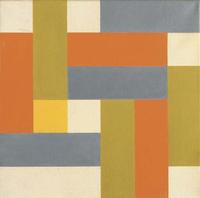
Farbenergien in vier Richtungen
Richard Paul Lohse
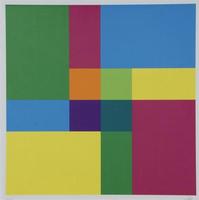
Zentrum aus vier Quadranten als Ergebnis der vier Kreuzflächen
Richard Paul Lohse
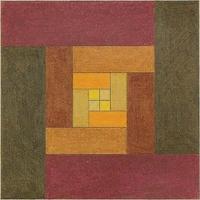
Etudes Bauhaus D
Victor Vasarely
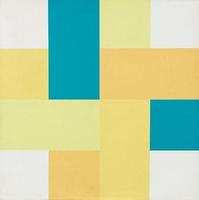
Vier verschränkte Farbgruppen mit blau grünen Akzenten
Richard Paul Lohse
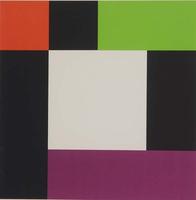
Three Colours Surrounded by Equal Amounts of Black and White
Max Bill
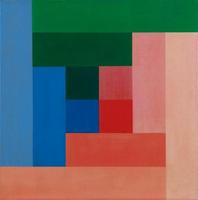
Progression of Four Graded Colours
Richard Paul Lohse
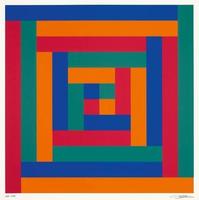
Progression von Sechs Gleichen Gruppen von 1-11
Richard Paul Lohse
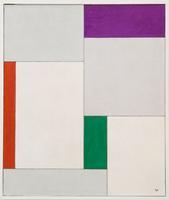
XVII composition dans le carré
Georges Vantongerloo
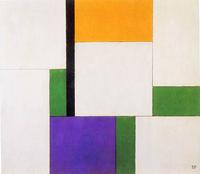
Composition
Georges Vantongerloo
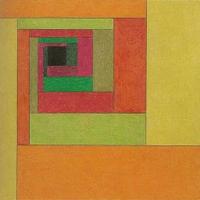
Etudes Bauhaus C
Victor Vasarely
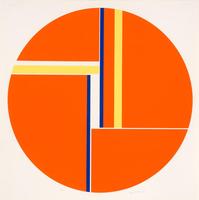
Orange Tondo
Ilya Bolotowsky
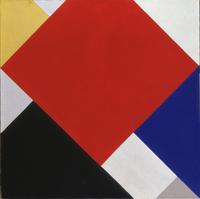
Counter composition V
Theo van Doesburg
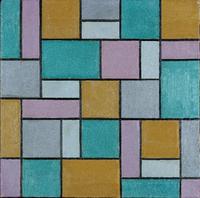
Composition XVII
Theo van Doesburg
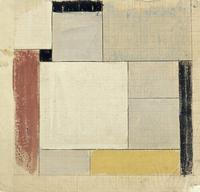
Preliminary design for the floor
Theo van Doesburg
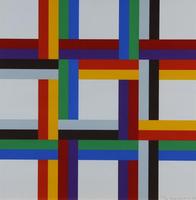
Untitled
Verena Loewensberg
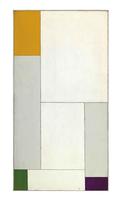
Composition émanante de l'équation y=-ax2+bx+18 avec accord de l'orangé-vert-violet
Georges Vantongerloo
Bewegung von acht Farben um eine Achse
Richard Paul Lohse
Helles zentrum
Max Bill