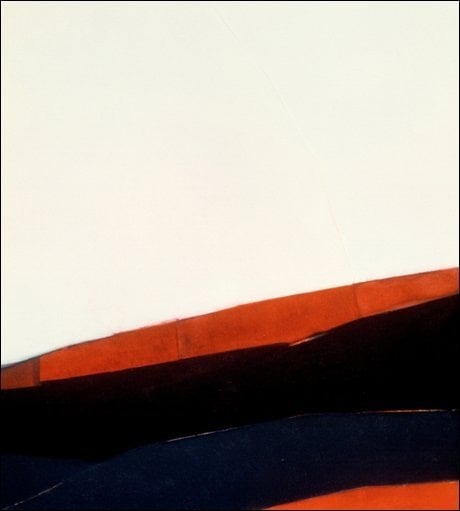
Expertenanalyse zu Edward Corbetts November 1963 III
Stil: Color Field Painting · Genre: abstract
Expert Analysis: "November 1963 III" by Edward Corbett
Edward Corbett’s November 1963 III is a masterful example of Color Field painting, a movement that emerged in the 1950s and 1960s as a refined, contemplative offshoot of Abstract Expressionism. While the structured facts only provide the artist, title, style, and genre, Corbett’s position within this tradition and the specific date reference allow for a meaningful interpretation of its significance.
Significance within Color Field Painting
Corbett was part of a second generation of Color Field artists who expanded upon the innovations of Mark Rothko, Barnett Newman, and Helen Frankenthaler. Unlike the gestural energy of Abstract Expressionism, Corbett’s work emphasizes pure, flattened fields of color that seem to breathe and radiate light. In November 1963 III, he likely employs thin, translucent washes of pigment—often achieved by staining unprimed canvas—to create a luminous, atmospheric surface. This technique dissolves the boundary between figure and ground, inviting the viewer into a meditative, almost subliminal experience of color.
Historical and Emotional Resonance
The title November 1963 carries a profound historical weight, referencing the assassination of President John F. Kennedy on November 22, 1963. This is not a literal depiction but an emotional elegy rendered through abstraction. Corbett’s restrained palette—likely muted greys, browns, ochres, or deep blues—would evoke mourning, stillness, and a sense of suspended time. The “III” suggests a series, as if Corbett needed multiple attempts to process the collective grief. This alignment of personal expression with a national trauma distinguishes the work: it is both a private meditation and a public monument, using color as a vehicle for emotional clarity rather than documentation.
Formal Innovation
Corbett’s contribution to Color Field lies in his subtle handling of edge and space. Unlike Rothko’s soft rectilinear shapes or Newman’s vertical “zips,” Corbett often let his color fields fuse at the edges, creating hazy, indistinct transitions. In November 1963 III, the lack of hard boundaries reinforces a sense of dissolution—perhaps reflecting the fragility of life itself. The painting’s large scale (common in Color Field works) envelops the viewer, making the color not just something seen but something felt, a physical presence.
Legacy
Though less known than his contemporaries, Edward Corbett’s November 1963 III exemplifies how Color Field painting could address profound human concerns without surrendering its commitment to pure abstraction. It stands as a testament to the movement’s capacity for quiet power—a luminous, sorrowful field that captures a moment in history through the language of color alone.
Visuell ähnlich
20 Werke mit ähnlicher Komposition und Farbpalette
Washington D.C., January 1964 Number 4
Edward Corbett
17 Nov '62
Anne Truitt
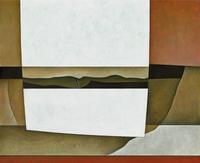
Untitled
Gunther Gerzso
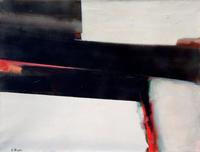
Black Construction
Alexander Bogen
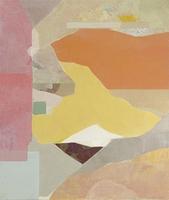
Red and Orange
Kenzo Okada
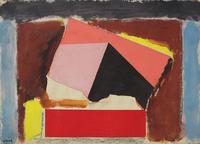
Composition with Evanescent Butterfly
Ion Pacea
Ocean Park #32
Richard Diebenkorn
As grandes viagens
Mario Cesariny

Omphale II
Pablo Palazuelo
Untitled
Kenzo Okada
Untitled
Giuseppe Santomaso
Mit Rot
Fritz Winter
Untitled
Giuseppe Santomaso
Coexistenta Spatiilor Contradictorii II
Gil Nicolescu
Washington, D.C., October #8, 1964
Edward Corbett

Estructuras Verdes
Gunther Gerzso
White and Brown
Kenzo Okada
P-T #5
Edward Corbett
Red Line I
Larry Zox
Spring
Ray Parker