Flowers
Analisi esperta di Flowers di Ding Yanyong
Stile: Expressionism, Ink and wash painting · Genere: flower painting
Expert Analysis of "Flowers" by Ding Yanyong
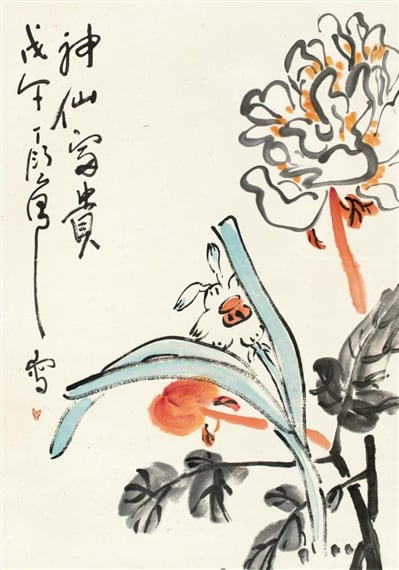
Ding Yanyong’s Flowers stands as a pivotal work of early 20th-century Chinese modernism, marking a bold synthesis of Western Expressionist emotion and Eastern ink-wash tradition. The painting is significant for how it reimagines the classic Chinese flower painting genre—typically governed by meticulous brushwork and restrained elegance—through a radically subjective lens.
In the Expressionist vein, Ding prioritizes raw feeling over naturalistic fidelity. The flowers are not depicted with delicate, botanical precision; instead, their forms are exaggerated, almost turbulent, suggesting inner vitality or psychological intensity. The brushwork, while retaining the speed and fluidity of ink-wash, becomes more gestural and abrupt, akin to the expressive stroke of a European Expressionist such as Emil Nolde or the later works of Edvard Munch.
Yet the medium remains unmistakably Chinese. Using ink on paper, Ding capitalizes on the inherent spontaneity of xieyi (freehand brushwork). The saturation of ink—from deep, dense blacks to pale, watery grays—creates a tonal drama that echoes traditional literati painting, but here the dark washes feel charged with modern anxiety rather than serene contemplation. The composition often employs asymmetrical balance and ample negative space, a hallmark of Chinese aesthetics, yet the aggressive splashes of color (if any) or the distorted stems push against that harmony.
What makes Flowers significant is its role in the cross-cultural dialogue of modern art. Ding Yanyong was part of the Lingnan School and later a teacher in Hong Kong, where he resisted both pure traditionalism and wholesale Westernization. This work embodies a hybrid modernity: it retains the soul of ink painting—its calligraphic energy, its transparency, its respect for emptiness—while embracing Expressionism’s subjective truth. The result is a flower painting that is simultaneously intimate and explosive, meditative and restless. It challenges the viewer to see a chrysanthemum or peony not as a symbol of virtue, but as a mirror of the artist’s own fractured, modern consciousness. In this, Flowers becomes a landmark of how Chinese ink painting could absorb and transform Western modernist impulses without losing its identity.
Visivamente simili
20 opere con composizione e palette affini
The Daffodils
Shitao
Untitled
Ike no Taiga
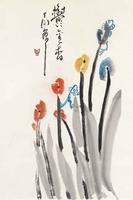
Tadpoles on Tulips
Ding Yanyong
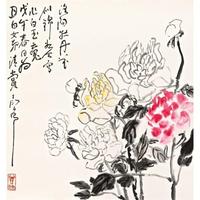
Peony
Ding Yanyong
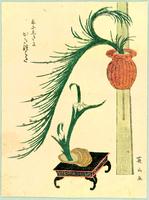
Flower Arranging
Keisai Eisen
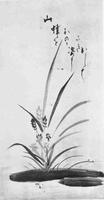
Orchid and Bee
Hakuin Ekaku
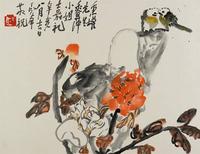
Birds and Peonies (Lovebirds)
Ding Yanyong
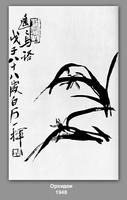
Orchids
Qi Baishi
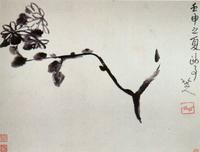
Chrysantheme
Bada Shanren
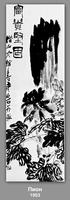
Peony
Qi Baishi
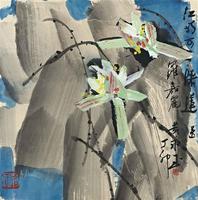
Colourful Lotus
Huang Yongyu
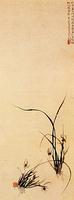
Shoots of orchids
Shitao
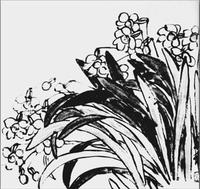
Daffodils
Qi Baishi
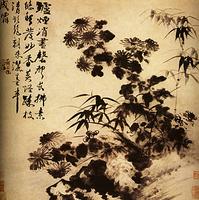
Chrysanthemums and bamboo
Shitao
Lovebirds
Ding Yanyong
Chrysanthemum
Qi Baishi
Flowers
Chen Peiqiu
Goldfish
Ding Yanyong
Green wine
Qi Baishi
Peony
Qi Baishi