Expert analysis of Ding Yanyong’s Lotus, Frogs and Mandarin Ducks
Style: Expressionism, Ink and wash painting · Genre: animal painting
Expert Analysis: "Lotus, Frogs and Mandarin Ducks" by Ding Yanyong
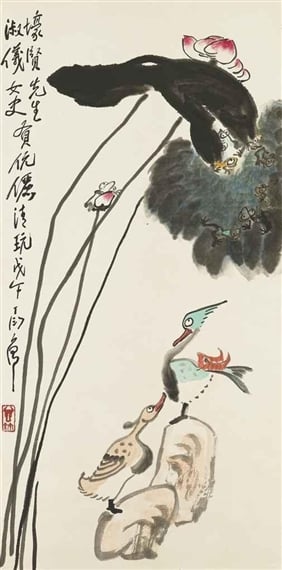
Ding Yanyong’s Lotus, Frogs and Mandarin Ducks stands as a masterful synthesis of two seemingly disparate traditions—the centuries-old discipline of Chinese ink-and-wash painting and the vibrant, emotional force of Western Expressionism. This work is significant precisely for the way it breaks from the restrained elegance of classical literati painting without abandoning its core materials or subject matter.
The Subject as Symbol, Reimagined
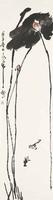
The lotus, frogs, and mandarin ducks are deeply emblematic in Chinese art: the lotus represents purity and spiritual transcendence; mandarin ducks symbolize marital fidelity; and frogs are associated with fertility and prosperity. Ding retains these layers of meaning but rejects the meticulous, idealized rendering typical of traditional bird-and-flower paintings. Instead, he treats these creatures as living, kinetic presences. The frogs appear almost sculptural in their bulging forms, while the mandarin ducks swim with a quick, gestural dash of ink that captures motion rather than detail.
The Fusion of Ink and Expressionism
What makes this work revolutionary is Ding’s handling of the brush. Traditional ink painting prizes the subtle gradations of xieyi (freehand style) and the disciplined control of line. Here, Ding pushes that technique toward a raw, expressive vitality. The lotus leaves are splayed in broad, wet washes of deep ink, some edges bleeding into the paper—an effect that conveys organic growth and decay. The calligraphic lines are not merely descriptive but charged with emotion; they twist, press, and release energy, echoing the Fauvist and Expressionist impulses Ding absorbed during his studies in France. The result is a painting that feels both ancient and startlingly modern.
Color and Space
Ding’s color choices are equally bold. While classical ink painting often reserves strong color for minimal accent, here the frogs are punctuated with vivid orange-red—a jarring, joyous note that forces the eye across the composition. The white of the paper is not passive negative space; it becomes a luminous field from which the forms emerge, a technique that aligns with Expressionism’s insistence on the artist’s subjective vision. The lotus stems cut across the picture plane like abstract lines, disrupting traditional spatial depth and creating a flattened, dynamic composition that is more felt than observed.
Significance in Context
Ding Yanyong was a key figure in the modernization of Chinese painting during the early 20th century. Lotus, Frogs and Mandarin Ducks exemplifies his belief that Chinese art could absorb Western expressive language without losing its soul. By applying Expressionist spontaneity to beloved Chinese subjects, Ding liberated ink painting from rigid literati conventions, opening it to a vitality and emotional directness that would influence generations of later artists. This work is not merely a depiction of nature; it is a declaration that tradition and innovation can coexist, each energizing the other.
Visually similar
20 works with related composition and palette
Lotus and Ducks
Ding Yanyong
Mandarin Ducks
Ding Yanyong
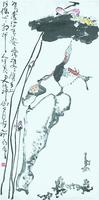
Untitled
Ding Yanyong
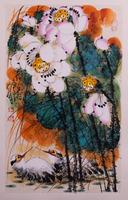
Fragrance of lotus
Dayou Lu
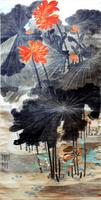
Lotus and Mandarin Ducks
Chang Dai-chien
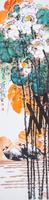
Fragrance of lotus
Dayou Lu
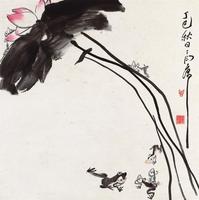
Lotus and Frogs
Ding Yanyong
Morning in the lotus pond
Dayou Lu
Lotus with birds
Huang Yongyu
Two Crows in a Tree
Shen Zhou
Fragrance of lotus
Dayou Lu
Lotus
Chang Dai-chien
Lotus pond clear dew
Dayou Lu
Two Ducks in the Lotus Pond
Huang Yongyu
The Lotus
Shitao
Goose
Ding Yanyong
Two Lotus
Huang Yongyu
Lotus and Frogs
Ding Yanyong
Flower and Rock
Lan Ying
On the Lotus Pond
Shitao