Expert analysis of Natalia Dumitresco’s Composition
Style: Art Informel · Genre: abstract
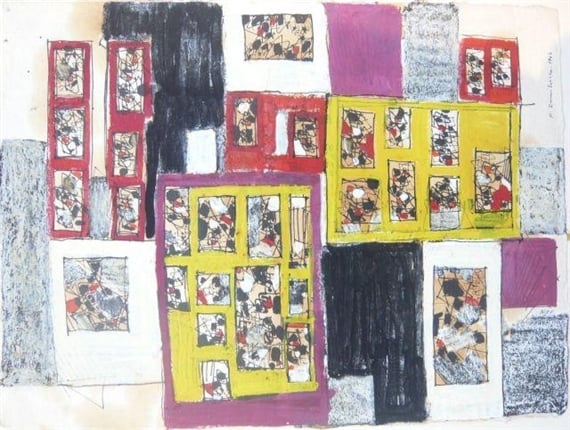
Expert Analysis: "Composition" by Natalia Dumitresco
Natalia Dumitresco’s “Composition” is a quintessential example of Art Informel—a post‑World War II European movement that rejected geometric abstraction in favor of intuitive, gestural, and material-driven expression. As an abstract work, it embodies the core tenets of the style: spontaneity, the primacy of the artist’s hand, and a deep engagement with the physicality of paint.
Significance within Art Informel
-
Gestural Freedom and Materiality
Like other Informel masters (e.g., Jean Fautrier, Pierre Soulages), Dumitresco builds her composition through layered, often agitated brushstrokes and textured surfaces. “Composition” likely emphasizes the raw, unmediated act of painting—where the canvas becomes a record of bodily gesture and emotional impulse, rather than a pre-planned design. -
A Bridge Between Eastern and Western Abstraction
Dumitresco, a Romanian-born artist who worked in France, brings a distinctive Eastern European sensibility to the Parisian abstract scene of the 1950s–60s. Her work often fuses the lyrical, folk-influenced color sense of her homeland with the existential urgency of French Art Informel. In “Composition”, this synthesis may manifest as a palette that is both earthy and luminous—grounded yet striving toward the ineffable. -
Rejection of Form in Favor of Process
In contrast to contemporaneous Abstract Expressionism (which often retains a heroic scale and symbolic content), Art Informel emphasizes formlessness and the dissolution of traditional compositional boundaries. Dumitresco’s “Composition” likely challenges the viewer’s expectation of a focal point, instead offering a dense, all-over field of marks, drips, and scraped areas—a visual equivalent of the chaos and fragility of the post-war human condition. -
Legacy as a Female Voice in a Male-Dominated Movement
Dumitresco is often overlooked in canonical histories of Art Informel, yet her work stands as a crucial counterbalance: it demonstrates that the movement’s radical subjectivity and anti-formalism also provided a platform for women artists to assert a deeply personal, non-dogmatic vision. “Composition” serves as a testament to her role in expanding the expressive range of European abstraction.
In summary, “Composition” is significant not only as a representative of Art Informel’s core aesthetic—gesture, texture, and spontaneity—but also as a work that embodies the movement’s trans-national, deeply humanist impulse. Dumitresco transforms the canvas into a site of existential encounter, where meaning emerges not from representation, but from the act of making itself.
Visually similar
20 works with related composition and palette
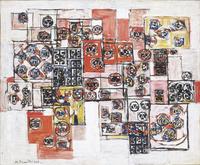
Red and Black
Natalia Dumitresco
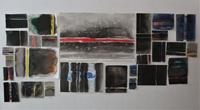
Wall of light
Iman Shaggag
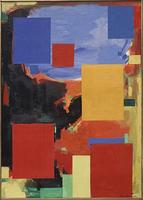
Goliath
Hans Hofmann
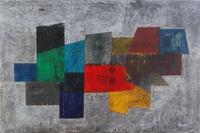
Cubes
Jean David
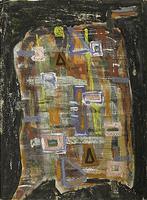
Untitled (Abstraction)
Betty Parsons
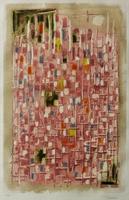
Composition Rose
Roger Bissière
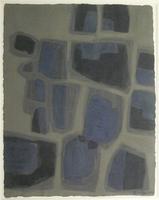
Composition Abstraite
Raoul Ubac
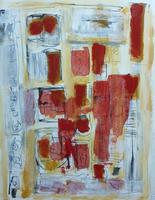
no title
Ben Vollers
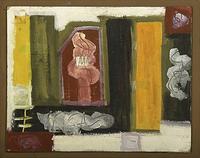
Untitled (Abstraction)
Betty Parsons
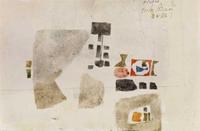
Komposition
Julius Bissier
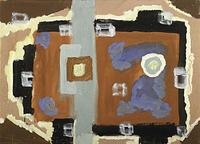
Untitled (Abstraction)
Betty Parsons
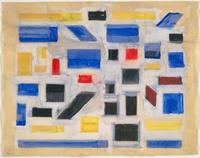
Untitled
Bart van der Leck
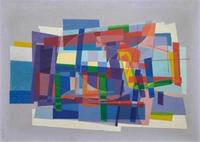
Sea Picture
Leo Leuppi
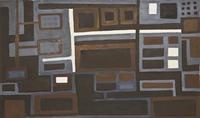
Untitled
Greta Freist
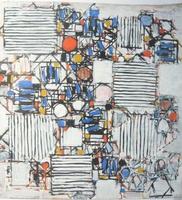
Cannes
Natalia Dumitresco
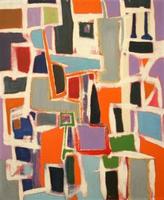
Untitled Abstraction
Frank Stella
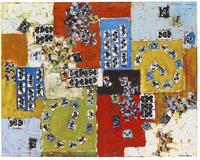
Fleurs
Natalia Dumitresco
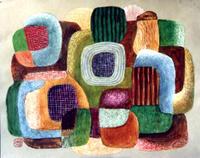
Golden People
George Saru
Creek
Robert Rauschenberg
Yellow Painting: October 1958 May/June 1959
Patrick Heron