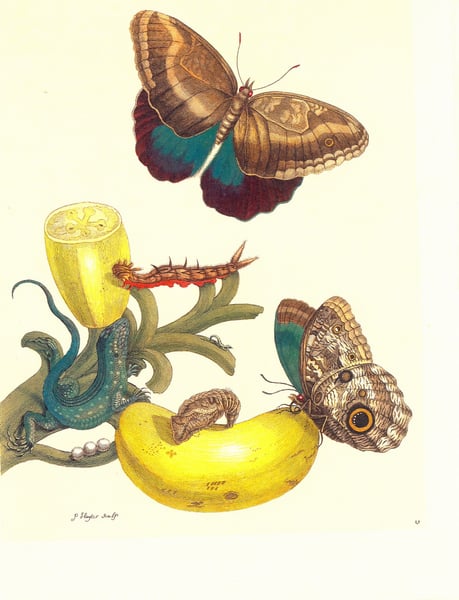
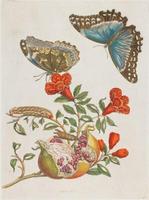
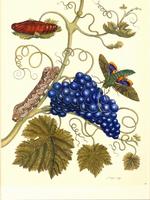
Expert Analysis of "Plate #23- Musa paradisiaca, Caligo teucer and Cnemidophorus lemniscatus" by Maria Sibylla Merian
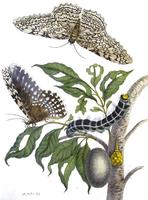
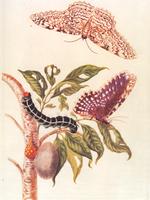
This work exemplifies the Naturalist style through its meticulous, lifelike depiction of three distinct natural specimens: the banana plant (Musa paradisiaca), the owl butterfly (Caligo teucer), and the rainbow whiptail lizard (Cnemidophorus lemniscatus). As an animal painting within the broader natural-history tradition, Merian’s plate transcends mere scientific illustration by integrating ecological relationships—the butterfly and lizard are shown interacting with the plant, suggesting a living food web.
Significance lies in Merian’s pioneering synthesis of art and empirical observation. During the 17th–18th centuries, she was among the first to depict insects and reptiles in their native habitats, challenging the static, isolated specimen conventions of her time. Here, the composition balances scientific accuracy (the banana’s fruiting stage, the butterfly’s wing patterns, the lizard’s scales) with aesthetic harmony: the curling banana leaves frame the creatures, while the lizard’s sinuous pose introduces dynamic tension. This plate, from her celebrated Metamorphosis Insectorum Surinamensium, helped revolutionize natural history by treating animals as active participants in an ecosystem, not as detached curiosities. Merian’s work remains a cornerstone of both Naturalist art and entomological illustration.