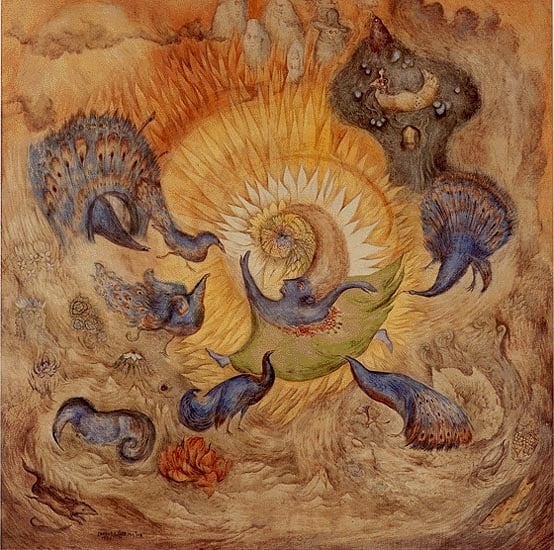
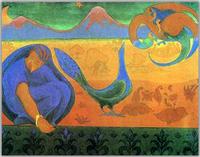
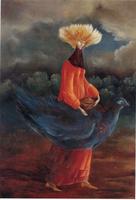
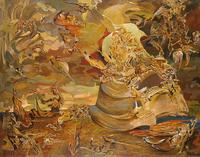
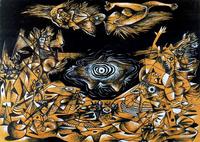
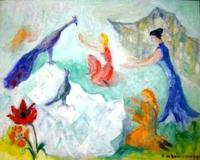
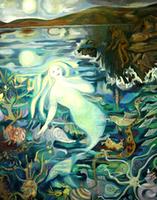
“Peacocks of Chen” by Leonora Carrington is a quintessential example of Surrealist symbolic painting, but its significance lies in how Carrington subverts traditional surrealist tropes through a deeply personal, female-centric mythology. While many male surrealists used peacocks as symbols of vanity or exoticism, Carrington reimagines them as guardians of esoteric knowledge—likely alluding to the alchemical and lunar associations found in her own invented cosmology. The enigmatic “Chen” may reference the Chinese Chen (晨, “morning”) or a personal cipher, aligning with Carrington’s lifelong fascination with hybrid creatures and liminal states. By fusing Celtic, Mesoamerican, and occult references with a distinctly female gaze, the work challenges the era’s dominant male surrealist narratives, making it a landmark in the movement’s evolution toward individual, mythopoetic expression.