Expert analysis of Mario Schifano’s Il Sogno Dada di Arturo Schwarz
Style: Pop Art · Genre: figurative
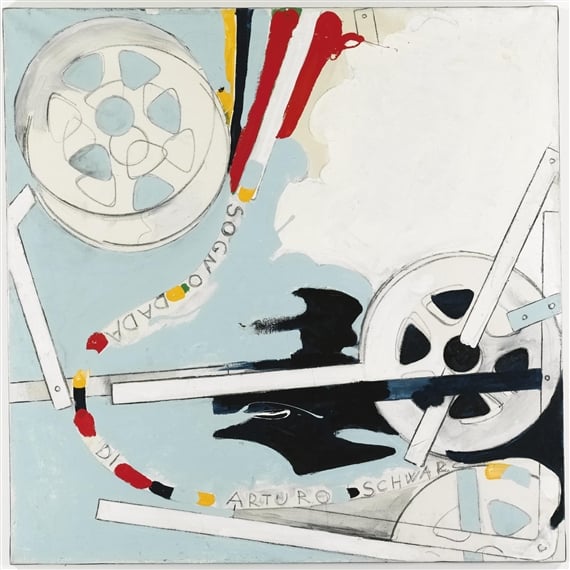
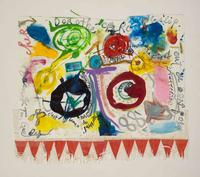
Expert Analysis: "Il Sogno Dada di Arturo Schwarz" by Mario Schifano
Mario Schifano (1934–1998) was a leading figure in Italian Pop Art, and this work holds particular significance as a conceptual dialogue between two avant-garde movements—Pop and Dada—and a tribute to the influential art historian and collector Arturo Schwarz. The title translates to "The Dada Dream of Arturo Schwarz," signaling a deliberate fusion of Pop’s mass-media iconography with Dada’s subversive, anti-art spirit.
Stylistically, Schifano employs the bold graphic language of Pop—flat colors, appropriated imagery, and commercial aesthetics—but infuses it with Dada’s irreverence and chance operations. The “figurative” genre manifests through recognizable forms (perhaps photographic silkscreens or painted symbols drawn from advertising, cinema, or art history), yet these figures are fragmented, layered, or juxtaposed in a manner that disrupts narrative coherence. This reflects Schifano’s signature method of recycling and deconstructing visual clichés.
What makes this artwork significant is its bridging of two critical moments in 20th-century art. By directly referencing Schwarz—the scholar who rediscovered and championed Marcel Duchamp—Schifano aligns his Pop practice with Dada’s legacy of questioning authorship, originality, and meaning. The work thus becomes a meta-commentary on the genealogy of avant-gardes, suggesting that Pop Art’s fascination with consumer culture is itself a dreaming continuation of Dada’s ironic critique. In the context of 1960s Italy, where Schifano operated, this piece also asserts a cosmopolitan, intellectual Pop distinct from American counterparts, linking local art history with international radical movements.
Genre
Style
Visually similar
20 works with related composition and palette
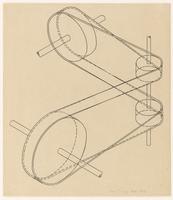
Untitled
Man Ray
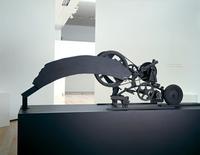
Char MK
Jean Tinguely
Construction for Noble Ladies
Kurt Schwitters
Untitled
Max Ernst
Dream-factory
Ben Vollers
Agricultural Machinery
Fernand Leger
Untitled
Lolo Soldevilla
Suzuki (Hiroshima)
Jean Tinguely
Méta-Matic No. 14
Jean Tinguely
Untitled 15
Ikhwan Sugianto
Drill
Frantisek Kupka
Music
Frantisek Kupka
Tondo #22
Hedda Sterne
The Corner of the Woods
Frances Hodgkins
Allegorie No. 1: Family (b)
Koshiro Onchi
Victory over the Sun: All is well that begins well and has no end
El Lissitzky
Wundermaschine - Méta-Kandinsky I
Jean Tinguely
Painting (formerly Machine)
Morton Schamberg
Aquarelle
Jean Rene Bazaine
Mechanical Element
Franciska Clausen