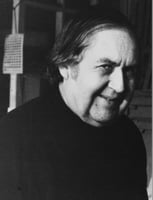
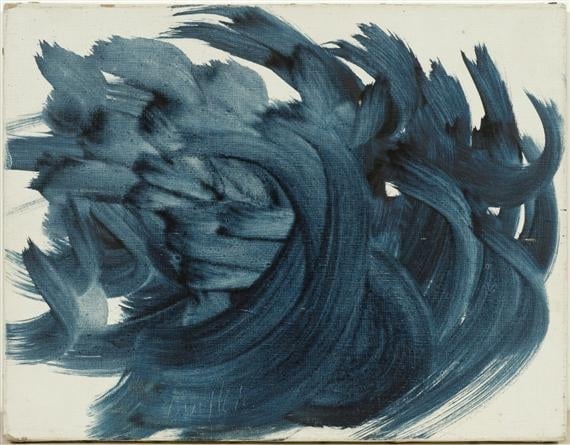
Expert analysis of Rene Duvillier’s Le vent no 11
Style: Lyrical Abstraction · Genre: abstract
Expert Analysis of "Le vent no 11" by René Duvillier
René Duvillier’s Le vent no 11 stands as a compelling exemplar of Lyrical Abstraction, a post-war European movement that championed spontaneous, emotive gesture over geometric rigidity. The title—“The Wind, No. 11”—immediately signals a serial exploration of natural forces transformed into pure painterly sensation. In this work, Duvillier channels the invisible, kinetic energy of wind through sweeping strokes, layered washes, and a dynamic interplay of color and void. The “no. 11” indicates a deliberate, almost musical variation on a theme, where each iteration refines the artist’s response to movement and atmosphere.
Within Lyrical Abstraction, significance arises from how the artist balances controlled composition with the appearance of improvisation. Here, Duvillier likely employs a palette that suggests airy lightness—soft blues, grays, or whites—punctuated by darker accents that mimic gusts or turbulence. The brushwork is neither rigidly geometric nor fully chaotic; it retains a palpable human touch, echoing the “lyrical” imperative to translate inner emotion into visible form. Unlike the cooler, more cerebral abstractions of contemporary movements, Le vent no 11 invites viewers to sense the physical act of painting—the wrist’s flick, the drip, the smear—as a direct analogue to the wind’s capriciousness.
This work’s significance also lies in its serial nature: by numbering the piece, Duvillier acknowledges that no single canvas can capture wind’s essence; instead, each version offers a momentary, subjective trace. Le vent no 11 thus becomes both an object of aesthetic contemplation and a record of process—a hallmark of Lyrical Abstraction’s commitment to vitality, spontaneity, and the poetry of the unseen.
Visually similar
20 works with related composition and palette
BB64
Kazuo Shiraga
Sea
Rene Duvillier
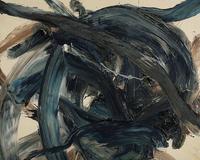
Vaisravana
Kazuo Shiraga
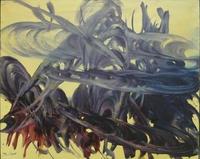
Cers I
Rene Duvillier
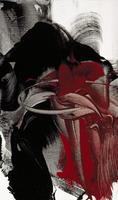
Volcanic lands
Monique Orsini
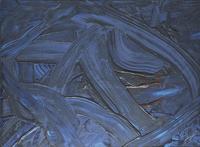
Koushin-san
Kazuo Shiraga
Dance of the Two-Headed Dragon
Kazuo Shiraga
Chisuisei Tetpihaku
Kazuo Shiraga
Kaibun
Kazuo Shiraga
Javelots et la mer, voyage intérieur
Rene Duvillier
Traverses
Rene Duvillier
Shoah (Forest)
Wilhelm Sasnal
Untitled
Monique Orsini
Smolbeck
Karl Otto Gotz
Untitled
Kazuo Shiraga
Composition III
Monique Orsini
Tomomori jusui (Blue Fudo Flame)
Kazuo Shiraga
River Avon mud drawing
Richard Long
Two Friends
Omer Uluc
Koushin-san
Kazuo Shiraga