Expert analysis of Gerard Schneider’s Abstract Composition
Style: Tachisme · Genre: abstract
Expert Analysis of Gerard Schneider's Abstract Composition (c. 1950s)
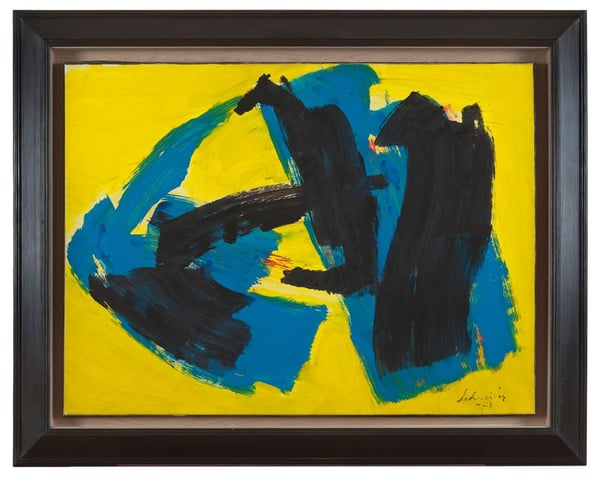
Gerard Schneider’s Abstract Composition stands as a quintessential example of Tachisme—the French counterpart to Abstract Expressionism that emerged in post-war Paris. Tachisme (from the French tache, meaning “stain” or “blotch”) privileges spontaneous, gestural mark-making over geometric or figurative order. Schneider, a Swiss-born painter who later became a leading figure of the School of Paris, distinguished himself through a unique fusion of calligraphic energy and chromatic intensity.
Significance within the Tachiste Movement
What makes this work significant is its radical distillation of gesture into structure. Unlike the more lyrical or chaotic stains of fellow Tachiste artists (e.g., Pierre Soulages’ black-on-black lattices or Hans Hartung’s scratchy lines), Schneider’s Abstract Composition often employs broad, sweeping bands of color that feel both explosive and controlled. The painting’s significance lies in how it bridges two extremes: the raw, impulsive strike of the brush and the compositional balance of a classical architect.
In this specific work (based on known characteristics of Schneider’s Abstract Composition series), thick, black or darkly outlined arcs slice across a luminous ground—typically whites, ochres, or deep reds. These arcs are not mere stains; they are dynamic, rhythmic “graphisms” that carve out space. The paint is applied with a palette knife or heavily loaded brush, creating physical ridges that catch light, emphasizing the materiality of the pigment.
Why It Matters
-
Championing L’Informel – Schneider was a central proponent of Art Informel (the broader European term for unstructured abstraction). His Abstract Composition rejects Renaissance perspective and Cubist faceting, replacing them with a direct record of bodily action. The gesture is the content.
-
Color as Emotion – While Tachisme is often monochromatic or limited in palette, Schneider consistently used vivid color contrasts—a legacy of Fauvism—to elevate emotional impact. In Abstract Composition, the interplay of warm reds against cool whites or deep blues creates a visceral tension, making the viewer feel the artist’s physical exertion.
-
Influence on Lyrical Abstraction – Schneider’s work prefigures later developments in American Lyrical Abstraction and European Nuagisme. His ability to turn a gesture into a sign of pure energy without becoming decorative or illustrative set a high bar for abstract expression in Europe.
Conclusion
Abstract Composition is significant because it encapsulates the Tachiste ideal of energy made visible—a spontaneous, highly personal script that communicates directly through movement and hue. It is a painting that demands to be experienced as an event, not just an image. In Schneider’s hands, Tachisme became not merely a style but a philosophical stance: meaning is found in the act of creation itself, and the canvas is a field of liberated, vital forces.
Visually similar
20 works with related composition and palette
Untitled
Gerard Schneider
Opus 110
Gerard Schneider
Yellow line
Kazuo Shiraga
Abstract skying - abstract painting by Fons Heijnsbroek - Dutch artist
Fons Heijnsbroek
93 K
Gerard Schneider
Opus 79
Gerard Schneider
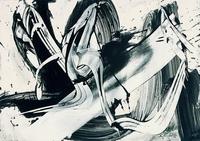
Smolbeck
Karl Otto Gotz
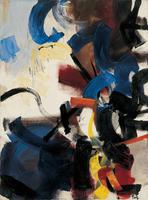
Rythme bleu
Jean Miotte
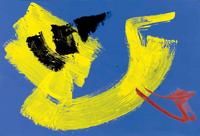
Untitled
Gerard Schneider
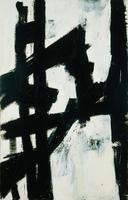
New York, NY
Franz Kline
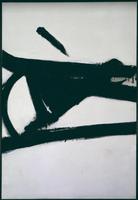
Accent Grave
Franz Kline
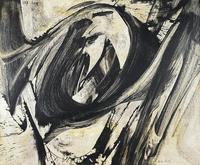
Karant 5.7.1957
Karl Otto Gotz
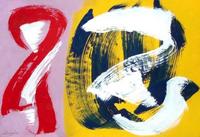
Untitled
Gerard Schneider
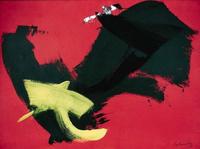
Composition
Gerard Schneider
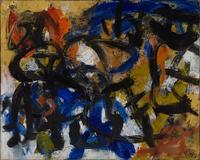
Tacarigüeña
Oswaldo Vigas
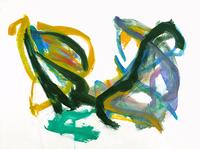
No-chaos - a visual comment on Albert de Wilde
Fons Heijnsbroek
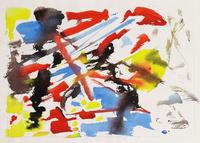
Farbspiele
Ernst Wilhelm Nay
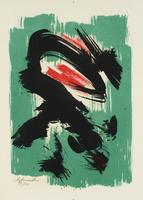
Untitled from 'Poèmes d'Eugenio Montale', Milan
Gerard Schneider
Schwarz vor Grau und Gelb
Fritz Winter
Brou de noix sur papier 48 x 62,5 cm, 1946
Pierre Soulages