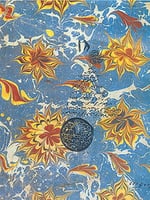
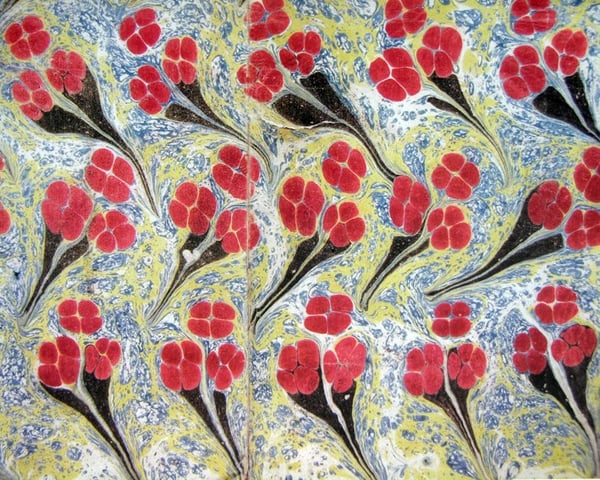
Ebru (attributed)
Analisi esperta di Ebru (attributed) di Hatip Mehmed Efendi
Stile: Ottoman Period · Genere: tessellation
Expert Analysis: "Ebru (attributed)" by Hatip Mehmed Efendi
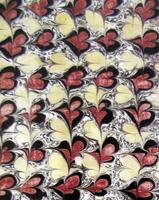
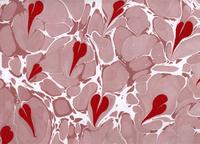
This attributed work by the celebrated Ottoman master Hatip Mehmed Efendi represents a pivotal intersection of two distinct artistic traditions: the fluid, organic world of ebru (Turkish marbling) and the rigorous, mathematical order of geometric tessellation. While ebru is historically known for its swirling, abstract color fields, here the artist imposes a crystalline, repeating structure—a tessellation of interlocking forms—achieved by controlling the marbling process with a stylus or comb to create precise, grid-like patterns. This innovation is the work’s central significance.
Significance within the Ottoman Period:
-
Technical Mastery and Innovation: Hatip Mehmed Efendi (d. 1773) is historically credited with developing the hatip ebru technique, named after his honorific title “Hatip” (orator). Unlike earlier ebru, which relied on free-form color dispersion, his method involved drawing a stick or comb through the pigment-laden size to generate repeatable, symmetrical motifs. This artwork exemplifies that pioneering shift: the tessellation is not merely decorative but testifies to a new level of control over the medium, transforming a spontaneous art into one of calculated precision.
-
Integration of Islamic Geometric Tradition: Tessellation is a hallmark of Islamic art, rooted in the avoidance of figural representation and the celebration of infinite pattern as a reflection of divine unity. By channeling this aesthetic into ebru—a medium previously associated with fluid abstraction—Hatip Mehmed Efendi effectively bridges the gap between calligraphy, manuscript illumination, and pure pattern-making. The work thus becomes a material conversation between the transient beauty of marbling and the eternal order of geometry.
-
Cultural and Historical Context: The Ottoman 18th century witnessed a flourishing of decorative arts under the Tulip Period, with a taste for intricate, repeatable designs in textiles, tiles, and manuscripts. This ebru tessellation would have served as an advanced endpaper for luxury books or as a standalone decorative panel. Its attribution to a named master elevates it from anonymous craft to a personal statement of artistic identity—rare for ebru of the era, where artists seldom signed works.
Genre and Artistic Impact:
As a tessellation, this piece challenges the typical ephemeral character of marbling. Each unit—whether a stylized rosette, diamond, or star—locks into its neighbor, creating a seamless, repeating field that invites endless contemplation. The visual effect balances the tension between the accidental bleeding of pigments (a signature of ebru) and the deliberate boundaries of the pattern. This duality makes the work a conceptual forerunner to later Op Art and algorithmic pattern design.
In summary, Ebru (attributed) by Hatip Mehmed Efendi is significant because it reimagines a fluid medium through the lens of Islamic geometric rigor, marking a transformative moment in Ottoman decorative arts. It stands as a testament to one master’s ability to impose order on chaos, achieving a hypnotic equilibrium that still resonates with contemporary sensibilities.
Visivamente simili
20 opere con composizione e palette affini
Hatip Ebru
Mustafa Duzgunman
Çiçekli Ebru
Necmeddin Okyay
Ebru (attributed)
Hatip Mehmed Efendi
Süleymaniye Kütüphanesi
Hatip Mehmed Efendi
Gelgit
Mustafa Duzgunman
Ebru (attributed)
Hatip Mehmed Efendi
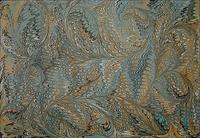
Taraklı Ebru
Mustafa Duzgunman
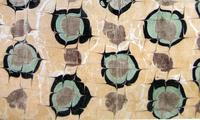
Ebru (attributed)
Hatip Mehmed Efendi
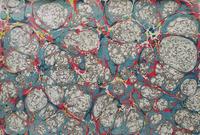
Battal Ebru
Mustafa Duzgunman
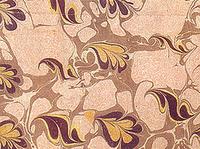
Süleymaniye Kütüphanesi
Hatip Mehmed Efendi
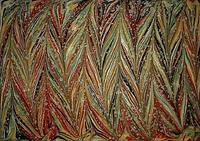
Gelgit
Mustafa Duzgunman
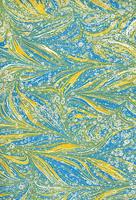
Gelgit
Mustafa Duzgunman
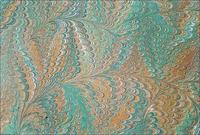
Taraklı Ebru
Mustafa Duzgunman
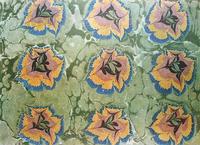
Hatip Ebru
Mustafa Duzgunman
Gelgit
Mustafa Duzgunman
Hatip Ebru
Mustafa Duzgunman
Taraklı Ebru
Mustafa Duzgunman
Battal Ebru
Mustafa Duzgunman
Gelgit
Mustafa Duzgunman
Hatip Ebru
Mustafa Duzgunman