Manuscript
Analisi esperta di Manuscript di Mir Emad Hassani
Stile: Safavid Period · Genere: calligraphy
Expert Analysis: "Manuscript" by Mir Emad Hassani (Safavid Period)
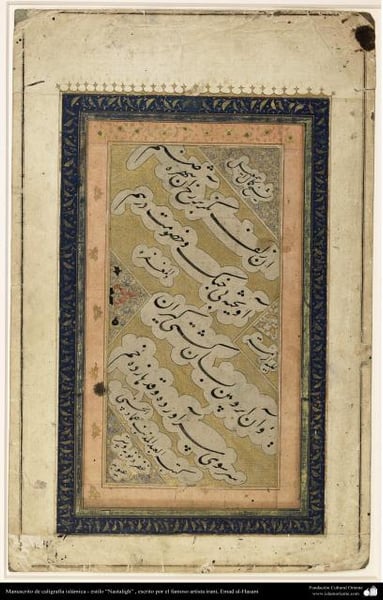
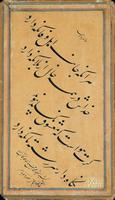
Mir Emad Hassani (c. 1554–1615) is widely regarded as the preeminent master of nasta'liq calligraphy, a script that dominates Persian manuscript traditions. This work, simply titled "Manuscript," exemplifies the apex of Safavid calligraphic art—a period when the written word was elevated from mere communication to spiritual and aesthetic devotion.
Significance in style and period:
- Perfection of nasta'liq: Mir Emad codified and refined the nasta'liq script, known for its fluid, sloping lines and dynamic interplay of thick and thin strokes. In this manuscript, every letter breathes with controlled rhythm: the ascending curves (e.g., alif and lam) are taut and graceful, while descending tails (e.g., ye and nun) taper into fine, airy points. This balance of strength and delicacy is a hallmark of his hand.
- Safavid context: The Safavid dynasty (1501–1736) championed Persian identity and Shia Islam, and the art of the book reached its zenith in the royal kitabkhana (library-workshop). Mir Emad worked outside the court for much of his career, yet his style became the definitive standard for nasta'liq, influencing generations of calligraphers across Iran, India, and the Ottoman world.
- Composition and negative space: Unlike many ornate manuscripts of the period, Mir Emad’s work often relies on the purity of line rather than elaborate illumination. Here, the dark ink on warm paper creates a stark, meditative contrast. The letters are arranged in a diagonal cascade, guiding the eye down the page with a musical cadence. The generous empty space around the text is not vacant—it is a positive, breathing element that accentuates the script’s elegance.
- Technical mastery: The consistency of ink density (thick where the pen turns, thin on straight strokes) demonstrates his absolute control of the qalam (reed pen). The ligatures between letters flow without breaks, achieving a seamless ribbon of writing. This is calligraphy as performance: each stroke is spontaneous yet irrevocable.
Artistic legacy: “Manuscript” is significant not only as a pristine example of Mir Emad’s oeuvre but as a turning point in Persian calligraphy. He transformed nasta'liq from a practical script into a transcendental art form, where the text’s meaning is inseparable from its visual beauty. His work would later inspire the Mughal and Qajar schools, and today it stands as a paragon of Islamic calligraphic art.
Visivamente simili
20 opere con composizione e palette affini
Safinah Fragment
Mir Emad Hassani
Panel
Mir Ali Tabrizi
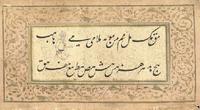
An album of Nasta'liq Calligraphy
Mir Ali Tabrizi
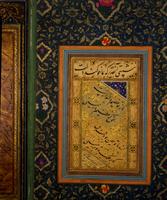
Untitled
Mir Emad Hassani
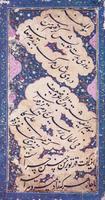
Untitled
Mir Ali Tabrizi
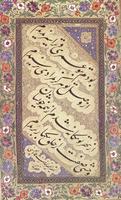
Chalipa panel
Mir Emad Hassani
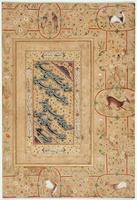
Persian calligraphy
Mir Ali Tabrizi
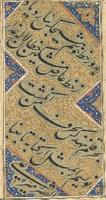
A Calligraphic Leaf
Mir Ali Tabrizi
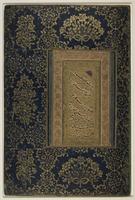
Prayers for Safety and Success
Mir Ali Tabrizi
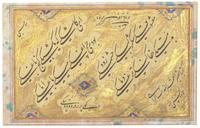
Calligraphy
Mir Emad Hassani
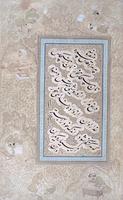
Untitled
Mir Ali Tabrizi
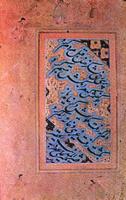
Untitled
Mir Ali Tabrizi
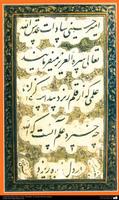
Untitled
Mir Emad Hassani
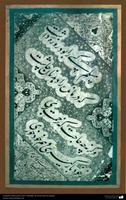
Calligraphy
Mir Emad Hassani
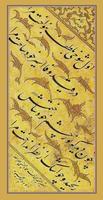
Untitled
Mir Emad Hassani
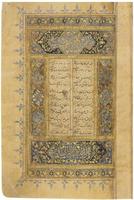
Khamseh
Mir Ali Tabrizi
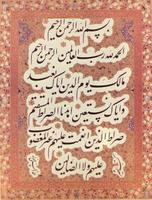
Al-Fatiha
Mir Emad Hassani
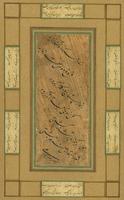
Untitled
Mir Ali Tabrizi
Kıta
Mustafa Rakim
Reclining Nude
Reza Abbasi