Expert analysis of Pisanello’s Apes
Style: Early Renaissance · Genre: sketch and study
Expert Analysis of "Apes" by Pisanello
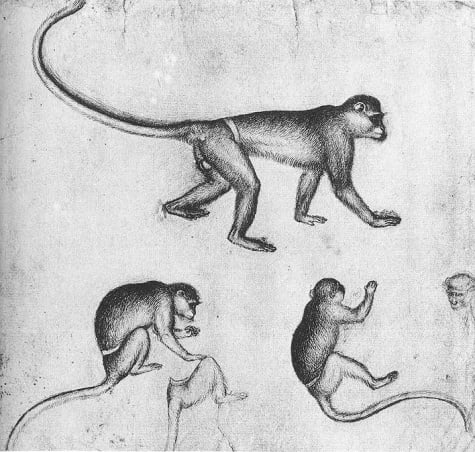
Pisanello’s Apes exemplifies the transition from the decorative Late Gothic tradition to the empirical naturalism of the Early Renaissance. As a sketch and study, the work is significant not for monumental composition but as a testament to the era’s burgeoning interest in direct observation of the natural world.
Observational Precision: The sketch captures the anatomical structure and gestural life of apes with a fidelity that was pioneering for its time. Pisanello’s careful attention to posture, fur texture, and facial expression reveals a shift away from medieval animal symbolism—where beasts often served moral or allegorical purposes—toward a scientific curiosity about living creatures. This aligns with the Early Renaissance emphasis on studying nature as a foundation for art.
Role as a Study: The piece is valuable for understanding the working methods of an Early Renaissance master. Such sketches were often preliminary studies for larger frescoes or paintings, demonstrating how artists built a visual lexicon from life. In Apes, the loose, energetic lines and selective hatching show a mind at work, analyzing form and movement rather than merely copying a static model.
Influence on Renaissance Naturalism: Pisanello’s animal studies, including Apes, helped establish a tradition of detailed zoomorphic representation that later artists—such as Leonardo da Vinci—would develop further. The sketch’s focus on the apes’ expressive hands and faces hints at an emerging Renaissance interest in the continuity between human and animal anatomy, a theme that would grow in complexity over the following century.
In summary, Apes is significant as a rare Early Renaissance document of direct naturalistic observation, bridging medieval bestiary conventions and the future scientific illustration and naturalism of the High Renaissance.
Visually similar
20 works with related composition and palette
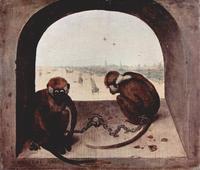
Two Monkeys
Pieter Bruegel the Elder
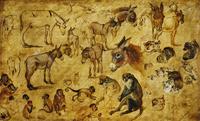
Studies of animals (donkeys, cats and monkeys)
Jan Brueghel the Elder
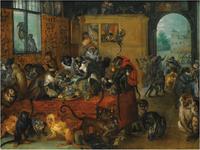
Monkeys feasting (Singerie)
Jan Brueghel the Elder
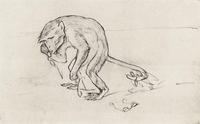
Monkey and the glasses
Valentin Serov
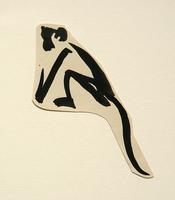
UNTITLED (MONKEY)
Alexander Calder
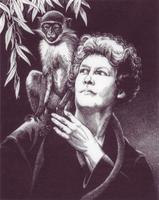
Jaspa and Me
Dorothy Lathrop
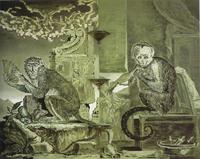
Black Apes
Arsen Savadov
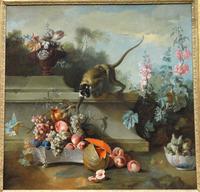
Still Life with Monkey, Fruits, and Flowers
Jean-Baptiste Oudry
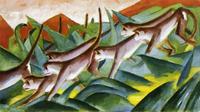
Monkey Frieze
Franz Marc
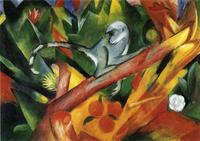
The Monkey
Franz Marc
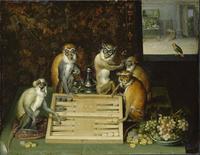
Monkeys playing backgammon
Frans Francken the Younger
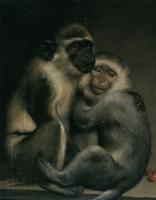
Abelard and Heloise
Gabriel von Max
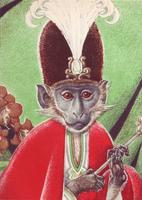
Mr. Bumps and His Monkey by Walter de la Mare
Dorothy Lathrop
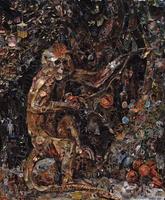
Green Monkey, after George Stubbs (Pictures of Magazines 2)
Vik Muniz
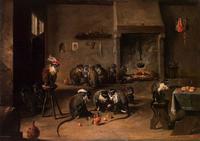
Monkeys in a Kitchen
David Teniers the Younger
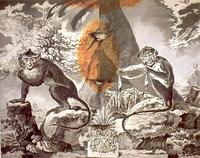
Black Apes
Arsen Savadov
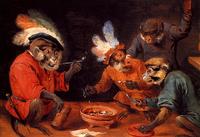
Monkey Tavern
David Teniers the Younger
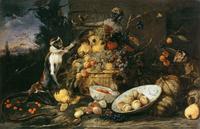
Three Monkeys Stealing Fruit
Frans Snyders
Untitled
Alighiero Boetti
Allegory of tulip mania
Jan Brueghel the Younger