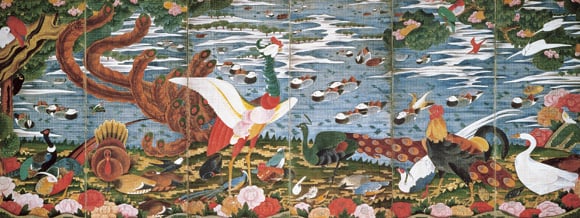
Birds, Animals, and Flowering Plants in Imaginary Scene
Экспертный разбор работы «Birds, Animals, and Flowering Plants in Imaginary Scene» художника Ito Jakuchu
Стиль: Ukiyo-e · Жанр: animal painting
Expert Analysis: "Birds, Animals, and Flowering Plants in Imaginary Scene" by Itō Jakuchū
Itō Jakuchū (1716–1800) stands as one of the most singular and technically virtuosic artists of the Edo period. Though often grouped with Ukiyo-e due to his bold use of color and decorative flair, Jakuchū’s work actually transcends the typical woodblock print aesthetic. This painting—executed as a hanging scroll or screen (the given format is unspecified but typical for his animal paintings)—exemplifies his obsessive attention to natural detail fused with a dreamlike, almost surreal composition.
Significance within Ukiyo-e and Animal Painting
-
Meticulous Naturalism meets Fantastical Arrangement
Jakuchū was renowned for his direct observation of living creatures—he reportedly kept birds and plants in his studio. Yet here, he juxtaposes species from different seasons and habitats (e.g., blossoming plum with lotus, cranes with songbirds) in a single, impossible landscape. This deliberate anachronism creates a vision of eternal harmony, a microcosm of the natural world as an timeless, idealized Eden. -
Technical Mastery of Texture and Detail
Unlike the flat, linear conventions of many Ukiyo-e prints, Jakuchū employed a meticulous painting technique known as tsuketate (wet-on-wet layering) and delicate washes. The feathers of birds are rendered with hundreds of tiny brushstrokes, giving them a velvety depth; the veins of leaves and petals are outlined with almost microscopic precision. This level of detail was rare even among contemporary Ukiyo-e masters, who prioritized broad decorative effects. -
Spiritual and Symbolic Dimensions
Jakuchū was a devout Zen Buddhist, and his animal paintings often carry layered symbolism. The combination of birds (freedom, the soul), animals (earthly vitality), and flowering plants (ephemeral beauty) forms a visual meditation on the interconnectedness of all life. The “imaginary scene” is not mere fantasy but a representation of the pure land or a paradise where time and mortality dissolve—a concept deeply resonant with Japanese Buddhist painting traditions, yet here rendered through the vibrant lens of Ukiyo-e color. -
Bridging High and Low Art
During the Edo period, Ukiyo-e was considered popular art for the merchant class, while Jakuchū’s refined brushwork and scholarly references (his father ran a wholesale fish business, and Jakuchū himself studied Kano school techniques) elevated animal painting to a philosophical plane. His work, including this piece, influenced later movements like the decorative Rinpa school and even modern Japanese painting.
In Conclusion
“Birds, Animals, and Flowering Plants in Imaginary Scene” is significant because it marries the detailed naturalism of scientific illustration with the decorative splendor of Ukiyo-e, all filtered through a deeply spiritual imagination. Jakuchū’s ability to make the impossible seem vividly real—a bird from winter perching beside a summer bloom—creates a visual paradox that challenges the viewer to see the world as a harmonious, interconnected whole. This painting is not only a masterpiece of animal painting but a testament to Jakuchū’s unique position as an artist who defied strict categorization, bridging the popular and the profound.
Визуально похожие
20 работ с близкой композицией и палитрой
Birds, Animals, and Flowering Plants in Imaginary Scene
Ito Jakuchu
Birds, Animals, and Flowering Plants in Imaginary Scene
Ito Jakuchu
Peacock Fight
James McNeill Whistler
Phoenix and Sun
Ito Jakuchu
195 Are unsuccessfully attacked by Glandelinian soldiers unseen in picture
Henry Darger
Old Pine Tree and Peacock
Ito Jakuchu
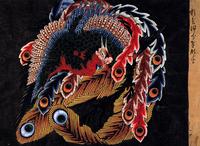
Ceiling of Ganshoin temple at Obuse
Katsushika Hokusai
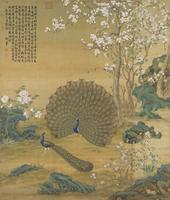
Peacock spreads its tail
Giuseppe Castiglione (郞世宁 - Lang Shining)
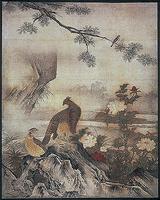
Flowers and Birds of the Four Seasons
Kanō Motonobu
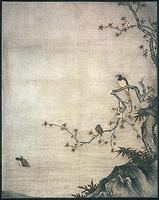
Flowers and Birds of the Four Seasons
Kanō Motonobu
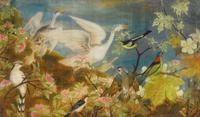
Hibiscus and Birds
Le Pho
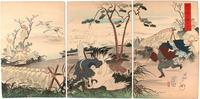
Visit at the crane hunt
Toyohara Chikanobu
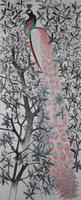
Peacock
Viorel Marginean
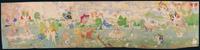
Untitled (Blengins Capturing Glandelinian Soldiers)
Henry Darger
Views Inside and Outside the Capital, Kyoto (Right half)
Kanō Eitoku
Monkeys and Horses
Han Gan
Right Screen
Kanō Motonobu
Rooster
Owon
Flowers and Birds of the Four Seasons
Kanō Motonobu
Untitled
Viorel Marginean