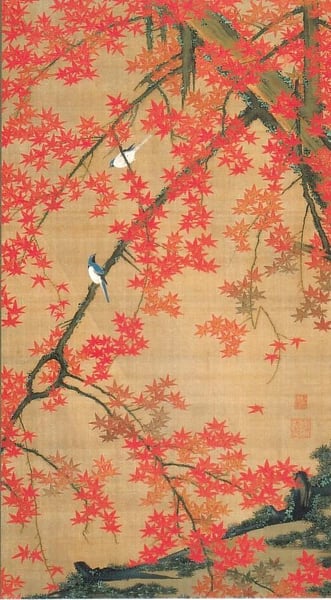
Maple Tree and Small Birds
Analisi esperta di Maple Tree and Small Birds di Ito Jakuchu
Stile: Ukiyo-e · Genere: animal painting
Expert Analysis: "Maple Tree and Small Birds" by Ito Jakuchu
Ito Jakuchu (1716–1800) was a singular figure in the world of Ukiyo-e and Japanese painting. While Ukiyo-e is most commonly associated with woodblock prints of actors, courtesans, and landscapes, Jakuchu’s work represents a highly refined, often eccentric branch of the style—one that merged meticulous naturalism with a bold decorative sensibility. "Maple Tree and Small Birds" exemplifies his mastery of the kachō-ga (bird-and-flower painting) genre, a tradition rooted in Chinese scholarly painting but transformed through Jakuchu’s unique lens.
Significance Within Ukiyo-e and Animal Painting
-
Meticulous Observation Meets Decorative Flair
Jakuchu was renowned for his almost scientific attention to detail. In this painting, each maple leaf is rendered with crisp, veined precision, while the small birds—likely finches or tits—are posed with lifelike alertness. This naturalism is not merely documentary; it is woven into an elegant, rhythmic composition that anticipates the decorative boldness of later Ukiyo-e artists like Hokusai and Hiroshige. The interplay of red and gold maple leaves against the soft, unpainted silk background creates a striking two-dimensional pattern, a hallmark of the Rinpa-influenced decorative aesthetic that permeates much of Jakuchu’s work. -
A Bridge Between Chinese Tradition and Japanese Innovation
The subject—autumn maples and birds—is a classic trope in Chinese hua-niao painting, but Jakuchu infuses it with a distinctly Japanese sensitivity. Unlike the atmospheric, ink-wash approach of Chinese literati, he uses rich, opaque mineral pigments (especially vermilion, gold, and malachite green) applied with painstaking stippling and layering. This technique, combined with his sharp, calligraphic outlines, gives the painting an almost tactile intensity. The birds are not passive symbols; their lively poses—one peering downward, another poised to take flight—bring a narrative immediacy rare in formal bird-and-flower works. -
Jakuchu’s Unique Place in Ukiyo-e
Although Jakuchu worked primarily as a painter (on silk, paper, and even screens), rather than a printmaker, his output is often classified under the broader Ukiyo-e umbrella because of its origin in the merchant-class culture of Kyoto and its appeal to a sophisticated urban clientele. "Maple Tree and Small Birds" demonstrates how Ukiyo-e’s emphasis on ukiyo (the floating world of transient beauty) could be applied to the natural world: the fleeting brilliance of autumn leaves and the momentary stillness of a bird are captured with an almost photographic crispness, yet remain stylized enough to feel like a dream. -
Influence on Later Generations
Jakuchu’s animal paintings—especially his famous series "Dōshoku sai-e" (Colorful Realm of Living Beings)—redefined the possibilities of Japanese animal painting. His combination of extreme detail, vibrant color, and asymmetrical composition inspired not only later Ukiyo-e printmakers but also the Nihonga revival of the Meiji period and even modern Japanese illustration. "Maple Tree and Small Birds" is a quintessential example of how he elevated a seemingly simple subject into a meditation on life, decay, and the exquisite perfection of nature.
In short, this work is significant for its fusion of empirical observation with decorative abstraction, its refinement of a classical Chinese genre into a distinctly Japanese Ukiyo-e idiom, and its enduring influence on the trajectory of Japanese bird-and-flower painting.
Visivamente simili
20 opere con composizione e palette affini
Flowers and Birds of the Four Seasons
Kanō Motonobu
94. The Maple Trees at Mama, the Tekona Shrine and Tsugihashi Bridge
Hiroshige
Flowers and Birds of the Four Seasons
Kanō Motonobu
柳汀灵禽
Qian Xuan
Baika shokinzu
Ito Jakuchu
Finches and Bamboo
Emperor Huizong
Stonechat
Ohara Koson
Monkeys and Horses
Han Gan
Roses (Bara Shou Kin Zu)
Ito Jakuchu
White Clouds and Red Trees
Lan Ying
Bamboo, Rock, and Mandarin Ducks
Bada Shanren
Landscape after Li Tang
Lan Ying
Pine Tree, White Hawk, and Rock
Lan Ying
Baika kougetuzu
Ito Jakuchu
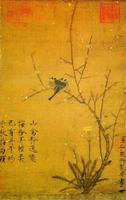
Plum and birds
Emperor Huizong
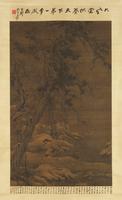
Travelers in a Wintry Forest
Li Cheng
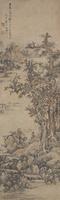
Landscape after Dong Yuan
Lan Ying
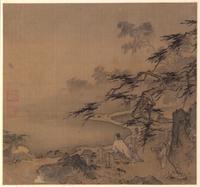
Watching Deer by a Shaded Stream
Ma Yuan
Flowers and Bamboo
Xu Wei
Two Barn Swallows in Flight, Willow Branch and Flowering Cherry above
Ohara Koson