Analisi esperta di Imagine If di Basil Beattie
Stile: Abstract Expressionism · Genere: abstract
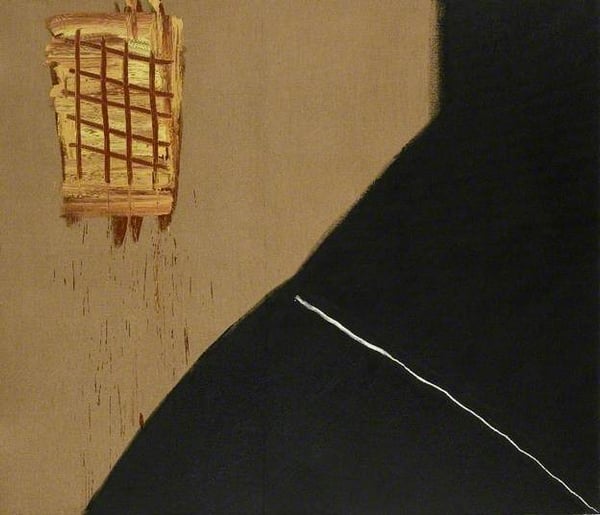
Expert Analysis of "Imagine If" by Basil Beattie
As an abstract expressionist work, "Imagine If" embodies the core tenets of a movement that redefined painting in the post-war era: the primacy of instinct, the physical act of mark-making, and the direct transmission of emotion onto the canvas. While the artist Basil Beattie is often associated with the lyrical abstraction of the British School, this piece aligns with the international language of Abstract Expressionism—a style that, from the 1940s onward, positioned abstract form as a vehicle for universal human experience rather than representation.
The title itself, "Imagine If," is significant within this context. It functions as an invitation—not a narrative or a directive, but a prompt for open-ended speculation. This aligns with Abstract Expressionism’s emphasis on the viewer’s subjective encounter: the painting does not depict an object but rather creates a field of potential meaning. The work’s significance lies in how it harnesses abstraction to prompt a dialogue between the canvas and the imagination, foregrounding process over depiction.
In terms of genre, the purely abstract nature of the work is central to its importance. Unlike earlier abstract movements that sought geometric order (e.g., De Stijl, Bauhaus), Abstract Expressionism championed spontaneity, gesture, and the “all-over” composition. "Imagine If" likely employs the rhythmic, energetic strokes and layered color fields typical of Beattie’s practice. These elements are not decorative but are instead the very substance of the painting’s meaning—each mark is a record of decisions made in real time, embodying the artist’s physical and emotional engagement.
Ultimately, "Imagine If" is significant as a case study of Abstract Expressionism’s enduring power: it insists that the most abstract forms—the most open-ended invitations to “imagine if”—can possess the greatest immediacy and emotional resonance. The work stands as a testament to the movement’s core belief that the act of painting itself is a direct, unmediated expression of being.
Visivamente simili
20 opere con composizione e palette affini
Geometrical Composition: The Guitar
Pablo Picasso
Harvest
Helen Frankenthaler
Who knows the beginning and who knows the end II
Blinky Palermo
Anking
John Hoyland
Fraction
Larry Bell
Spring
Ray Parker
Thundi
Sally Gabori
Ipswich
James Brooks
The Heritage
Luc Tuymans
Untitled
Jose Guerrero
Pilsnabbt
Rune Jansson
Goudron sur verre 45.5 x 76.5 cm, 1948
Pierre Soulages
Key Largo
Friedel Dzubas
Timbri del colore n. 8
Giuseppe Santomaso
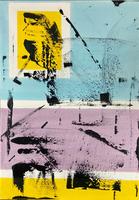
Esfinge
eDgar gRau
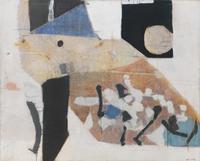
Solstice
Kenzo Okada
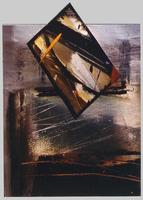
El reverso de mi ventana.
Aldo Menéndez
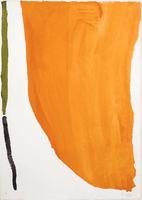
Orange Downpour
Helen Frankenthaler
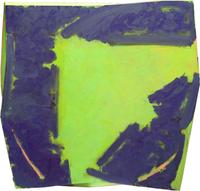
Broken Circle
Richards Ruben
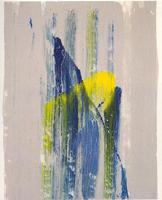
Berliner Raga 6
Luciano Bartolini