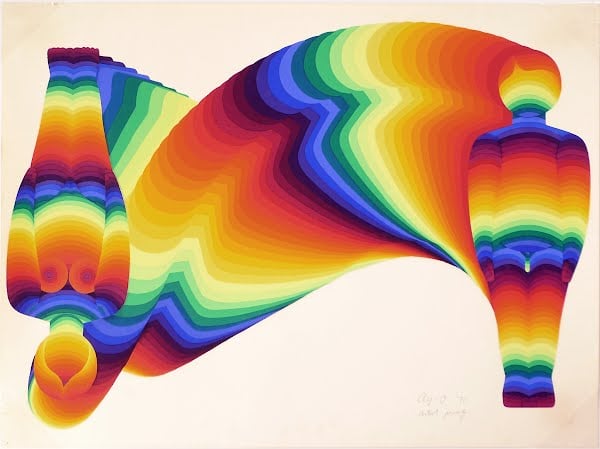
Analisi esperta di Rainbow night 8 di Ay-O
Stile: Neo-Dada · Genere: figurative
Expert Art Historical Analysis: "Rainbow night 8" by Ay-O
Context and Style
Ay-O’s Rainbow night 8 is a significant work within the Neo-Dada movement, which emerged in the late 1950s as a reaction against the formalism of Abstract Expressionism and the seriousness of high modernism. Neo-Dada embraced irony, chance, and the incorporation of everyday materials or imagery—often with a playful, anti-art stance. As a member of the Fluxus movement and a key figure in Japanese Neo-Dada, Ay-O is best known for his "Rainbow" series, in which he systematically employs the full spectrum of colors as both palette and conceptual device.
Significance of the Work
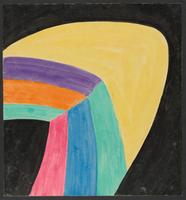
The title Rainbow night 8 directly signals Ay-O’s signature strategy: superimposing a prismatic, rainbow-hued treatment onto a conventional figurative subject—here, a night scene. By rendering a nighttime landscape in vivid, un-naturalistic rainbow colors, Ay-O subverts the viewer’s expectation of nocturnal darkness and atmosphere. This tension between the comforting familiarity of figurative representation and the jarring, almost psychedelic palette embodies Neo-Dada’s core impulse to disrupt visual norms and challenge the boundary between high art and popular culture.
The work’s significance lies in its skillful fusion of two seemingly incompatible elements: the literal, recognizable content of a night view, and the synthetic, artificial energy of the rainbow. Ay-O transforms a mundane subject into a sensory experience that is both disorienting and humorous—a hallmark of Neo-Dada’s irreverent critique of established artistic hierarchies. In Rainbow night 8, the rainbow is not mere decoration but a conceptual tool: it flattens depth, denies naturalistic lighting, and asserts the artist’s freedom to redefine perception. This approach aligns Ay-O with contemporaries like Yoko Ono and Nam June Paik, who used repetition, seriality, and playful subversion to question what art could be.
Within Neo-Dada
What makes Rainbow night 8 especially notable is its disciplined use of a single, restrictive element (the rainbow palette) to generate infinite variation. By numbering his rainbow works (here, “8”), Ay-O implies a serial, process-based practice—another Neo-Dada trait that echoes Marcel Duchamp’s readymades and Andy Warhol’s mass-production aesthetics. The work thus stands as a bridge between the anti-formalist energy of Neo-Dada and the later systematic conceptualism of the 1960s, while retaining a vibrant, accessible visual appeal that invites both contemplation and joy.
Visivamente simili
20 opere con composizione e palette affini
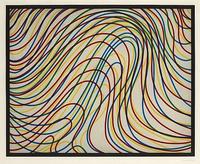
Wavy Lines with Black Border
Sol LeWitt
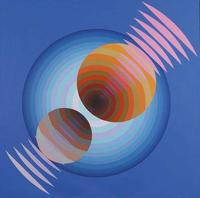
Cosmos N°2
Martha Boto

Grey Blue and Black, Pink Circle
Georgia O'Keeffe
Fantastic Vortice
Loutphi
Fantastic Vortice
Loutphi
Untitled
Nicholas Krushenick
Horizontal Wavy Lines
Sol LeWitt
Dynasty in Lines
Loutphi
L'Alchimiste
Julio Le Parc
Fouji Yama (24 Rainbow Gradation)
Ay-O
Doppelform
Dieter Roth
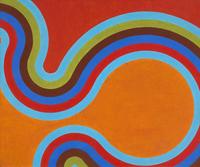
Staccato
Cesar Paternosto
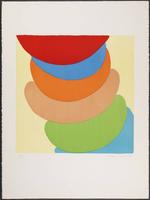
Red, Blue, Orange on Yellow
Terry Frost
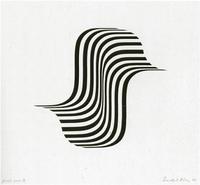
Untitled (Winged Curve)
Bridget Riley
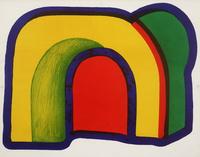
Arch
Howard Hodgkin
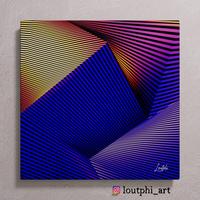
Kinetic Sunrise
Loutphi
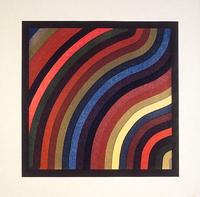
Two Centimeter Wavy Bands in Colors
Sol LeWitt
Composition V
S. H. Raza
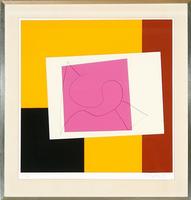
Kiel
Richard Mortensen
Colored Rhythm: Study for the Film
Leopold Survage