Analisi esperta di Vanquished di Emily Carr
Stile: Cubism, Post-Impressionism · Genere: landscape
Expert Analysis of "Vanquished" by Emily Carr
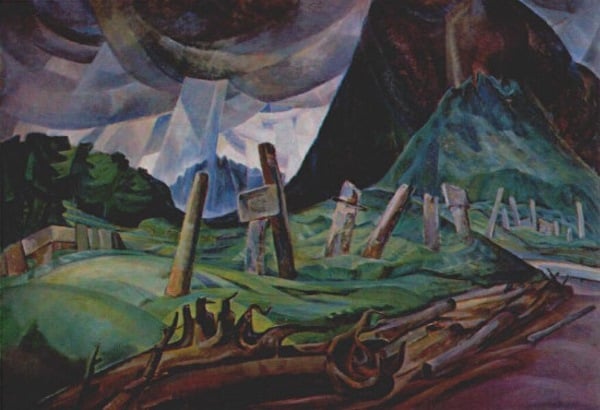
Emily Carr’s Vanquished stands as a compelling synthesis of Post-Impressionist color and Cubist structure, rendered within the landscape genre that defined her mature work. Painted during a period of intense experimentation, the piece captures a forest scene—likely a clear-cut or storm-felled woodland—where the vertical thrust of trees is broken into geometric facets. The Cubist influence is evident in the fragmented planes and shifting viewpoints, which deconstruct the natural forms to convey a sense of upheaval and loss. Yet Carr’s signature Post-Impressionist palette—deep greens, earthy browns, and streaks of vibrant blue or gold—imbues the scene with emotional resonance, moving beyond mere formal analysis to evoke the spiritual and ecological weight of the subject.
What makes Vanquished significant within Carr’s oeuvre and early 20th-century art is its bold fusion of two avant-garde styles to address a distinctly Canadian theme: the confrontation between wilderness and industry. Carr was among the first to apply Cubist fragmentation not to still lifes or figures but to the dense coastal forests of British Columbia, transforming the landscape into a dynamic, almost mournful abstraction. This work exemplifies her transition from Post-Impressionist lyricism to a more angular, structural modernism—a shift that would later influence the Group of Seven and solidify her role as a pioneer of Canadian modern art. In Vanquished, the tension between organic growth and geometric dissolution becomes a metaphor for nature’s resilience and its vulnerability, a theme that remains urgent today.
Genere
Visivamente simili
20 opere con composizione e palette affini
Winter. Red Hill in the realm of Berendey
Boris Grigoriev
Big trees at Estaque
Georges Braque
The Rite of Spring
Nicholas Roerich
Hills at Great Bear Lake
A.Y. Jackson
Maitreya the Conqueror
Nicholas Roerich
Forest, British Columbia
Emily Carr
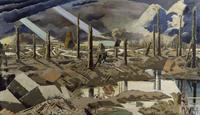
The Menin Road
Paul Nash
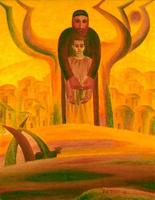
Abraham and Isaac
Israel Tsvaygenbaum
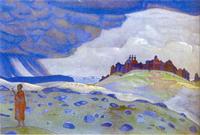
Procopius the Righteous removes a cloud of stone from the Great Ustyug
Nicholas Roerich
Set Design prologue to the staging of Satan's Diary (by L. Andreev)
Kuzma Petrov-Vodkin
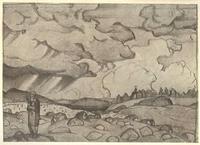
Procopius the Righteous removes a cloud of stone from the Great Ustyug
Nicholas Roerich
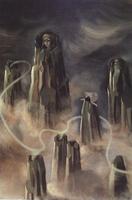
The Souls of the Mountain
Remedios Varo
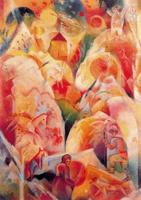
Winter
Albert Bloch
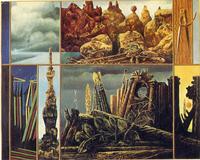
Painting for Young People
Max Ernst
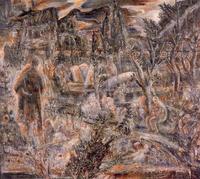
Passing Train
Albert Bloch
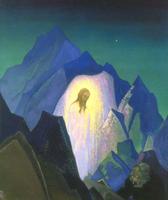
Christ
Nicholas Roerich
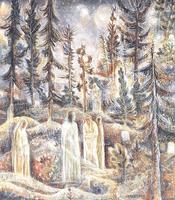
Vision in a Summer Night
Albert Bloch
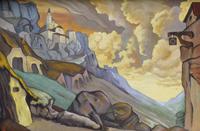
Study of scene design for "Fuente Ovehuna"
Nicholas Roerich
Untitled
Zdzislaw Beksinski
Hills
Nicholas Roerich