Expertenanalyse zu Endre Bartoss The last painting
Stil: Art Informel · Genre: abstract
Expert Analysis of "The last painting" by Endre Bartos
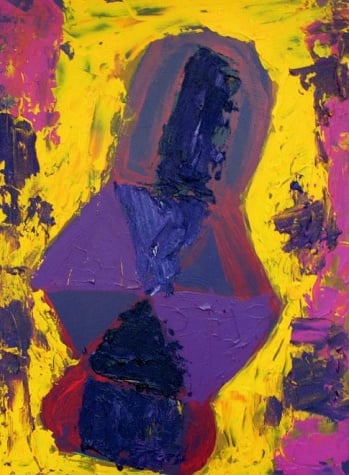
Endre Bartos’s The last painting stands as a definitive example of Art Informel, the post-war European movement that rejected geometric abstraction in favor of raw, spontaneous, and gestural expression. The work’s significance lies in how it embodies the core tenets of Art Informel—particularly its emphasis on the physical act of painting as a direct record of the artist’s psyche and materials.
Given its title, this painting carries a poignant finality. As a work in the abstract genre, it likely forgoes representational content for an intense focus on texture, surface, and unplanned mark-making. The significance within Art Informel is threefold:
-
Gestural Authenticity: The painting likely features vigorous, sweeping strokes or drips that prioritize the artist’s immediate emotional state over premeditated composition. This aligns with Art Informel’s debt to Surrealist automatism and its reaction against the rigid formalism of earlier abstraction.
-
Materiality and Texture: Typical of the style, Bartos may have used thick impasto, layering, or unconventional tools to create a dense, almost sculptural surface. This tactile quality transforms the canvas into an artifact of the creative process, where every scrape, smear, or embedded grit becomes a testament to the painter’s struggle with the canvas.
-
Existential Weight: The title suggests a culmination or farewell. In the context of Art Informel—a movement often linked to existentialist philosophy and the trauma of World War II—this painting likely confronts themes of mortality, chaos, or finality through its unbridled energy and lack of fixed meaning. It is not a “picture” of something, but a direct, unfiltered trace of the artist’s last creative act.
The last painting is significant precisely because it pushes Art Informel’s logic to its extreme: the moment of making becomes the only subject, and the painting itself is the residue of a singular, unrepeatable event. In Bartos’s hands, this abstraction is not an escape from reality but an encounter with its most raw, unmediated form.
Genre
Stil
Visuell ähnlich
20 Werke mit ähnlicher Komposition und Farbpalette
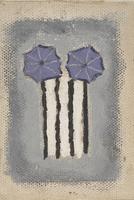
Untitled
Forrest Bess
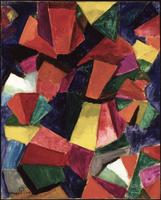
Synchromy Number 4: To Form
Morgan Russell
Composition III (Still life)
Theo van Doesburg
Terk
Sonia Delaunay
Umbrellas
Fernand Leger
James Gibbs
Mark Lancaster
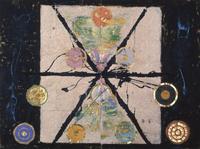
Arianna & Pitagora
Luciano Bartolini
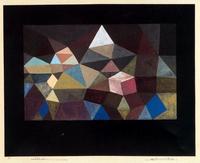
Crystalline Landscape
Paul Klee
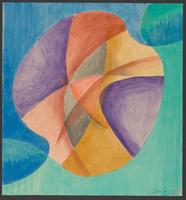
Colored Rhythm: Study for the Film
Leopold Survage
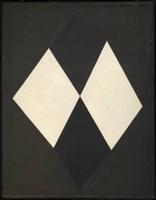
Untitled
Mira Schendel
Batticaloa (from the Diamond Drill series)
Larry Zox
Untitled, Triangle, 8'H
Robert Swain
Allstar Galilee
Stephen Mueller
Pasadena Lifesavers Red #5
Judy Chicago
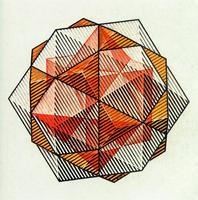
Four Regular Solids
M.C. Escher
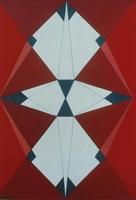
Componenti antagoniste
Galliano Mazzon
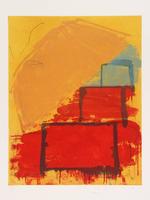
Trickster
John Hoyland
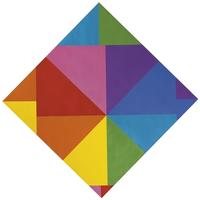
Acht farben im horizontal-diagonal-quadtrat
Max Bill
Converge
Harriet Korman
Constructie
Gil Nicolescu