Analisi esperta di Self-portrait di Istvan Farkas
Stile: Expressionism · Genere: self-portrait
This analysis is based solely on the provided structured facts—style (Expressionism), genre (self-portrait), and artist (Istvan Farkas).
Expert Analysis
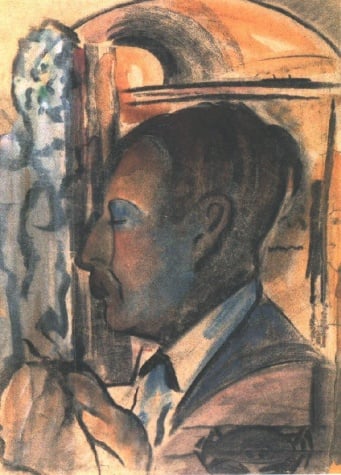
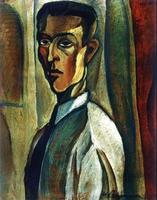
Istvan Farkas’s “Self-portrait” is a significant work within the Expressionist movement, particularly in the context of Central European modernism. As a self-portrait, it embodies the Expressionist imperative to prioritize subjective emotional experience over objective representation. The work’s significance lies in how it harnesses the genre’s introspective potential to convey psychological intensity.
Expressionist Innovation: Farkas likely employs the hallmark devices of Expressionism—distorted anatomy, heightened color contrasts, and a rejection of naturalistic perspective—to externalize his inner state. The self-portrait, traditionally a vehicle for physical likeness or social status, is here repurposed as a direct channel for angst, alienation, or existential questioning. The artist’s face and posture would be exaggerated not to mimic reality but to amplify the emotional temperature of the moment.
Genre and Period Significance: In the context of Hungarian Expressionism (which flourished in the early 20th century, particularly among artists of the “Eight” or “The Neos”), Farkas’s self-portrait contributes to a broader dialogue on identity and modernity. The self-portrait genre allows him to position himself both as the subject and as the creator—a reflexive stance that mirrors Expressionism’s obsession with the artist’s own psyche. By turning the lens inward, Farkas aligns with peers like Egon Schiele or Oskar Kokoschka, who used self-portraiture to probe raw, often uncomfortable truths.
What Makes It Significant: The work’s significance lies in its synthesis of personal confession and universal expression. It captures the tension between the individual self and the turbulent historical moment (likely pre- or interwar Europe), making it not just a likeness but a document of its time. The absence of precise biographical details in the given facts actually reinforces the painting’s expressive power: the viewer is left to confront the pure formal language of Expressionism—the way distortion and color communicate pain, vulnerability, or defiance without needing a narrative. In this sense, Farkas’s “Self-portrait” stands as a key example of how Expressionism transformed the self-portrait from record to revelation.
Genere
Stile
Visivamente simili
20 opere con composizione e palette affini
Pagans and Degas's Father
Edgar Degas
Self Portrait
George Bouzianis
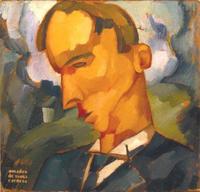
Sorrows, heads
Amadeo de Souza-Cardoso
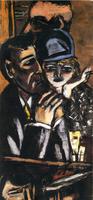
Bar Brown
Max Beckmann
Sketch of man's head (Self-portrait)
Nicholas Roerich
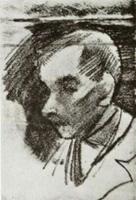
Head of a Man
Vincent van Gogh
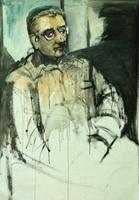
author Series - Hüseyin Haydar
Artin Demirci
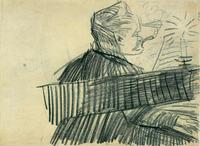
Pianist
Vincent van Gogh
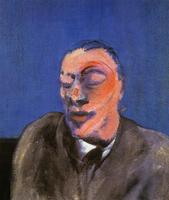
Head II
Francis Bacon
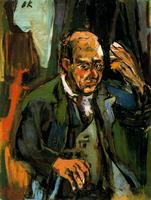
Arnold Schönberg
Oskar Kokoschka
Portrait of Sebastia Junyer-Vidal
Pablo Picasso
A Figure
Odilon Redon
The Chess Players
Marcel Duchamp
Head III
Francis Bacon
Portrait of Roman Selsky
Margit Selska
Kondor Béla, Piros Hajú Nő
Kondor Béla
Egry József, Önarkép Kalapban
Egry József
Czóbel Önarckép
Bela Czobel
Self-Portrait
Victor Brauner
Head
Francis Bacon